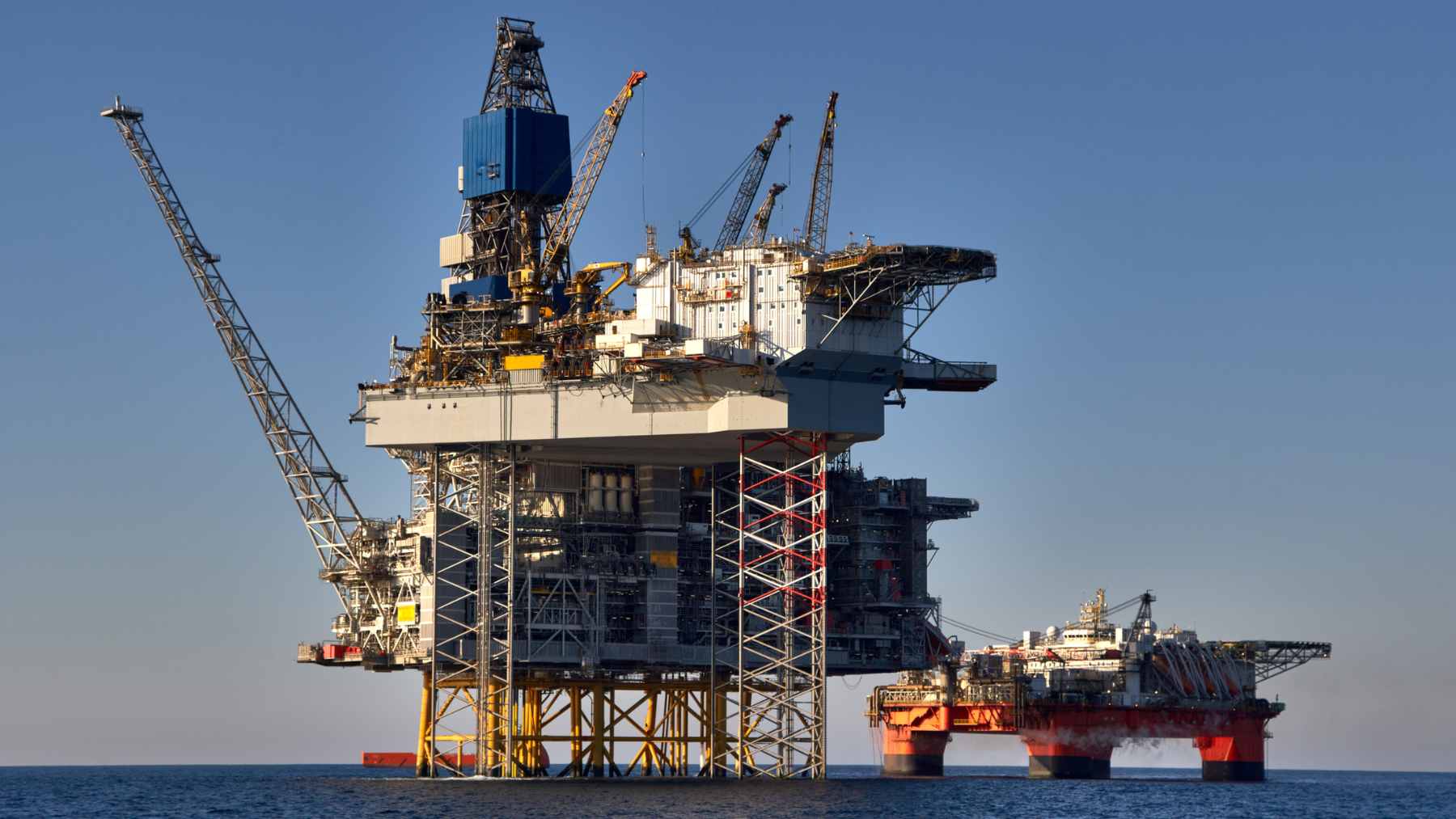
BP has announced what it calls its largest oil and gas discovery in 25 years, a deepwater find in Brazil’s Santos Basin that could become a new production hub if future testing confirms the field can be developed commercially. The Bumerangue prospect sits far offshore, in water about 7,780 feet deep, and the exploration well reached roughly 19,200 feet in total depth.
That is the headline. The bigger question is what comes next. Early data point to a major hydrocarbon system below Brazil’s famous pre-salt rocks, but BP has also reported elevated carbon dioxide in the reservoir, a detail that could shape the project’s cost, climate footprint, and long-term viability.
A giant find offshore Brazil
Bumerangue is located in the pre-salt Santos Basin, one of the world’s most watched offshore oil provinces. BP said the discovery was made in the 1-BP-13-SPS exploration well, drilled more than 250 miles from Rio de Janeiro in ultra-deepwater conditions.
In practical terms, this is not oil sitting in an underground cave. Oil, gas, and water are held in tiny pore spaces inside rock, and engineers need the right pressure, temperature, and rock quality for those fluids to flow steadily.
BP’s later update made the find look even larger. Initial laboratory and pressure analysis confirmed a gross hydrocarbon column of about 3,280 feet, including roughly 328 feet of oil and about 2,950 feet of liquids-rich gas-condensate.
Why the pre-salt matters
Brazil’s pre-salt zone lies beneath a thick layer of ancient salt. That salt can act like a seal, trapping hydrocarbons below it for millions of years, but it also makes the rocks harder to image and understand.
The Santos Basin already hosts major fields such as Tupi, Búzios, and Sapinhoá. That history explains why companies keep pushing into deeper water and more complicated geology, even when the price tag is enormous.
Still, the rocks can be unpredictable. Pre-salt carbonates formed in ancient lake systems, and their textures may shift over short distances, which means a promising discovery still needs appraisal wells before anyone can call it a working field.
The CO2 question
The part that may matter most for the environment is carbon dioxide. BP’s first rig-site analysis found elevated CO2 levels, and that matters because CO2 must be separated from produced oil and gas before the fuels can be sold or moved efficiently.
High CO2 does not automatically kill a project. But it can require bigger processing equipment, more energy use offshore, and systems to reinject or store the gas. That is where the engineering gets expensive, and where climate concerns become harder to brush aside.
BP now says the reservoir’s CO2 can be managed, pointing to liquids across the hydrocarbon column, high-quality rock properties, and its deepwater experience. The company is still running laboratory tests to determine fluid characteristics, gas-to-oil ratios, condensate-to-gas ratios, and in-place volumes.
What scientists already know
This CO2 signal did not come out of nowhere. A 2022 study involving U.S. Geological Survey geochemist Geoffrey S. Ellis examined natural gases from the pre-salt Santos Basin and found different gas families linked to petroleum system processes, migration pathways, and fluid sources.
That kind of work helps explain why one field may contain more CO2 than another, even in the same broad basin. Deep faults, ancient fluids, and the chemistry of source rocks can all leave fingerprints in the gas.
For readers, the takeaway is simple. Bumerangue is not just a drilling story. It is a chemistry story too, and that chemistry could decide whether the field becomes a major hub or stays a promising but difficult discovery.
From discovery to production
BP is not ready to publish commercial volume estimates. That is normal at this stage, because a first discovery well is only the opening chapter.
Next come more seismic studies, appraisal wells, pressure testing, and engineering models. BP has said well activities are expected to begin in early 2027, subject to regulatory approval.
Could production follow quickly? Maybe not. Ultra-deepwater projects often take years because operators must design subsea systems, floating production equipment, pipelines, and CO2 handling capacity before final investment decisions are made.
A climate-era oil bet
Here is the uncomfortable part. A discovery like Bumerangue can strengthen energy security and supply, but it also lands in a world trying to cut greenhouse gas emissions.
That tension is not going away. Households still feel energy prices in the electric bill and at the pump, yet every new long-life oil and gas project raises questions about how it fits with climate targets.
At the end of the day, Bumerangue’s future will depend on more than the size of the rock structure. The real test is whether BP can prove the field can produce safely, manage its CO2, satisfy regulators, and make economic sense in a market that is watching carbon more closely than ever.
The press release was published on BP’s website.