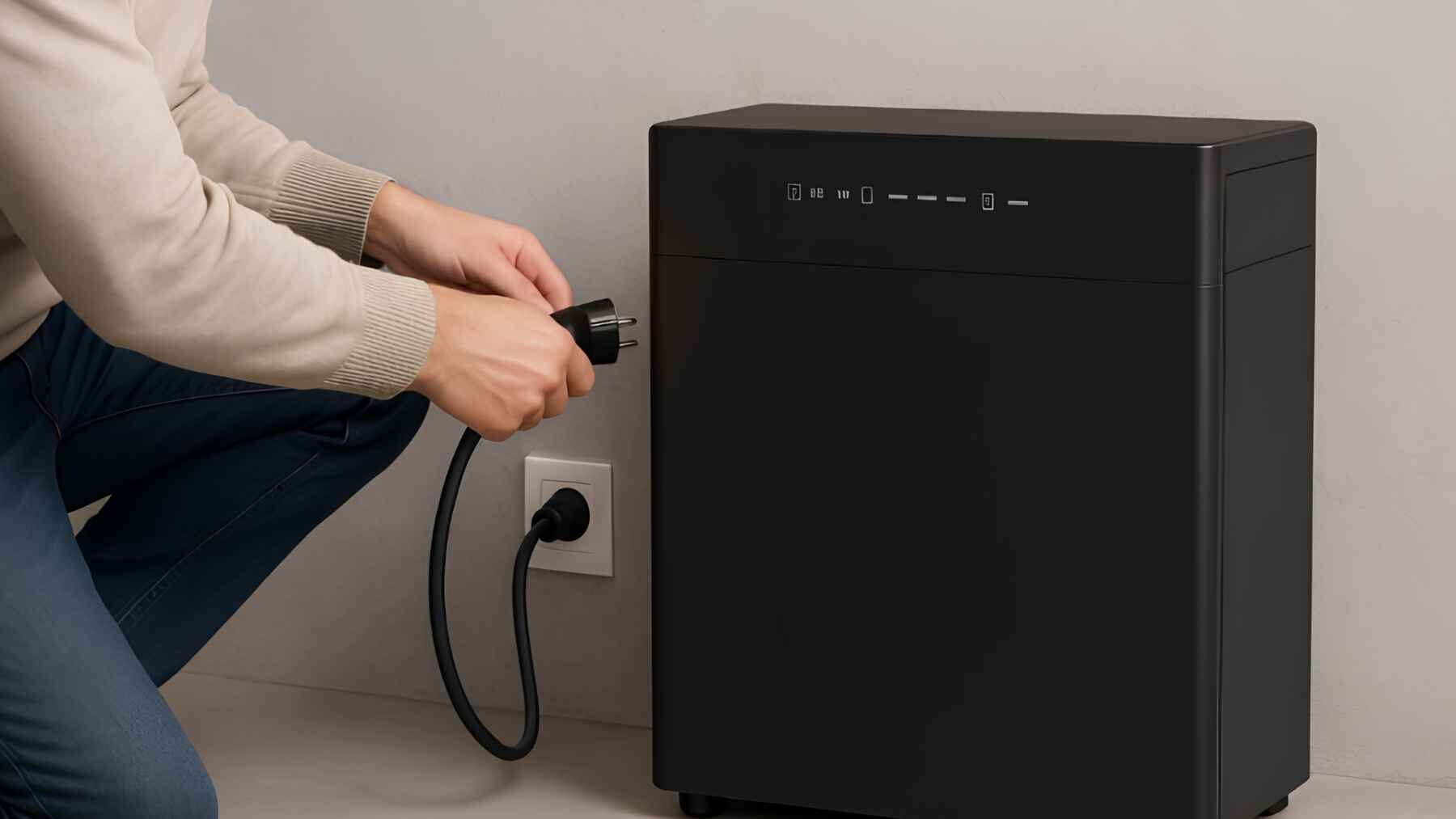
A quiet energy experiment is already taking place inside some Australian apartments. A small number of renters and apartment dwellers are plugging portable home batteries into the mains illegally, according to Renew Economy, a sign that demand for cheaper power is running ahead of the rulebook.
This is not just a story about gadgets, though. It is about who gets to use abundant daytime solar power, who keeps paying the higher electric bill after sunset, and whether regulators can design safe rules before risky do-it-yourself setups become a much wider habit.
Renters are being left out
Australia’s home battery boom has moved fast. Renew Economy reports that home battery installations passed 400,000 in May, helped by a federal rebate program that has made storage more affordable for households able to install official systems.
That is the catch. These programs mostly work for people with a suitable roof, the right wiring, and permission to install solar panels or a battery. For renters and apartment residents, the clean energy transition can still feel like something happening on someone else’s roof.
The Australian Government says its Cheaper Home Batteries Program is meant to keep discounts at around 30% across a range of battery sizes, while supporting more than 2 million Australians to install a battery by 2030. Big numbers, yes, but for many people in high-rise buildings, they remain mostly out of reach.
Free midday power changes the math
Now another policy is making the question more urgent. Australia’s Solar Sharer Offer gives eligible households three free hours of electricity in the middle of the day, even if they do not own rooftop solar.
The offer applies in New South Wales, South Australia, and South East Queensland, with a daily free-power cap of up to 24 kilowatt-hours. In practical terms, the more a household can shift laundry, dishwashing, cooling, or EV charging into the sunny hours, the more useful the plan becomes.
Victoria is preparing a similar Midday Power Saver from October 1, 2026, with a free window from 11 a.m. to 2 p.m. every day. That sounds simple enough, but the Victorian Government also warns that power outside those hours may cost slightly more, so savings depend on whether people can actually move their energy use.
Why balcony batteries matter
For a homeowner, the answer may be easy: run appliances when power is free, charge a battery, then use that stored energy later when the sun drops and prices rise.
For an apartment resident, it is harder. A small balcony solar panel and plug-in battery could turn the same idea into something practical, especially during hot summer afternoons, when air conditioning can turn an electric bill into a nasty surprise.
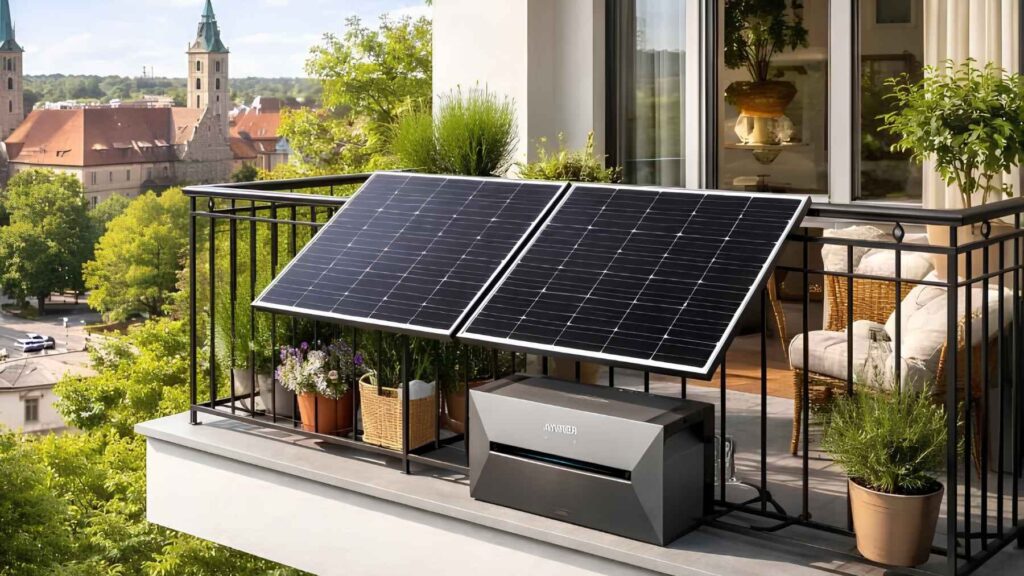
Phil Krok, Anker Solix’s sales manager in Australia, told Renew Economy that Solar Sharer is “the policy we see as the one that will unlock all the value” for products like these. His point is simple: free midday electricity becomes far more useful when renters have a safe way to store some of it.
Germany offers a clue
Australia would not be starting from nowhere. Germany already has a formal path for balcony solar, where small plug-in solar devices can be connected to a household circuit through a socket.
Germany’s rules allow plug-in solar devices with up to 2,000 watts of module power and a total inverter limit of 800 VA. That is not enough to run a whole apartment like a rooftop system, but it can cover some everyday loads, especially when paired with careful timing.
The idea is no longer niche. Germany’s energy regulator said about 430,000 new plug-in balcony solar panel installations were registered in 2025, equal to about 3.2% of the country’s new solar capacity that year.
The safety problem is real
Still, Australia cannot simply copy and paste Germany’s model. Glen Morris, founder of Smart Energy Labs, told Renew Economy that Germany’s 800-watt level is roughly 3 amps, while Australian sockets are typically rated at 10 amps. On paper, that sounds comfortably below the circuit limit.
The tricky part is what happens inside the safety system. Morris pointed to concerns about residual current devices, also known as RCDs, which are designed to cut power when they detect a fault. If direct current from a solar panel or battery interferes with that protection, the safety switch may not work as expected.
There is also a problem for electricians. If a plug-in battery keeps feeding a circuit after the switchboard has been turned off, a worker may think the wiring is dead when it is not. That is exactly why clear standards matter.
A rulebook before a rush
The illegal use now being reported appears small, not widespread. But it points to a larger pressure building in the background, especially because batteries approved for overseas balcony systems, and unapproved versions sold online, are easy to buy.
Morris summed up the consumer side bluntly, saying, “There’s nothing stopping anyone from buying anything.” That does not make the practice safe or legal in Australia, but it does show why silence from regulators may not be a long-term answer.
The cleaner solution would be a recognized product category, tested hardware, installation rules, labeling for electricians, and protections for renters and building owners. Bureaucratic, but necessary.
What households should know
For now, renters and apartment residents should be careful. Plugging an overseas battery into the wall because it worked in Germany is not the same as using an approved system under Australian standards.
The safer move is to use official energy plans where available, shift energy-hungry appliances into free-power windows, and ask retailers or building managers about approved options. A timer on a washing machine may not sound revolutionary, but it can still help.
At the end of the day, balcony solar is not just about convenience. It is about whether the clean energy transition can reach people who do not own a roof, do not control a switchboard, and still want a fairer shot at lower bills.
The official Solar Sharer Offer statement was published on energy.gov.au.