A Swiss research team has restored learning and memory in aging mice by briefly switching on three “reprogramming” genes inside the exact neurons that store a memory. The work comes from EPFL in Lausanne, and it targets tiny clusters of cells called “engrams,” often described as the brain’s physical “memory trace.”
It’s a striking science story, but it also lands in a very Earth-bound reality. Dementia affected an estimated 57 million people worldwide in 2021, and evidence keeps building that what we breathe, especially polluted air from traffic and fossil fuel burning, can influence dementia risk. That’s why this study is also a reminder that clean air policies can be brain health policies.
A targeted reset for the brain’s memory trace
If you’ve ever walked into a room and forgotten why you went there, you’ve felt a tiny slice of what memory slip can feel like. In aging and in Alzheimer’s disease, those everyday moments can scale up into serious, life-changing cognitive decline, partly because key memory circuits stop working smoothly.
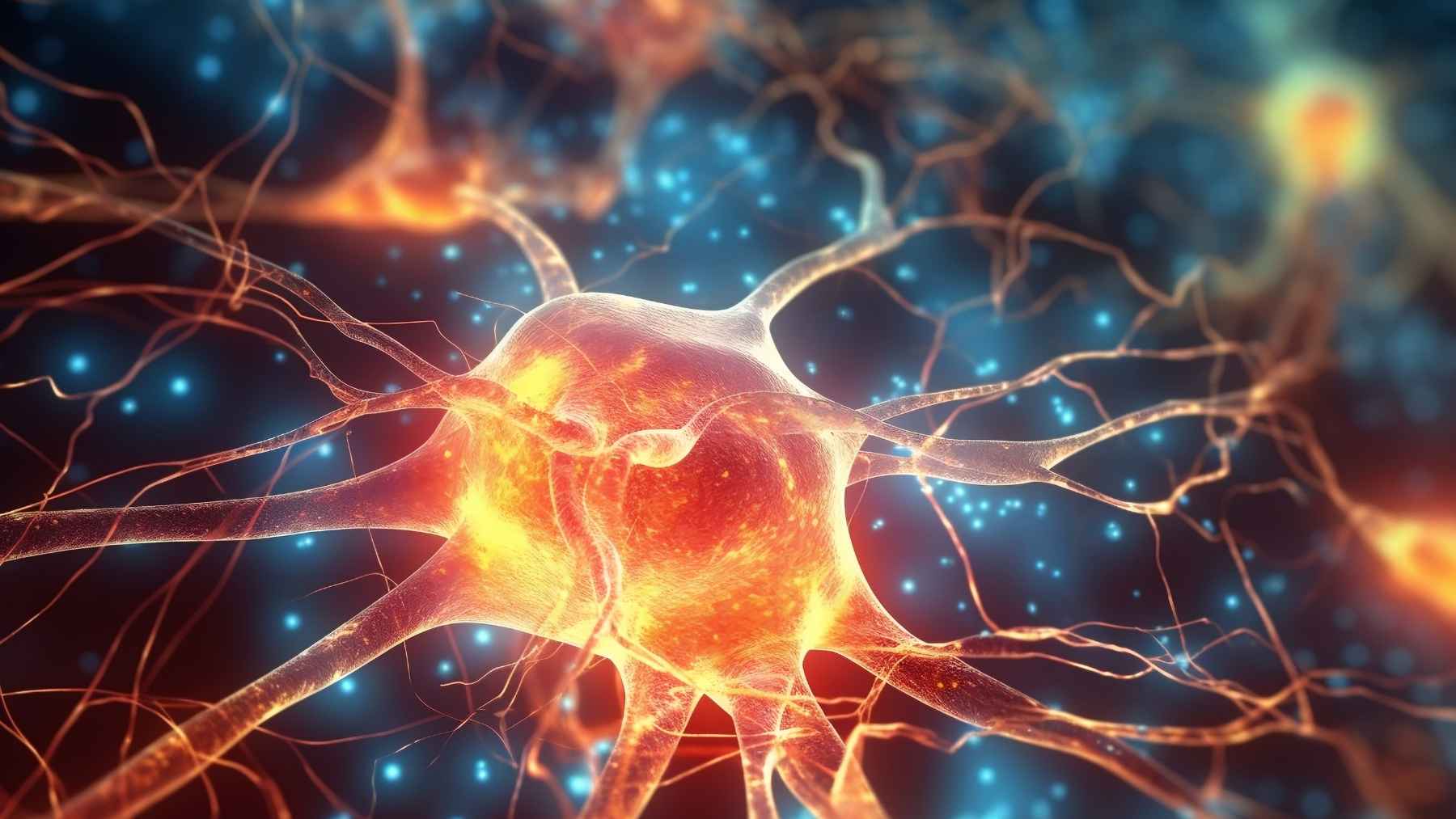
EPFL’s team focused on “engram” neurons, the sparse groups of brain cells that activate during learning and then reactivate when a memory is recalled. In older brains and in mouse models of Alzheimer’s disease, these engrams can malfunction, which can make recall fall apart even if the neurons are still there.
Their tool kit comes from a fast-moving field called “partial cellular reprogramming.” Instead of trying to replace brain cells, the approach aims to roll back some molecular signs of aging inside existing cells, while keeping their identity intact.
How the gene therapy hits the right neurons
The researchers used gene therapy vectors known as adeno-associated viruses, delivered through precise injections into specific brain regions. One part of the system tags neurons that are active during learning, and another part acts like a timed genetic switch that turns on three genes, Oct4, Sox2, and Klf4 (together called “OSK”), only for a short window.
They targeted two memory-linked areas that play different roles. The dentate gyrus in the hippocampus is important for learning and recent recall, while the medial prefrontal cortex contributes to remote recall about two weeks later.
That “short window” detail is not just a technical footnote. By keeping OSK expression limited in time and limited to a small set of neurons, the team aims to capture beneficial effects while reducing the risk of disrupting normal cell function.
What improved in aging and Alzheimer’s model mice
In aged mice, activating OSK in learning-related hippocampal engram neurons brought memory performance back toward levels seen in young controls. When the same idea was applied to prefrontal cortex engrams, it helped recover remote memories that are normally harder to access as the brain ages.
The group also tested mouse models of Alzheimer’s disease. In a spatial-learning task, the mice showed less efficient navigation and weaker memory strategies, but targeting dentate gyrus engrams improved learning strategies during training, and targeting prefrontal engrams improved longer-term spatial memory.
Under the hood, the paper reports changes consistent with “younger” cellular function. Engram reprogramming reversed some senescence and disease-related hallmarks, helped restore epigenetic and transcription patterns tied to synaptic plasticity, and counteracted Alzheimer’s-typical neuronal hyperexcitability, while still recovering learning and memory in behavioral tests.
Why this matters beyond the lab
This is still mouse research, and no one should confuse a proof of concept with a ready-to-use treatment for people. Brain injections, gene therapy control, long-term safety, and durability of the effect are all major questions that would need careful, stepwise answers before anything like this could be tested widely in humans.
But the direction is important. The researchers are showing that at least some cognitive decline may be tied to cells that are still present but “aged” in how they operate, and that molecular rejuvenation of a very specific cell population can shift behavior in animals.
It also plugs into a broader reality about dementia. Alzheimer’s disease may contribute to 60 to 70% of dementia cases, and dementia is a growing global burden as populations age. That’s where prevention and environment enter the conversation in a big way.
Air pollution is now part of the dementia risk conversation
The Lancet’s 2024 Commission report on dementia prevention concluded that nearly half of dementia cases worldwide could potentially be prevented or delayed by addressing 14 modifiable risk factors across the life course. Importantly for environmental policy, air pollution is on that list, alongside factors like smoking, high blood pressure, diabetes, and physical inactivity.
That framing matters because air pollution is not just an individual choice. It’s shaped by transportation, energy systems, building design, and whether a neighborhood sits next to heavy traffic or industrial activity. In other words, your city’s air can quietly become part of your brain’s long-term story.
So even as labs chase cutting-edge therapies, the dementia puzzle is also being influenced by street-level decisions like reducing vehicle exhaust, cleaning up power generation, and cutting the soot and fine particles that drift into our lungs.
The air pollution numbers that are hard to ignore
In July 2025, researchers at the University of Cambridge led a systematic review and meta-analysis that included 51 studies and data from more than 29 million participants with at least a year of exposure data. They found a statistically significant association between dementia and three pollutants, PM2.5, nitrogen dioxide (NO2), and soot.
Their estimates put the risk in concrete terms. For every 10 micrograms per cubic meter of PM2.5, the relative risk of dementia increased by 17%, and for every 10 micrograms per cubic meter of NO2, risk rose by 3%, while soot showed a 13% increase in relative risk per 1 microgram per cubic meter.
If that sounds abstract, think about the sources named in the report. Vehicle exhaust, power plants, industrial processes, and wood burning all show up, and that familiar stop-and-go traffic jam is not just a climate issue or a lung issue.
As senior author Haneen Khreis put it, “Tackling air pollution can deliver long-term health, social, climate, and economic benefits.”
Prevention can also be a sustainability strategy
There’s another environmental layer people rarely talk about at dinner. Health care systems have their own carbon footprint, and the more chronic disease a society carries, the more pressure that can put on hospitals, supply chains, and long-term care.
A 2025 OECD report estimated that in 2018 the health sector accounted for 4.4% of all demand-based greenhouse gas emissions across OECD countries. It also estimated more than 520 kilograms (about 1,150 pounds) of CO2-equivalent emissions per person, on average, tied to the delivery of health care, with most emissions tied to supply chains rather than what happens inside a clinic.
So yes, future gene therapies may one day help people who are already living with cognitive decline, and that work is worth following closely. But the “greenest” dementia strategy, for the most part, may still start earlier with cleaner air, healthier cities, and risk reduction steps that don’t require a syringe in the brain.
The press release was published by EPFL News.