Graphene concrete is moving from lab benches to real job sites with a tempting promise: lighter slabs, less cement and structures that may last longer. The catch is just as important. Specialists say the technology can reduce material in specific floors, pavements and slab applications, but only when testing proves it is safe.
The best-known example is Concretene, a graphene-enhanced concrete additive tested in England. Official project reports point to 30% less material in some slab uses and possible carbon savings, but those numbers do not mean every building can suddenly lose steel or thickness. That is where the story gets interesting.
What graphene changes
Graphene is a sheet of carbon so thin that it is often described as one atom thick. Think of it as an ultrathin mesh, far too small to see, but able to change how a material behaves when it is spread properly through the mix.
In concrete, the goal is not to replace cement with graphene. The idea is to add tiny amounts of carbon nanomaterial, meaning particles used at an extremely small scale, so the cement paste bonds better as it hardens. Hydration, the reaction between cement and water, turns the wet mix into a solid mass.
That denser internal structure matters because water, salts, and air have a harder time moving through it. In practical terms, that may mean stronger concrete, less cracking, better corrosion protection, and longer service life for some components. It is not magic.
The slab that drew attention
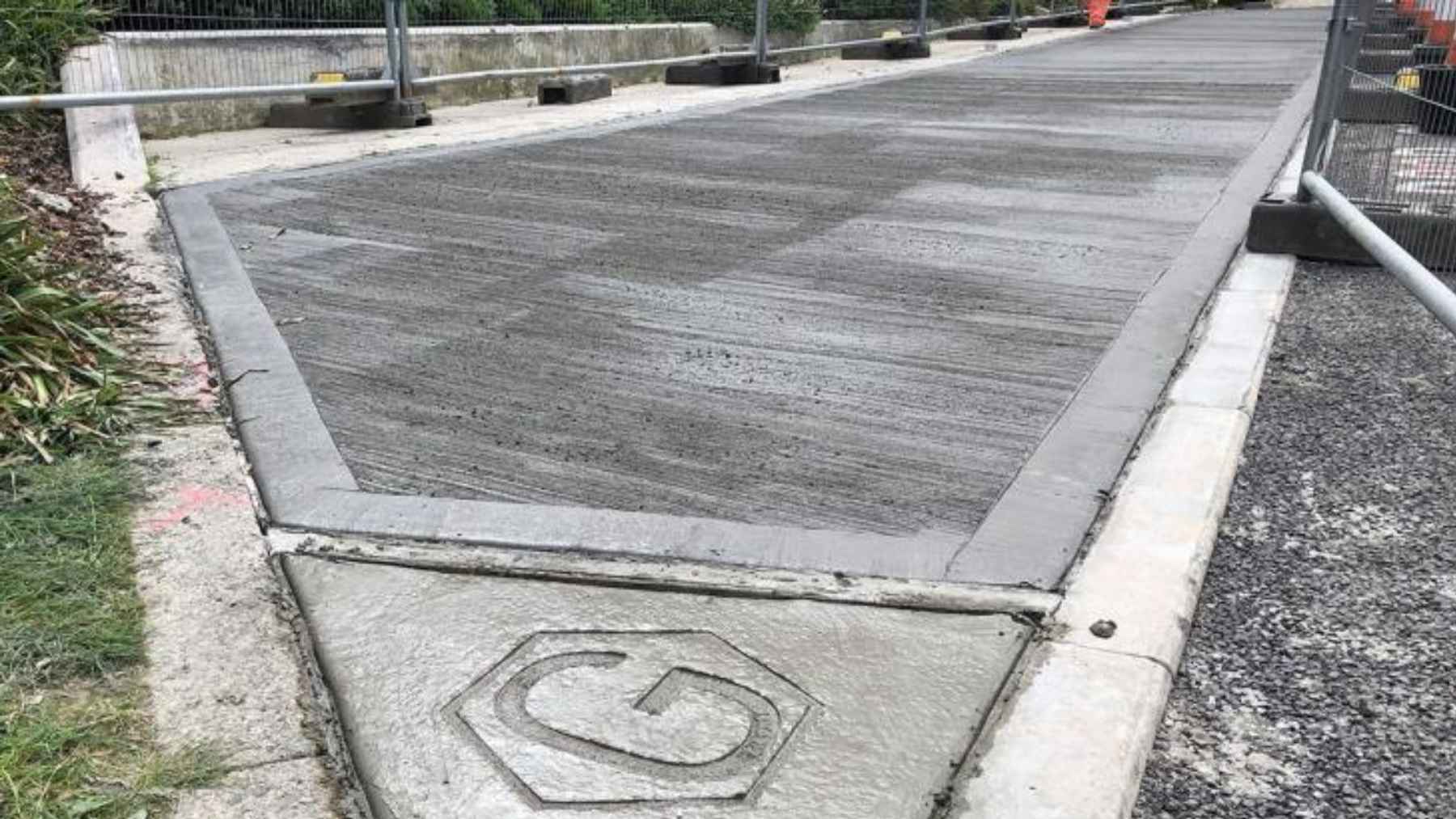
The clearest public example came from a gym floor in Amesbury, England. Engineers at The University of Manchester’s Graphene Engineering Innovation Centre worked with Nationwide Engineering on a Concretene floor slab of about 7,500 square feet, using conventional equipment and labor. The project reported 30% less material and no conventional steel reinforcement in that specific slab application.
Alex McDermott, co-founder of the construction firm, summed up the central idea when he said, “you don’t need to use as much concrete to get the same performance.” That is a powerful claim because concrete is everywhere, from warehouse floors to driveways and roads. Anyone who has watched a sidewalk crack after a harsh winter knows durability is not a small detail.
Still, the Amesbury example should not be read as a universal blueprint. A slab on the ground is not the same as a bridge deck, a column, a beam, or a suspended floor above open space. Different loads, different risks, different math.
Why less cement matters
The climate argument is straightforward. Cement production is responsible for nearly 8% of global carbon dioxide emissions, according to UK Research and Innovation, and reducing cement demand can lower the pollution built into a project before anyone uses it. This is not like trimming the electric bill after moving in.
The same agency says Concretene’s approach could reduce the embodied carbon of concrete by 20 to 30% in suitable uses. Embodied carbon is the pollution tied to extracting, making, transporting and placing materials. It is a hidden footprint, but a big one.
That helps explain the excitement around lighter floors and pavements. If a project can safely use less cement, less concrete volume and less steel, trucks carry fewer heavy loads, and builders may spend less. The trouble is, each saving has to be earned by evidence.
Steel is not gone
Concrete is excellent under compression, which is the squeezing force in a wall, floor, or column. It is much weaker under tension, which is the pulling and bending force that opens cracks. That is why steel reinforcement became such a normal part of modern construction.
Graphene-enhanced concrete may allow less reinforcement in some floors, pavements, or slabs on the ground. The Amesbury project is one example. On the other hand, buildings, bridges, beams, columns, and suspended slabs often need steel to control cracking, add ductility, and prevent sudden failure.
The Concrete Centre has described graphene as a high-performance admixture rather than a cement substitute. That distinction matters. A better mix can widen design options, but it does not cancel building codes, fire checks, load calculations, or the judgment of structural engineers.
Testing is the gatekeeper
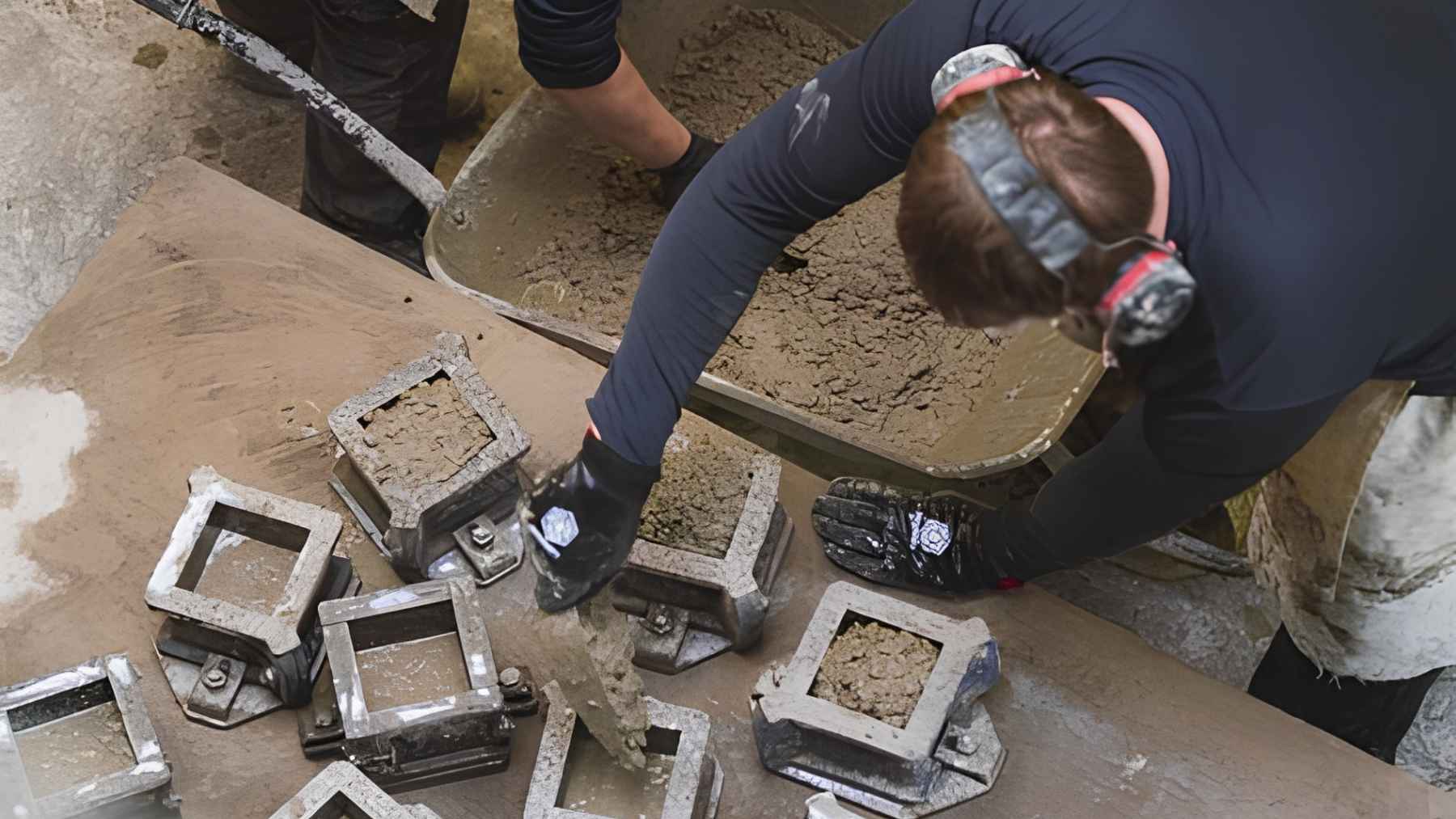
Before anyone cuts cement, thickness, or reinforcement, the mix has to prove itself. Engineers need compression tests, tension behavior, stiffness, shrinkage, cracking checks, curing control, and durability data against water, salts, and carbonation. They also need to know how the material works with local aggregates, chemical admixtures, and real job-site practices.
This is where a promising material can stumble. If graphene is not dispersed evenly, tiny amounts can clump instead of helping the whole mix. A batch that looks good in one lab may behave differently with another supplier, another climate, another crew, or another curing schedule.
The real question is not whether graphene concrete can perform well. It can, in the right setting. The harder question is whether performance can be repeated at scale, job after job, without losing safety, cost control, or quality.
What comes next
The next stage is less flashy than a breakthrough headline. It means standards, certification, repeatable supply chains, and prices that make sense for ordinary builders, not only pilot projects. Without those pieces, graphene concrete remains impressive but limited.
There is also a design question hiding in plain sight. Should the industry use graphene concrete to make everything thinner, or to make some structures last longer with the same amount of material? The answer may vary by project.
For the most part, graphene concrete looks like a way to make selected components more efficient, not a license to gamble with safety. Lighter slabs, lower cement use, and longer life are all meaningful goals. But the ruler, the lab report, and the building code still get the final word.
The main peer-reviewed work has been published in Proceedings of the Institution of Civil Engineers, Construction Materials.