Scientists in New York have developed a solar desalination system that does two jobs at once. It turns seawater into fresh water, and instead of leaving behind a dirty liquid waste stream, it pushes the remaining salts into a solid form that can be collected.
That matters because desalination is already becoming a lifeline for dry coastal regions, from California to the Mediterranean. The new work is still at laboratory scale, but it points to a cleaner way to produce water while recovering lithium, the light metal used in many rechargeable batteries.
Why this matters now
Desalination means removing dissolved salts from water so people can use it for drinking, farming, or industry. UNICEF reported that in 2024, about 2.1 billion people still lacked safely managed drinking water. That does not mean the ocean is an easy fix, but it explains why many countries keep looking at seawater when rivers, reservoirs, and aquifers fall short.
Traditional desalination has a catch. A 2019 global outlook estimated that desalination plants produced about 37 billion gallons of brine every day, more than the amount of fresh water they made. Brine is extra-salty wastewater, and when it is dumped back into the sea, it can stress marine life.
How the black metal works
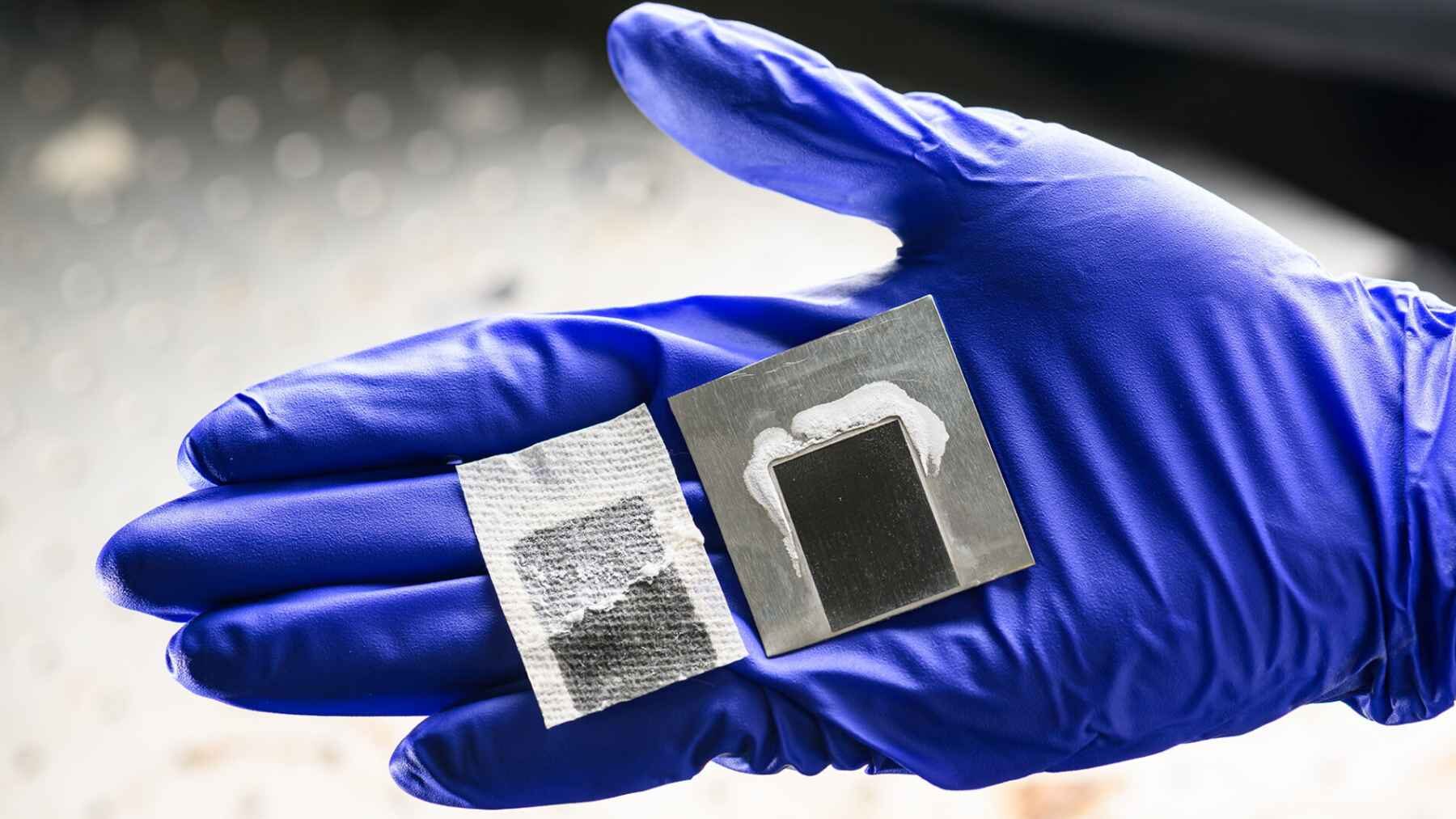
The system comes from researchers including Luheng Tang, Subhash C. Singh, Ran Wei, Tianshu Xu, and Chunlei Guo at the University of Rochester’s Institute of Optics. Their device uses black metal panels treated with extremely fast laser pulses, which carve tiny grooves into the surface.
Those grooves make the metal “superwicking,” a simple way of saying it pulls water across itself very quickly. At the same time, the black surface absorbs nearly all incoming sunlight, heating a thin layer of seawater until it evaporates. The vapor can then be condensed into fresh water.
The coffee ring trick
The clever part is not only the evaporation. It is what happens to the salt.
Anyone who has left a coffee drop on a counter has seen a dark ring form at the edge after the liquid dries. Guo’s team used that everyday effect to move salt crystals away from the working area of the panel, keeping the active surface from crusting over like an old shower head.
That matters because real seawater is messier than a lab mixture of water and table salt. It contains minerals that can form hard, stubborn crusts. In tests with water from the Atlantic, Indian, and Pacific Oceans, the Rochester system kept moving the solids to a passive collection area instead of letting them block the surface.
From waste salt to lithium
Here is where the story takes a turn. If the system gathers dry salts instead of making brine, those solids can become more than waste.
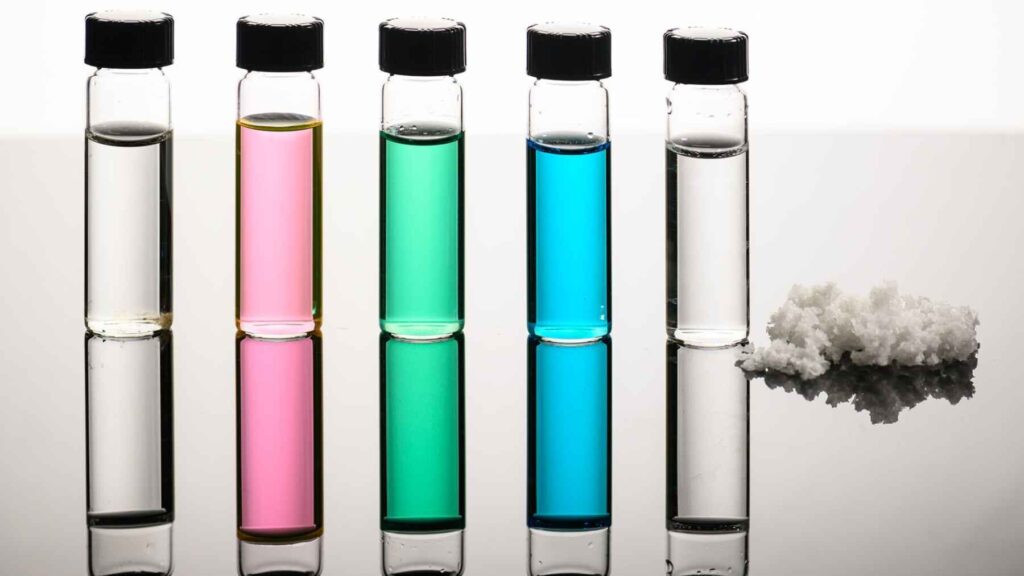
In a related paper, the team added hydrogen titanate nanoparticles inside the same kind of grooved metal surface. These particles act like tiny selective traps, catching lithium ions while letting many other dissolved materials move on. It is chemistry, but the basic idea is simple enough to sort the valuable piece from a very salty pile.
Using samples from Great Salt Lake, the researchers extracted about half of the available lithium from the leftover salts. They also showed that the lithium became much more concentrated, which could make later refining easier if the method can be scaled. As Guo put it, “pulling lithium directly from saltwater could be a very important future route.”
Cleaner water, cleaner supply chains
Lithium is in phones, laptops, electric cars, and grid batteries. Demand has been rising, and mining it from rock or pumping it from underground brines can use land, water, and energy in ways that create local controversy.
Pulling lithium from salty water would not replace mining tomorrow. But as a side benefit of desalination, it could change the math. In practical terms, water plants might someday produce fresh water, collect salts, and recover small amounts of useful material instead of paying only to manage waste.
For coastal towns and islands, the appeal is easy to picture. Fewer tanker deliveries, fewer emergency restrictions, and maybe less strain on the electric bill if sunlight can do more of the work. That is not a finished promise yet. It is a path worth testing.
Tests and limits
The main desalination paper describes a panel that operated continuously under sunlight-like testing and harvested nearly all salts as solids. The researchers also say the design can track the sun, which helps it keep collecting energy as the day changes.
Still, the word “prototype” matters. A device that works in a controlled lab setup has to prove itself against storms, fouling, maintenance costs, manufacturing limits, and the boring but important questions of plumbing and permits.
That is often where promising water technology slows down. The ocean is not a clean beaker, and communities need systems that work day after day with minimal attention. The good news is that the Rochester design was tested with real ocean samples, not just simplified saltwater.
What happens next
The next step is scale. Bigger panels would have to keep the same self-cleaning behavior, collect salts safely, condense fresh water efficiently, and recover lithium without adding new environmental problems.
If that works, the technology could fit into a more circular model for water treatment. Instead of treating brine as an unavoidable burden, desalination could become a source of both water and materials.
The main study was published in Light: Science & Applications.