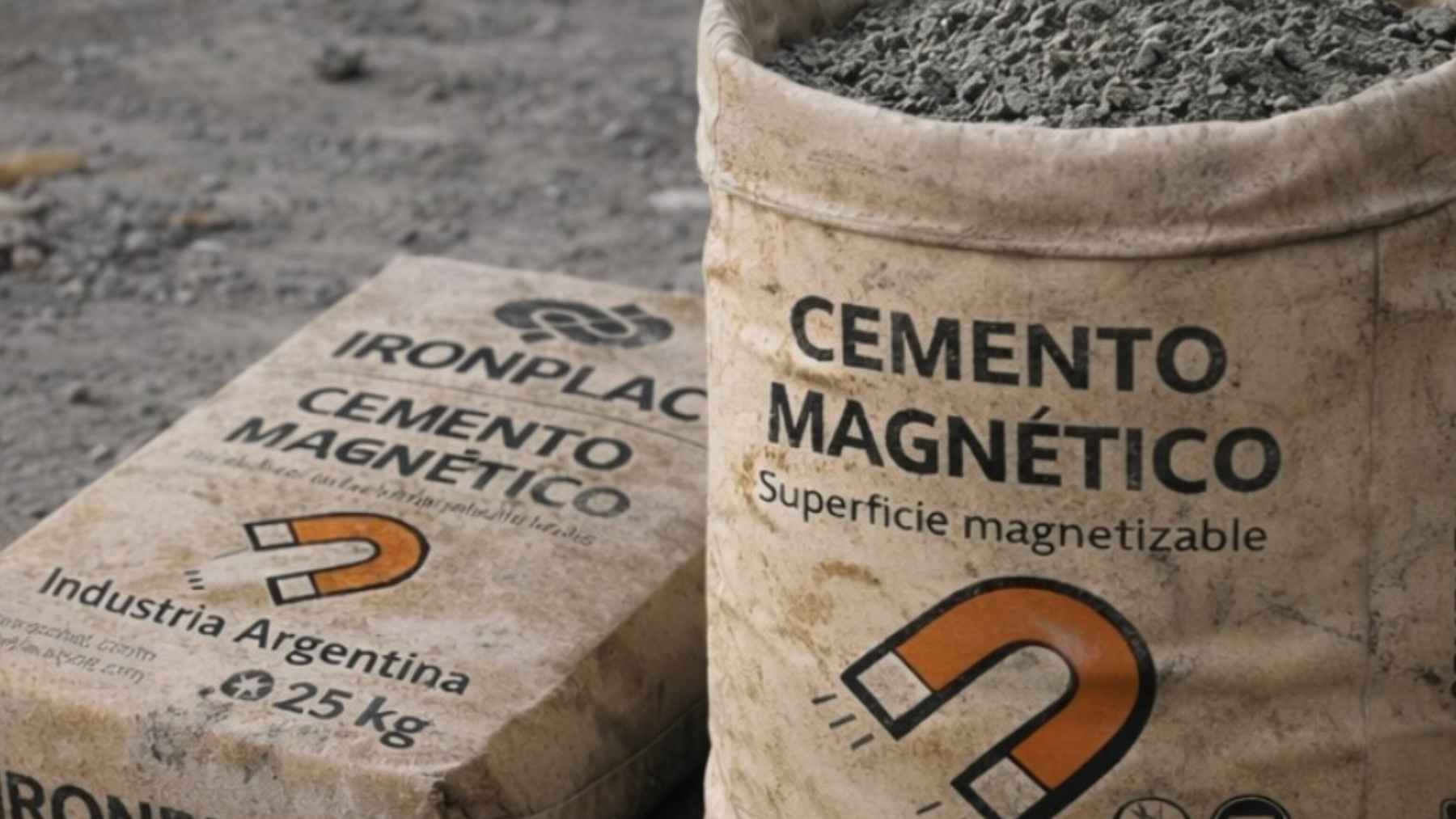
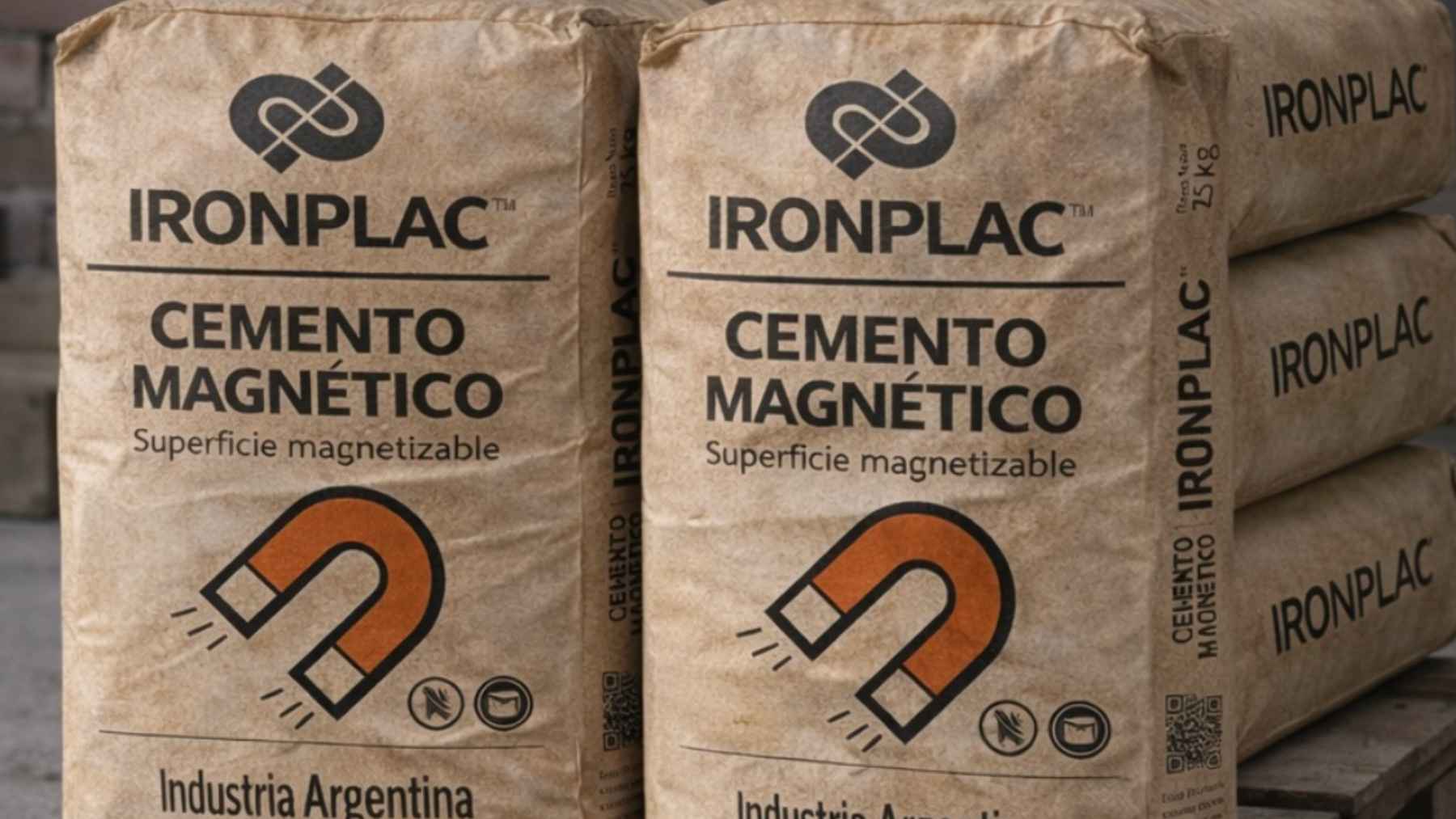
What if hanging a picture no longer meant a drill, wall anchors, dust on the floor, and one more patch job later on? Argentine inventor Marco Agustín Secchi, 29, has developed Ironplac, a magnetizable building material designed to let walls hold magnet-backed objects without nails or screws. Early pilot tests suggest the idea is more than a clever demo, but it is still in development.
The pitch is easy to grasp, even if the material itself is new. Instead of treating a wall as a passive surface, Ironplac aims to turn it into a finish that can receive magnets, making frames, tools, and accessories easier to place, remove, and rearrange. In practical terms, that could change how homes, offices, workshops, and classrooms are organized.
What Ironplac is
Ironplac is described on its official channels as a magnetizable construction system for both wet and dry construction, meaning traditional plaster-style finishes as well as panel-based interior systems. It is meant to work with cement, boards, and coatings, and it is presented as a way to transform both new and existing walls into active surfaces without drilling holes.
In interviews about the project, the inventor says the idea grew out of a very ordinary frustration. Why do people still have to drill into a wall every time they want to hang a frame, move a tool rack, or change the layout of a room? In demonstrations, he has shown walls holding items such as tools, knives, panels, and even a shovel with magnets instead of screws.
The project’s own description says the goal is to turn walls into “active” and functional surfaces. That does not mean touchscreens or electronics. It means the wall itself becomes part of the room’s storage and organization, which is a small shift in theory but a big one in everyday use.
How the wall actually works
The key point is that Ironplac is not being presented as an active magnet or an electrical system. According to the project description and the inventor’s own explanations, the material uses a special mix with mineral and ferrous fillers that gives the finished surface the ability to hold magnets while keeping the look and feel of a normal wall.
In simple terms, the wall does not stay “on” like a powered device. It behaves more like a passive surface that responds when an object carrying a magnet touches it. For wet construction, the product can be prepared like a final skim coat, mixed with water and applied much like a traditional finish.
That distinction matters. People often hear “magnetic wall” and picture a constant field pulling at anything metallic nearby, but that is not how the system has been described. The wall only does something useful when the object itself carries a magnet, which keeps the idea closer to a practical finish than to a gadget.
Why builders may care
Anyone who has ever moved into a rental, remodeled a kitchen, or rearranged a workshop knows the small mess that comes with every new hole in the wall. Drill noise, wall dust, plastic anchors, repainting, and patched spots are minor problems one by one, but they add up. A surface that lets people move objects around without fresh damage every time has an obvious appeal.
There is also a broader construction angle. UNEP says buildings were responsible for 34% of global energy demand and 37% of energy and process-related carbon dioxide emissions in 2022, while the U.S. EPA estimates that construction and demolition debris reached 600 million tons in 2018.
One magnetic coating will not solve that, of course, but more adaptable interiors could fit the wider push to reduce unnecessary rework and waste.
The bigger materials picture
Ironplac may sound unusual, but magnetic behavior in cement-based materials is not science fiction.
A 2026 paper by Hossein Bararjani and colleagues from the University of Guilan and Adelaide University, published in Results in Engineering, examined cementitious composites made with magnetic sand and magnetite powder for technical uses including wireless power transfer and magnetic sensing.
That research was aimed at infrastructure applications, not living rooms. Still, it shows the underlying materials idea is real. What makes Ironplac stand out is its everyday focus – taking a property that researchers have studied for specialized uses and pointing it at a simple home and workplace problem that most people recognize in seconds.
What happens next
For now, the project is still trying to move from prototype to product. Its creator has said it is not yet on sale, and official project posts show pilot testing and demos in real construction settings, including dry construction setups.
Reports on the invention also say the formula is moving through the Patent Cooperation Treaty route – the international filing system managed by the World Intellectual Property Organization.
There are also practical questions that matter more than buzz, including how much weight it can support over time and how well it handles repeated repositioning, humidity, or repainting. Those are the kinds of answers that usually decide whether a promising material stays a clever prototype or becomes part of ordinary construction.
That suggests the next phase is less about novelty and more about proof. If Ironplac can show consistent performance, workable pricing, and enough confidence for builders, architects, and property owners to use it beyond showpiece walls, hanging a picture with a drill may start to feel like an old habit rather than a necessity.
The main official project description has been published on Ironplac.