A working mine in the Italian Alps has just become something most people would never expect to find below a mountain. Under the rock of the Val di Non, servers are now sharing space with the region’s more traditional underground treasures: apples, sparkling wine, and cheese.
The project, known as Trentino DataMine and branded as Intacture, has completed its fundamental works after less than two and a half years of construction. Built inside the Tuenetto di Predaia quarry in northern Italy, the underground data center is being presented as a model for digital infrastructure that uses the mountain itself as part of its cooling and protection system.
Servers under the Dolomites
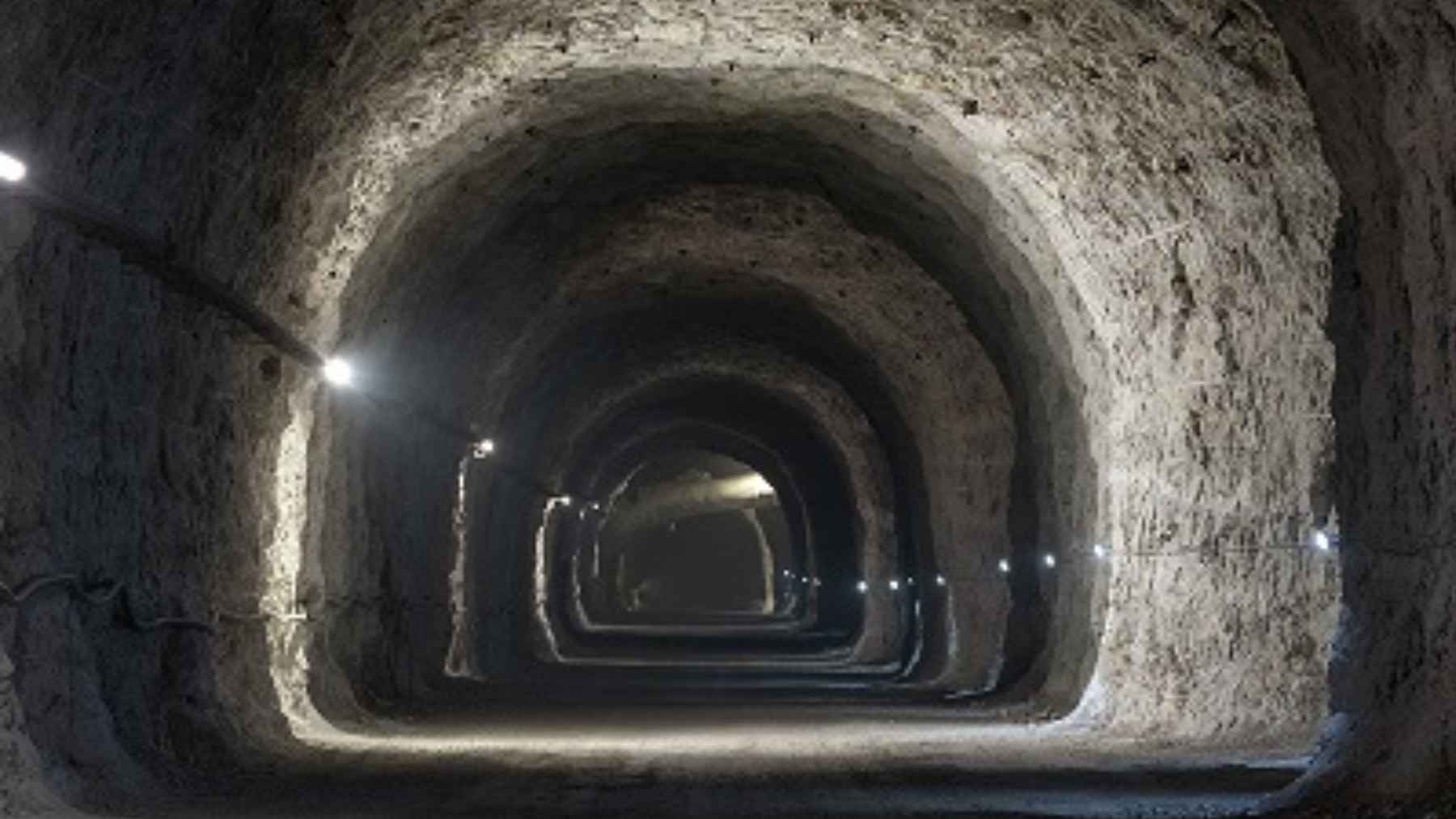
The facility sits about 328 feet below the surface, deep inside an active dolomite mine. About 80% of the structure is underground, a choice meant to reduce land use while taking advantage of the cool, stable conditions inside the rock.
That setting gives the project its unusual twist. In the same mountain where local producers have long stored apples, sparkling wine, and cheese, Trentino DataMine is now preparing to host the machines that power digital services and artificial intelligence. Strange? Maybe. But it also makes a certain practical sense.
Natural cooling changes the equation
Data centers usually need major cooling systems because servers run all day and generate heat. Anyone who has felt a laptop warm up during a long workday understands the basic problem – only here the scale is much larger.
In this case, the underground rooms stay at about 54 degrees Fahrenheit with no humidity, according to the Autonomous Province of Trento. Fresh air from the valley and the surrounding dolomite rock help cool the space without additional mechanical cooling, while the energy supply is described as entirely renewable and mostly local hydropower.
The earlier project presentation also said Intacture was designed for a power usage effectiveness below 1.25, compared with an average of 1.6 for European data centers. In plain English, that means more electricity should go directly to computing and less should be wasted on keeping the building comfortable for machines.
A big job carved into rock
This was not a case of simply putting a few server racks in an old cave. The team designed, excavated, wired, and certified a full underground technology infrastructure inside an active mine.
Official figures show that workers extracted about 2.2 million cubic feet of rock, excavated 9.3 miles of tunnels, and built a vertical shaft known as a “fornello” to connect the operating galleries with the surface. The shaft is more than 130 feet deep, turning the project into a serious engineering challenge as well as a digital one.
The center is starting with 800 kilowatts of capacity. After expansion, the plan is to scale the system in stages until it reaches 6 megawatts, enough to give the site a stronger role in Italy’s race to build infrastructure for AI, research, and advanced digital services.
Public money meets local companies
The project cost more than $58 million. About $21 million came from Italy’s National Recovery and Resilience Plan, while the rest came through the public-private partnership behind Trentino DataMine.
The University of Trento is the implementing body and scientific guide for the project. Private partners include Covi Costruzioni, Dedagroup, GPI, and ISA, the Istituto Atesino di Sviluppo, bringing together construction, IT services, health technology, and investment experience.
Achille Spinelli, vice president of the Autonomous Province of Trento, said the infrastructure could become a national strategic hub for research, AI technologies, and new digital development. Francesco Ubertini, president of CINECA, described the site as “a place of enormous potential.”
Less land on the surface
One of the strongest environmental arguments is land use. The 2024 project presentation said that if Intacture had been built fully above ground, it would have occupied the equivalent of 21 Olympic-size swimming pools. Underground, it uses a little more than one.
That matters because data centers are spreading quickly as cloud computing and AI demand more processing power. Putting that infrastructure underground will not solve every energy problem, but in places with the right geology, cool air, and renewable power, it can reduce some of the pressure on land and cooling systems.
At the end of the day, the Italian project is trying to make the mountain do part of the work. Not magic, just smart siting.
Europe looks below ground
Trentino DataMine is also part of a wider European trend. Data Center Dynamics notes that underground data centers are gaining attention because they can offer physical protection and lower environmental impact.
Other examples already exist. Cegeka announced an underground data center project in Belgian Limburg, Mount10 converted Swiss Alpine bunkers into data centers in the 1990s, and Norway’s Lefdal Mine Datacenter opened in 2017.
Still, the Trentino project stands out because it is built in an active mine where traditional local activities continue nearby. That mix of agriculture, geology, renewable energy, and AI infrastructure makes the story feel less like a futuristic stunt and more like a test case for what digital sustainability could look like.
The official press release was published on the Autonomous Province of Trento’s website.