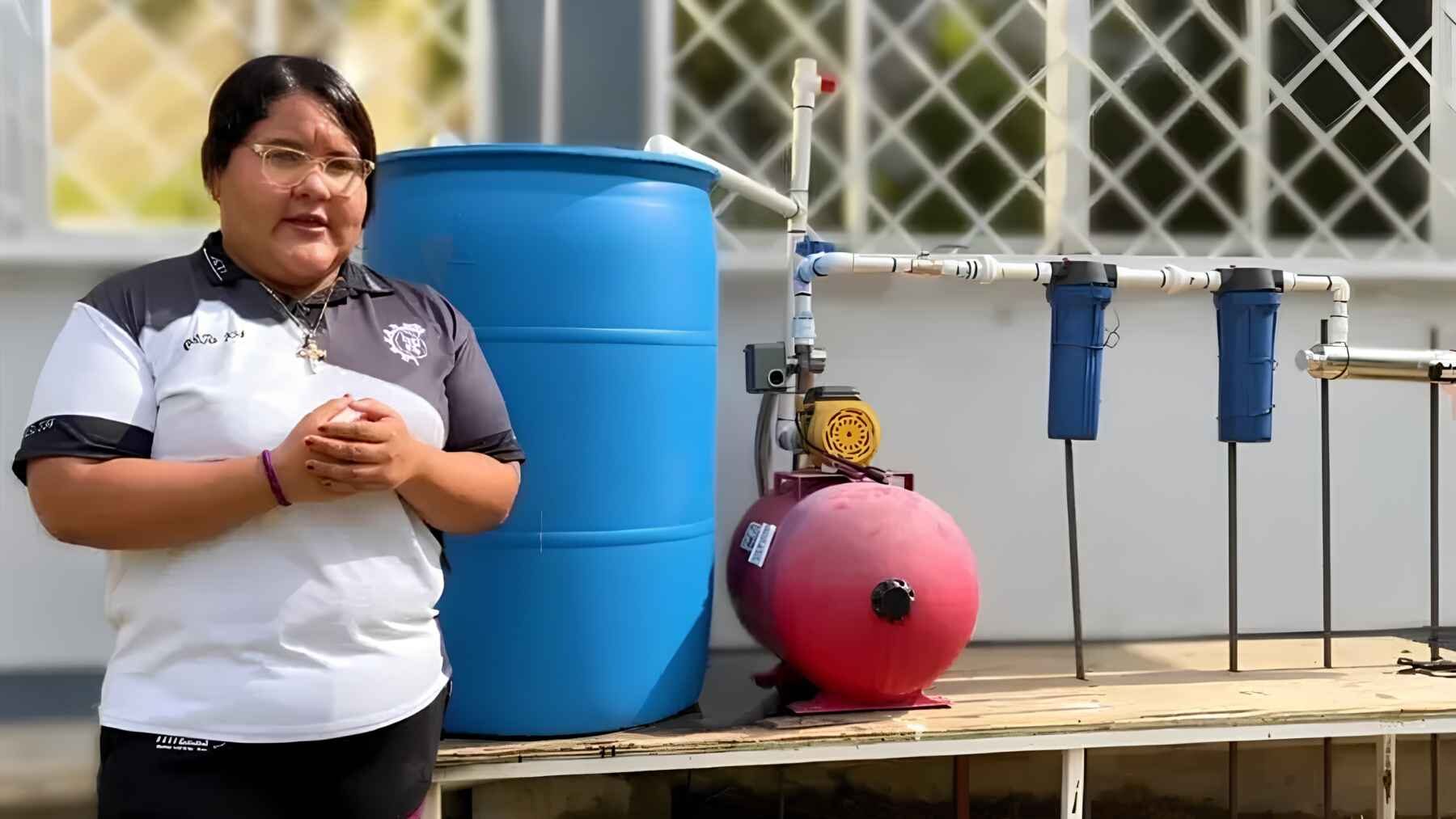
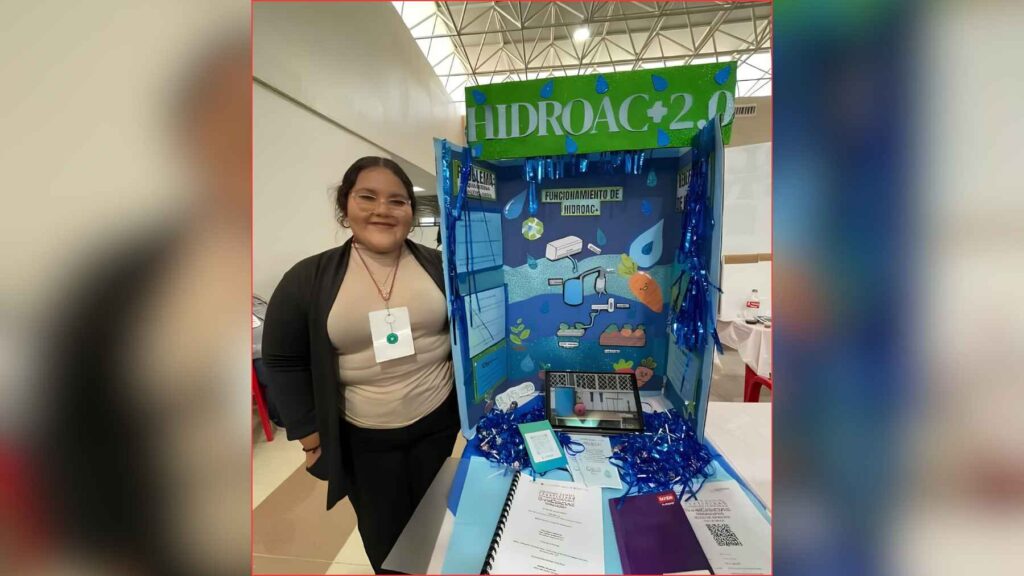
In Nuevo Laredo, the same machines that make summer heat bearable may now help grow food. Dania Yasaret Saldaña Martínez, a student from CBTis 234 in Tamaulipas, was named the Northeast regional winner in Mexico’s 2026 National Youth Water Prize for “HidroAC+,” a system that captures and reuses air conditioner condensate for crops.
The idea lands at an awkward but familiar moment for many hot cities. Air conditioners run for hours, electric bills climb, and thin streams of water drip away from drain hoses, often without a second thought. In border communities where temperatures can exceed 104 degrees Fahrenheit for months and water cuts affect daily life, that wasted trickle starts to look less like waste and more like a question. What else are we letting drain away?
The water hiding in plain sight
HidroAC+ starts with a simple observation. When warm, humid air meets the cold coils of an air conditioner, moisture condenses into liquid water, much like droplets forming on a cold glass during that sticky summer heat we all know.
Dania’s system is designed to capture that water instead of letting it fall into the street or flow into a drain. From there, the liquid is treated and enriched with nutrients before being used to feed crops.
Once conditioned, the water supports two growing methods. One is hydroponics through the Nutrient Film Technique, where a shallow stream of nutrient-rich water flows over plant roots. The other is raised-bed cultivation, giving the project a hybrid design rather than a single lab setup.
Why treatment matters
At first glance, air conditioner condensate sounds almost clean. Extension specialists note that it begins much like distilled water, but after it passes over coils, pans, and drain lines, it can pick up dust, bacteria, fungi, and traces of materials from the equipment.
That is why the treatment step is not a nice extra. It is the safety line. The project does not present condensate as drinking water, and experts generally do not recommend untreated AC condensate for direct human consumption or casual use on edible plants.
Effectively, HidroAC+ is not just a bucket under a hose. It is a small water-reuse system that recognizes both sides of the problem, the value of the water and the need to handle it carefully.
Hydroponics changes the math
The hydroponic side is what makes the idea especially interesting for food production. The Food and Agriculture Organization of the United Nations says hydroponics can use up to 90% less water than conventional cultivation, largely because water can be recirculated and delivered directly to roots.
That matters in places where every gallon has to work harder. A lettuce plant in a small hydroponic setup does not need a field, deep soil, or broad irrigation. It needs a controlled flow, nutrients, and monitoring.
Still, there is nuance here. Hydroponics is not magic. Pumps, nutrient mixes, filters, and regular maintenance all matter, and if the system is neglected, the savings can quickly lose their shine. The promise is real, but so is the homework.
A school project with a bigger message
The Premio Nacional Juvenil del Agua is not just a science fair with a nice logo. Its 2026 call describes the contest as Mexico’s most important youth competition in water issues and asks students ages 15 to 20 to present projects on sustainable water management.
The official contest page lists HidroAC+ as a “Sistema Híbrido de Cultivo con Agua de Condensación de Aires Acondicionados.” In other words, the judges were not only looking at a clever device. They were looking at a practical answer to a local water problem.
That local focus is the heartbeat of the story. Nuevo Laredo is not an imaginary test bed. It is a city where heat, water interruptions, school life, and household budgets collide. A project that can be built with accessible materials speaks directly to families, schools, and neighborhoods trying to stretch limited resources.
Small systems can still matter
No one should pretend that AC condensate will replace a city’s water network. It will not. A household drain line cannot solve drought, aging infrastructure, or the politics of water allocation.
However, small systems can do something important. They can reduce waste at the point where it happens, especially in schools, homes, offices, and community centers where air conditioning already runs for long hours. The U.S. Environmental Protection Agency even includes AC condensate among the possible sources in its non-potable water reuse modeling, alongside rainwater and graywater.
That kind of reuse thinking is becoming more valuable as cities get hotter. Not every solution needs to begin with a massive plant, a long pipeline, or a billion-dollar plan. Sometimes it begins with noticing the puddle under the air conditioner.
What comes next for HidroAC+
The next step for HidroAC+ would be testing at a larger scale. How much water can different types of air conditioners produce in local conditions? Which filters are enough? Which crops grow best, and how often should the water be checked?
Those questions do not weaken the project. They make it stronger. A good environmental idea should survive measurements, maintenance, and day-to-day use, not just a presentation board.
For now, Dania Yasaret Saldaña Martínez has offered a practical reminder from a hot border city. The water crisis is huge, but some answers may already be dripping quietly from the machines we use every day.
The official statement was published on the Premio Nacional Juvenil del Agua ‘s website.