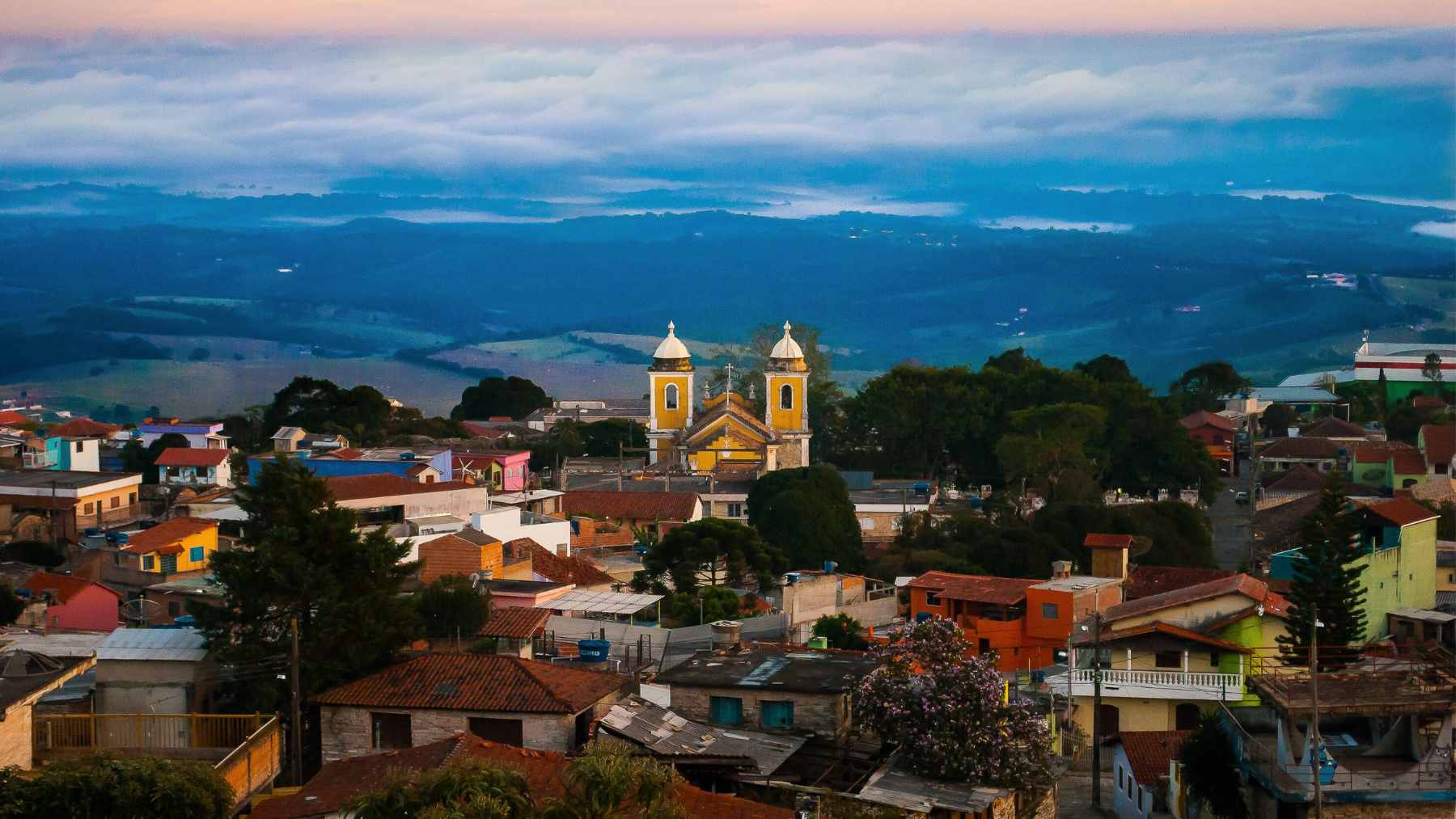
High in southern Minas Gerais, a small Brazilian city has become famous for looking as if it grew straight out of the mountain beneath it. São Tomé das Letras sits around 4,724 feet above sea level, where quartzite slabs cover streets, shape facades, and hold together churches built generations before modern cement became the default.
The result is part heritage site, part mining town, and part magnet for travelers looking for waterfalls, caves, sunset views, and the kind of mystery that makes people look twice at a dark grotto. But the story is not just charming.
The same stone that gives São Tomé its identity also raises a hard question for the future. How much extraction can a fragile mountain landscape carry?
A city made from its own mountain
Long before the city became a tourism brand, residents used what the Serra da Mantiqueira gave them. Quartzite, locally known as Pedra São Tomé, splits into flat slabs, so builders stacked irregular pieces into thick walls, paved streets, and framed religious buildings.
The Instituto Estadual do Patrimônio Histórico e Artístico (IEPHA) says the Igreja Matriz, the Igreja de Nossa Senhora do Rosário, and historic-center buildings were made with dry stones laid one on another without binding agents. The roads too were paved with large irregular stone blocks.
The engineering hiding in the rough stone
At first glance, walls made without mortar can look almost improvised. In reality, dry-stone construction depends on weight, fit, balance, and experience passed from one worker to another.
Each slab must be chosen for how it rests against the next one. A bad fit can create a weak spot, while a good one can help a wall stand through wind, humidity, and mountain temperature swings. It is old-school engineering, the kind you can read with your hands.
Heritage built around faith and legend
The official history of the historic center is tied to the reported discovery of an image of Saint Thomas in a grotto, a tradition that led to the building of a chapel starting in 1770. The current Matriz church began in 1785, according to IEPHA.
That origin story still matters because São Tomé does not separate stone from memory very easily. In practical terms, the streets, churches, and topography form one cultural landscape, protected at state level after heritage decisions in 1985 and a 1996 correction that extended protection to the historic center and Matriz church.
Why mystics and hikers keep coming
So why do people keep traveling there? Part of the answer is visible in everyday daylight, with waterfalls, lookout points, caves, rock art references, and the famous Casa da Pirâmide drawing visitors into the mountains.
Another part is harder to measure. São Tomé das Letras has long been surrounded by stories about underground passages, unusual energy, ufology, and spiritual retreats.
In 2025, the Minas Gerais government said the city was being repositioned as a destination of spirituality and connection, with tourism experiences built around nature, ancestral culture, sunset colors, mineral formations, meditation, caves, waterfalls, and guided astronomical observation.
Pedra São Tomé became official
The same quartzite that shapes the old streets is also an economic product. In July 2024, Brazil’s National Institute of Industrial Property (INPI) recognized the Região Pedra São Thomé as a Geographic Indication in the Denomination of Origin category for quartzite slabs and foliated quartzite used mostly as ornamental and coating material.
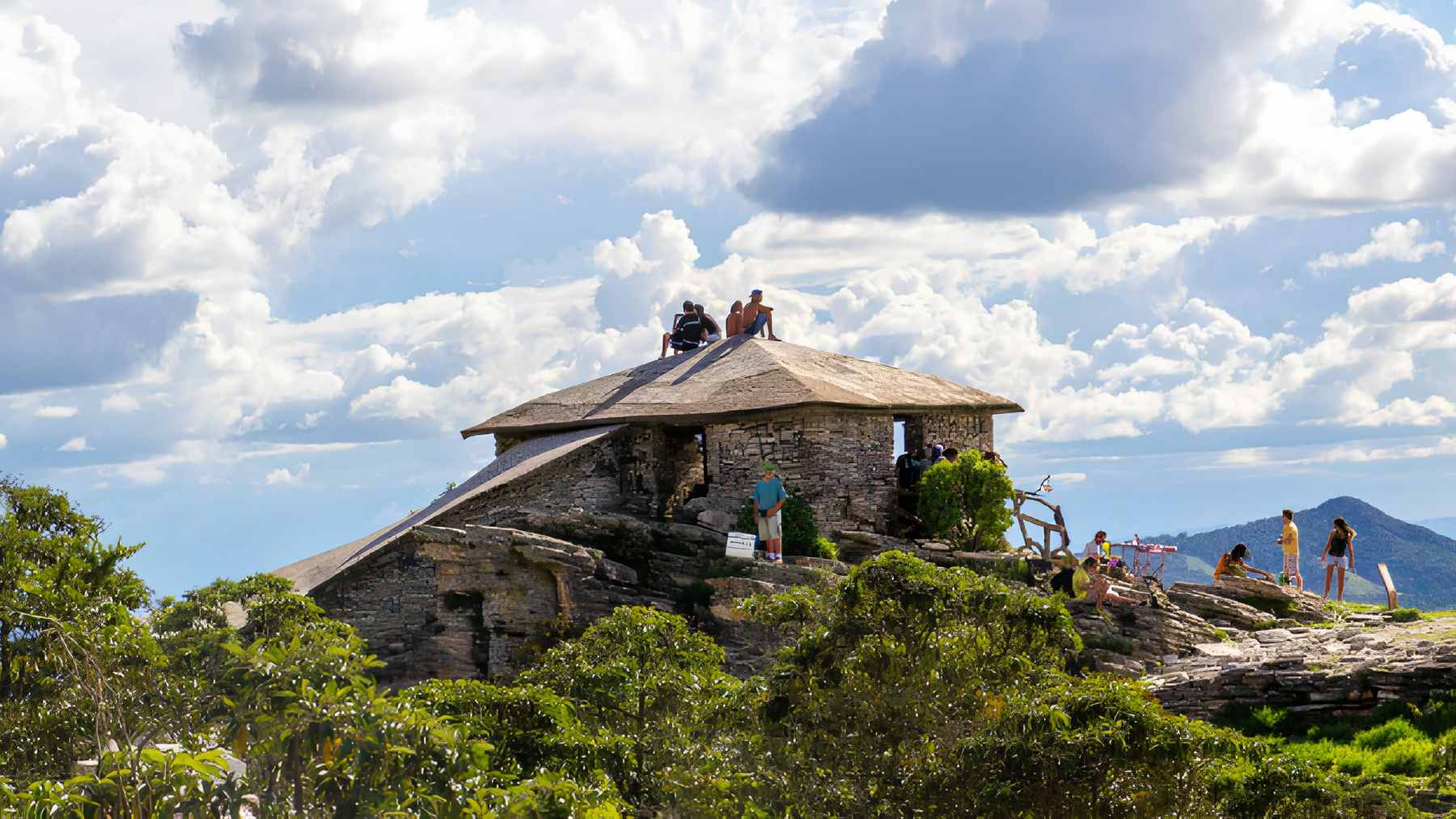
INPI said the stone is a metamorphic quartzite with white, yellowish, or pink tones, low thermal conductivity, anti-slip qualities, and a tabular structure that allows it to separate into slabs for floors, walls, and outdoor surfaces.
That helps explain why builders reach for it around pools and patios, especially where sun-baked pavement can turn a barefoot walk into a test of courage.
The environmental question is getting sharper
Still, no city can quarry its own symbol without consequences. Mining supports jobs, transport, workshops, commerce, and family income, but it also changes the mountain face and puts pressure on roads, watercourses, and scenic areas that tourism depends on.
That is the tightrope São Tomé has to walk. A Geographic Indication can help organize origin, quality, and regularity in the supply chain, but it is not the same thing as environmental protection. Licensing, monitoring, and recovery of quarry areas still matter.
A living place, not a museum
It would be easy to turn São Tomé das Letras into a postcard and leave it there. Stone streets, white churches, caves, legends, orange sunsets – the image almost writes itself.
But the city is more interesting than that. It is a place where geology became architecture, architecture became tourism, and tourism now has to share space with mining and conservation. At the end of the day, the mountain is not just scenery. It is the city’s memory, its workplace, and its warning.
The official statement was published on the Agência Minas website.