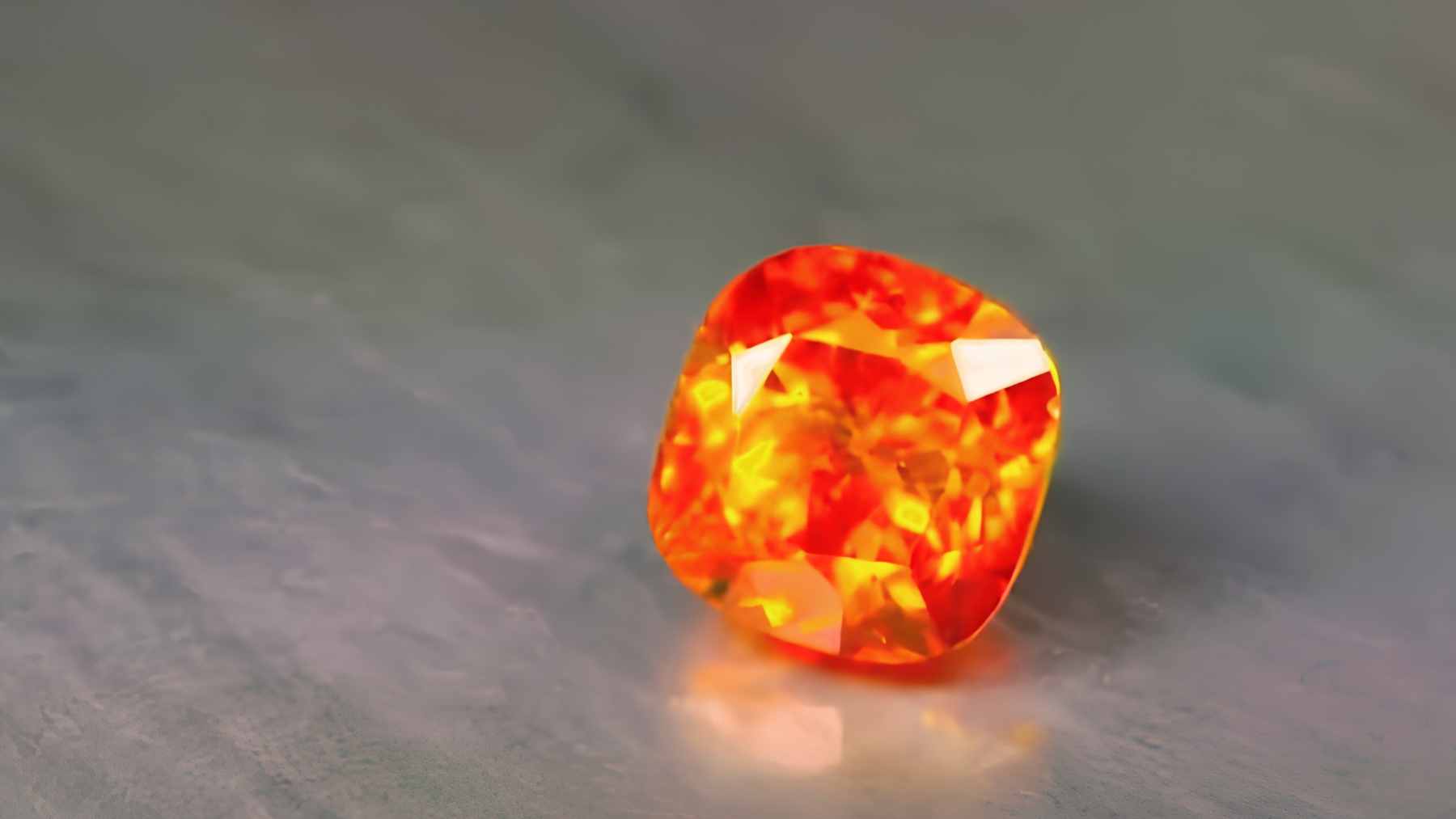
A tiny reddish-orange gem from Myanmar has become one of the strangest trophies in modern geology. The mineral is called kyawthuite, and science has documented only one natural crystal so far.
That single sample weighs 1.61 carats, or about 0.01 ounces, which is less than many crumbs you might brush off a kitchen counter. However, its scientific value is much bigger than its size, because it represents an officially recognized mineral species found in just one confirmed natural specimen.
A mineral with one sample
Kyawthuite was approved as a valid mineral species by the International Mineralogical Association in 2015. The official International Mineralogical Association (IMA) mineral list identifies kyawthuite as an approved mineral from Myanmar under the 2015 approval number.
The mineral was later described in detail by Anthony R. Kampf of the Natural History Museum of Los Angeles County, George R. Rossman and Chi Ma of the California Institute of Technology, and Peter A. Williams of Western Sydney University. Their work focused on a single water-worn crystal found near Mogok, a gem-rich area in Myanmar.
That is what makes the story so unusual. Diamonds, rubies, and emeralds can be rare in a jewelry store, but they are known from many places. Kyawthuite is different because, for now, its natural record rests on one tiny crystal.
Why it stands out
A mineral is not defined only by what it looks like. Scientists also examine its chemical makeup and the way its atoms are arranged, almost like checking both the ingredients and the recipe.
Kyawthuite contains bismuth, antimony, and oxygen. Mindat, a mineral database maintained by the Hudson Institute of Mineralogy, lists it as the only approved mineral of its bismuth-antimony oxide group.
In everyday terms, that means the crystal is not just a pretty orange stone. Its internal structure is special enough for scientists to separate it from minerals that may look similar or contain related elements.
Small but heavy
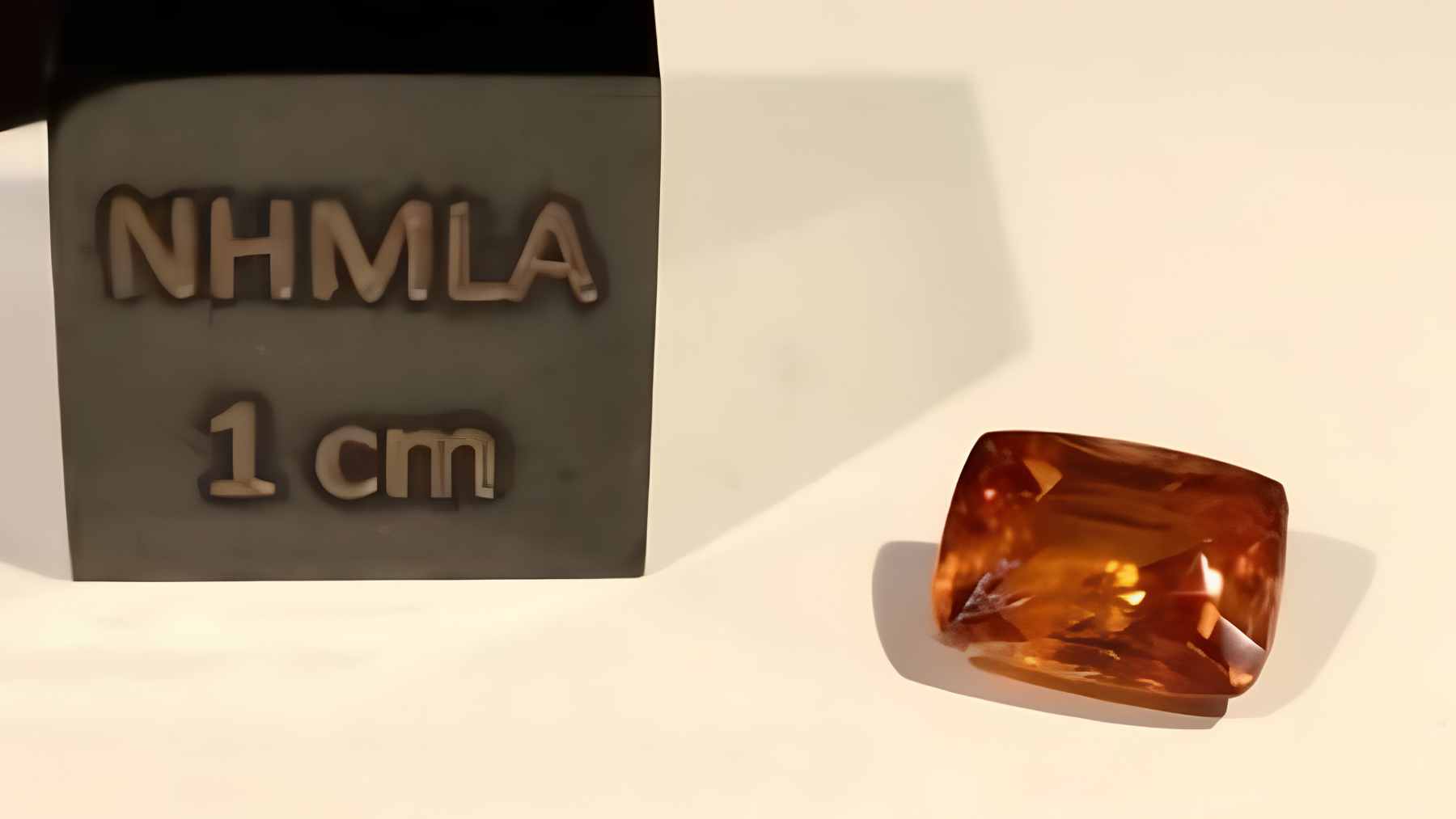
The known crystal is reddish orange, transparent, and has a diamond-like shine. Its hardness is about 5.5 on the Mohs scale, which means it is harder than a copper coin but softer than quartz.
It is also dense. The measured density reported for kyawthuite is about 0.30 pounds per cubic inch, so a larger piece would feel surprisingly heavy in the hand. Of course, no larger natural piece has been confirmed.
How can something so small matter so much? In mineralogy, a type specimen is the reference sample used to define a mineral. In this case, that reference is a faceted 1.61-carat gem.
Found in water-worn gravel
The crystal was found in alluvium, which means loose sediment such as gravel or sand moved by water. That detail matters because the place where a gem is picked up is not always the place where it formed.
Mindat lists the type locality as Chaung-gyi-ah-le-ywa, in the Mogok area of Myanmar’s Mandalay Region, and notes that the crystal likely came from a pegmatite. A pegmatite is a coarse-grained rock that can grow unusual crystals during the final stages of cooling magma.
That possible origin helps explain the odd chemistry. Pegmatites can concentrate elements that do not fit neatly into common minerals, giving nature a small window to make something rare.
Mogok’s unusual geology
Mogok has a long reputation for remarkable gemstones. The area is known for rubies, sapphires, spinels, peridot, and moonstone, according to the American Museum of Natural History.
Still, kyawthuite is not simply another rare gem from a famous mining district. It is a scientific outlier, the kind of mineral that shows up once and then refuses to appear again, at least in the confirmed record.
That makes Mogok feel less like a normal mining area and more like a natural laboratory. Under the right mix of heat, fluids, rock chemistry, and time, the region has produced minerals that are difficult to repeat.
Rare does not always mean priceless
There is an important distinction here. A gemstone can be expensive because buyers want it, because its color is beautiful, or because jewelers can sell it at a premium.
Kyawthuite’s importance is different. Its rarity is based on confirmed natural occurrence, not market demand. So far, the scientific databases consulted list only one locality and one preserved natural type specimen.
That does not automatically make it the most expensive stone in the world but by the standards of mineral science, it sits in an extreme category, where rarity means almost no natural material exists for study.
What the crystal teaches us
Kyawthuite is a reminder that Earth still holds surprises, even in an age of satellites, global databases, and powerful laboratory tools. A stone weighing about 0.01 ounces can still force scientists to update the catalog of known minerals.
It also shows why museum collections matter. The type material is kept in the Mineral Sciences Department of the Natural History Museum of Los Angeles County under catalog number 65602, where it remains available as the official reference for future research.
For most people, the crystal will never be more than a name and a photograph. For geologists, though, it is a small clue about how specific and selective Earth’s mineral-making processes can be.
The main study has been published in Mineralogical Magazine.