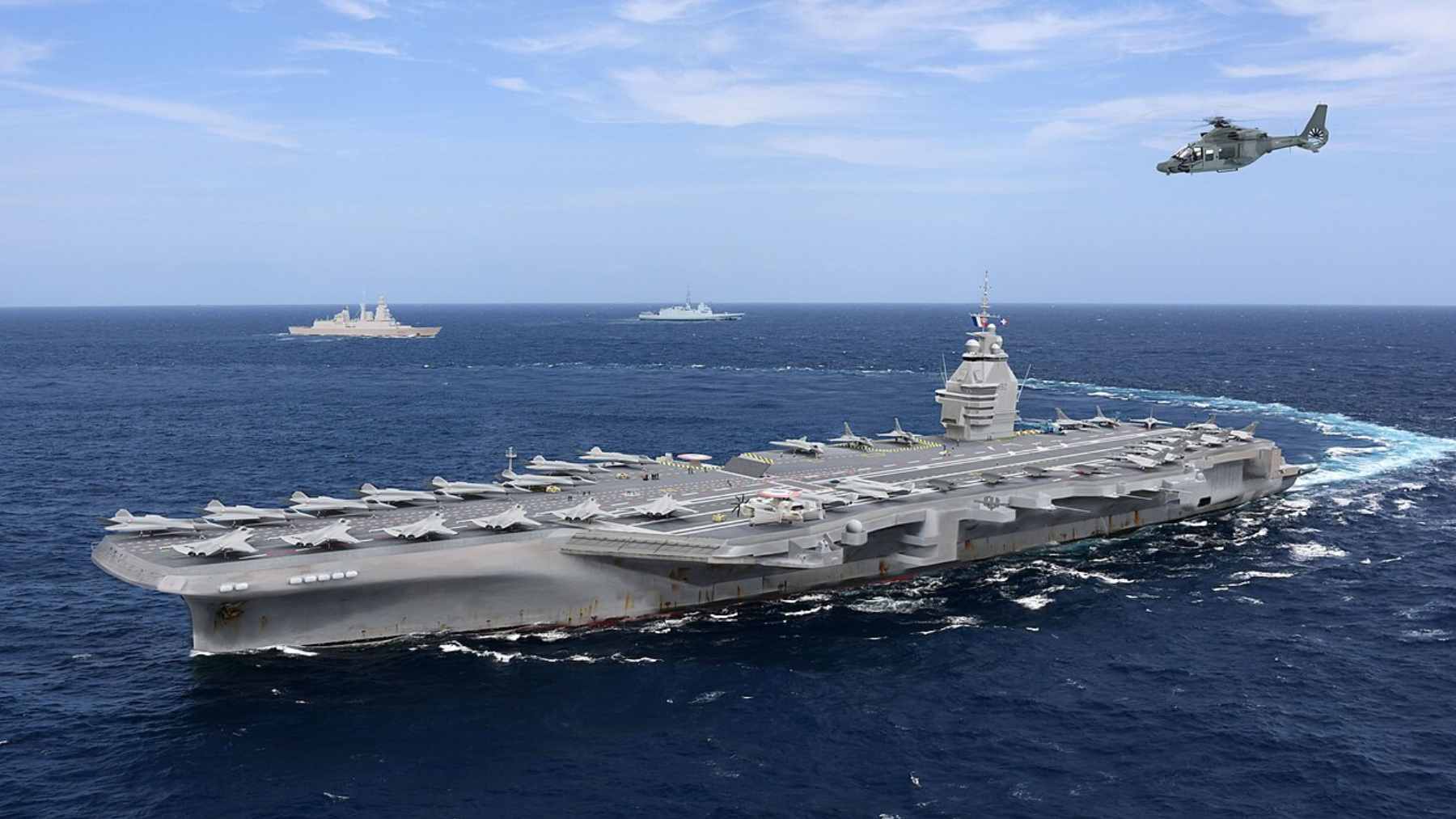
France has chosen the future of its navy, and it comes with a very large price tag. The country’s next nuclear-powered aircraft carrier, now named France Libre, is expected to enter service in 2038 as the replacement for the Charles de Gaulle, the only aircraft carrier France operates today.
At about 1,017 feet long and roughly 86,000 U.S. tons, the new ship will be the largest warship ever built in Europe. But the real question is not just how big it is. It is whether one giant floating air base still makes sense in an age of drones, long-range missiles, and strained defense budgets.
A floating air base
An aircraft carrier is, in simple terms, a moving airport at sea. It lets a country send fighter jets close to a crisis without asking another government for permission to use a runway.
That idea matters deeply to France. Paris calls it “strategic autonomy,” meaning the ability to act on its own when national interests are at stake. President Emmanuel Macron put it more sharply when he said France must be “strong at sea” in what he described as an age of predators.
Why France Libre is different
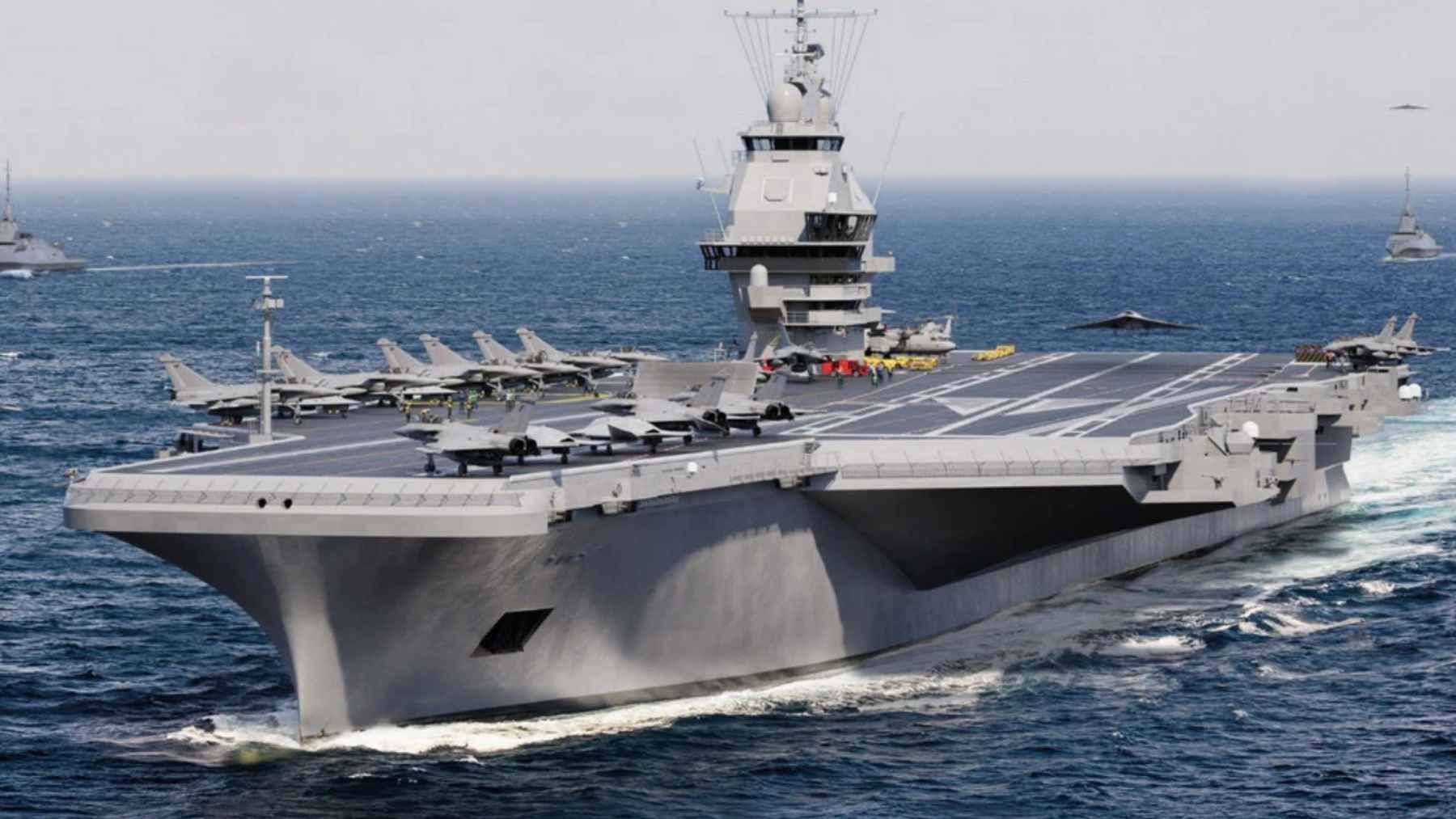
France Libre is not just a larger version of the Charles de Gaulle. It is planned to be about 295 feet wide, with a flight deck of roughly 183,000 square feet and room for about 2,000 people on board.
The current Charles de Gaulle is about 856 feet long and displaces about 46,000 U.S. tons. In everyday terms, France is moving from a powerful but compact carrier to something much closer to the scale of the world’s biggest naval powers, even if it remains smaller than the U.S. Navy’s Ford-class carriers.
The American technology inside
Here is the twist. A ship built to protect French independence will rely on U.S. launch technology.
France Libre is expected to use electromagnetic catapults and advanced landing gear from General Atomics. These systems use electric power to launch and recover aircraft more smoothly than older steam systems, and they can handle a wider mix of planes, from heavy surveillance aircraft to lighter drones.
Why not build a French version? For the most part, the reasons are time and cost. French officials have said buying the American system is more realistic than trying to create a domestic alternative on the same schedule.
Built for aircraft still coming
The new carrier is being designed for today’s Rafale M fighters, but also for aircraft that are not fully here yet. That includes upgraded Rafale jets, future combat drones, and the next generation of European fighter aircraft.
That makes France Libre a bet on the 2040s as much as the 2030s. What will naval air combat look like then? Nobody can say with total confidence, so the ship is being built with more electrical power, more space, and more flexibility than its predecessor.
The Charles de Gaulle problem
The Charles de Gaulle entered service in 2001. It has given France a rare European ability to project air power from the sea, but having only one carrier creates a simple problem.
When the ship is in maintenance, France has no carrier available. When it deploys, as it did to the Mediterranean in March 2026 during the Middle East crisis, it shows exactly why Paris values the capability. It can move fast, carry aircraft, and operate from international waters without waiting for a host country.
The price of independence
The program is expected to cost about $12 billion. That is not just a line in a military budget. It is money that could also fund submarines, frigates, missiles, drones, or air defenses.
Supporters point to the industrial side as well. The program involves hundreds of suppliers, many of them small and medium-sized French companies, and it helps preserve the know-how in shipbuilding and nuclear propulsion.
Still, some lawmakers have already questioned whether France can afford such a project while public finances are under pressure.
The risk nobody can ignore
Big carriers are powerful, but they are also obvious targets. Recent naval debates have focused on whether drones, long-range anti-ship missiles, and submarines can make large surface ships harder to protect in a major war.
That does not mean carriers are useless. They move, they travel with escorts, and their aircraft help defend them. But the balance is changing, and France is buying a ship whose most important years will come on a battlefield that may look very different from today’s.
France has made its choice
At the end of the day, France Libre is about more than steel, reactors, and catapults. It is a statement that France still wants the ability to show up with force, far from home, without asking anyone else for the keys to an air base.
That is the unique angle here. The carrier is not only replacing an aging ship. It is testing whether France’s old idea of independence can survive the new reality of war at sea.
The official press release has been published on Naval Group’s website.