Bosch has spent more than a decade building its e-bike reputation around mid-drive motors, the kind mounted near the pedals and favored for power, balance, and tougher terrain. Now the company is making a notable shift with Hub Line, its first rear-hub motor for urban e-bikes, a compact drive system meant to disappear into the back wheel rather than dominate the frame.
The vision is simple enough: city riders may not need the biggest motor or the largest battery. For many commuters, the better question is whether an e-bike feels light, quiet, easy to carry, and normal enough to use every day, even when there are stairs, traffic lights, narrow hallways, and that familiar rush-hour noise all around.
Why the wheel matters
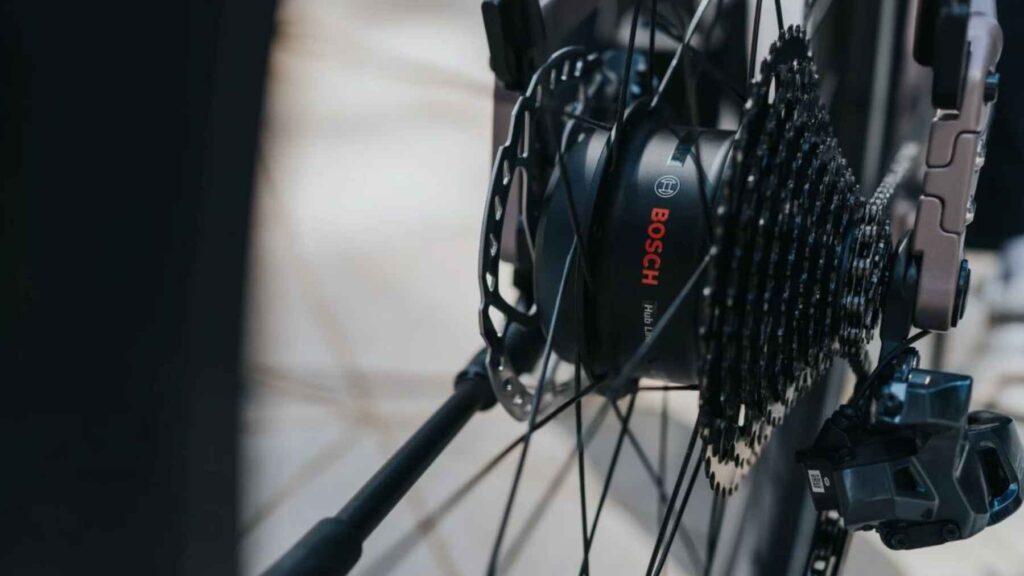
Bosch says the Hub Line was developed specifically for urban e-bikes, with the motor integrated into the rear wheel hub for a cleaner, more minimal look. The unit weighs about 5 lbs. and delivers about 33 ft.-lbs. of torque, with peak power of up to 400 watts.
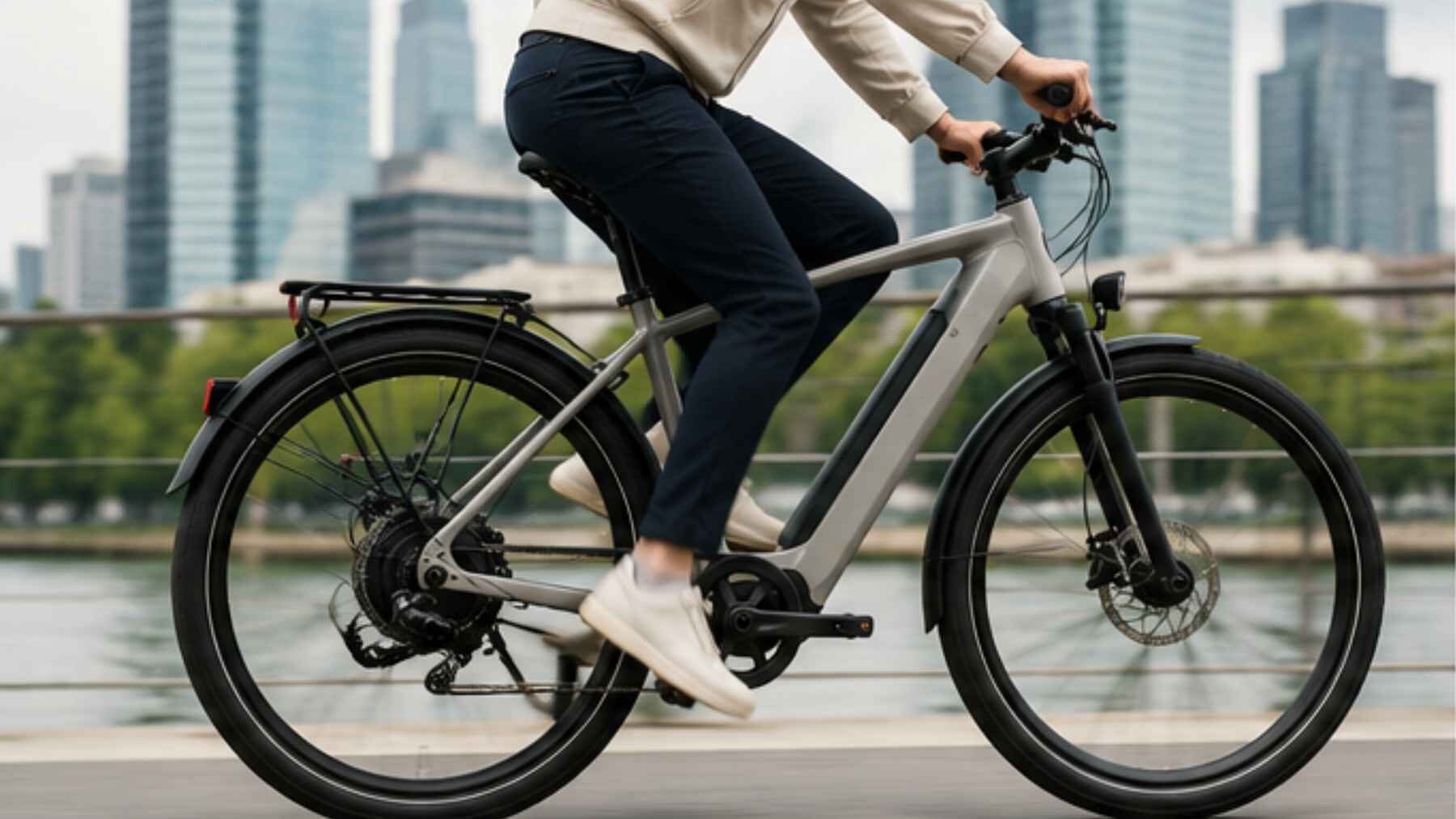
That is a big design change for a company long associated with mid-drive systems. A rear-hub motor can free up the bottom bracket area, helping designers build slimmer frames that look closer to conventional bicycles.
That matters in everyday life. A bike that looks less bulky may feel easier to bring into an apartment, park outside a café, or roll onto a train without drawing quite so much attention.
A more natural ride
Bosch says the Hub Line uses intelligent sensors to adjust support while the rider pedals. While riding, the system can respond to how hard someone is pressing, how fast they are pedaling, and what kind of city riding situation they are in.
The motor also decouples above about 15.5 mph, which lets the bike continue rolling with very little resistance once electric assistance stops. Anyone who has felt an e-bike suddenly become heavy after the motor cuts out knows why that detail matters.
It is not trying to be a mountain-bike powerhouse. Instead, the design seems aimed at the start-and-stop rhythm of the city, where the hard part is often getting moving after a red light or keeping momentum through light hills and traffic.
The smaller battery is the point
Alongside the motor, Bosch introduced the PowerTube 360, its slimmest smart-system battery so far. It weighs about 4.6 lbs., has 360 watt-hours of capacity, and can deliver more than 50 miles of range in Eco mode under favorable conditions, according to Bosch.
At first glance, that may sound modest compared with larger e-bike batteries, but the trade-off is obvious. A smaller battery can reduce weight, shrink the frame profile, and make the whole bike feel less like a machine and more like something you actually want to ride to work.
For longer trips, Bosch says the system can be extended with the PowerMore 250 range extender. For the most part, though, Hub Line is not chasing the longest possible ride, it is chasing the kind of daily mobility that replaces short car trips, school runs, grocery stops, and quick commutes.
Connected bikes are growing up
The new system is part of Bosch’s smart system, which links the motor and battery to the eBike Flow app. Through that app, riders can access features such as navigation, personalization, theft protection, and over-the-air updates.
That last feature is easy to overlook. We are used to phones and electric cars getting software updates, but bicycles have traditionally been far more static. You bought the bike, and that was more or less the product.
Now that line is changing. The modern e-bike is becoming a rolling platform, with software that can improve features, refine assistance, and add digital security over time. That is useful, but it also raises a very practical expectation. If bikes are becoming smarter, they also need to stay simple enough for regular people to trust.
Early models show the idea
The first bikes using the system show where Bosch thinks the market is heading. Canyon’s Roadlite:ON CF pairs the Bosch Hub Line motor with a Gates belt drive and single-speed setup, creating a low-maintenance urban bike with an estimated range of about 56 miles in Eco mode.
Vello is taking the idea in another direction with the VIA+, a compact folding e-bike that uses the Bosch HubLine rear motor and starts at about 36.4 lbs. That matters for commuters who combine cycling with stairs, elevators, trains, or small apartments.
Two very different bikes, same basic bet. Make the e-bike lighter, cleaner, and less intimidating, and more people may see it as a daily tool rather than a weekend gadget.
What this means for cities
Bosch’s move comes after the pandemic-era cycling boom gave way to a tougher, more competitive bike market. In Europe, industry data has shown pressure from inventory, discounting, and weaker demand, even as e-bikes remain an important part of the overall bicycle business.
That helps explain why lightweight urban systems are getting so much attention. The next wave of e-bike adoption may not come from riders who want bigger batteries and more power. It may come from people who want a quiet, good-looking bike that saves time, cuts exhaust fumes, and makes the electric bill for charging feel almost irrelevant next to the cost of driving.
Of course, technology alone will not fix urban transportation. Safer bike lanes, secure parking, and sensible local rules still decide whether people feel comfortable riding every day. But when the hardware becomes easier to live with, the switch from car to e-bike becomes a little less dramatic.
Small changes can move big habits.
The official press release was published on Bosch Media Service.