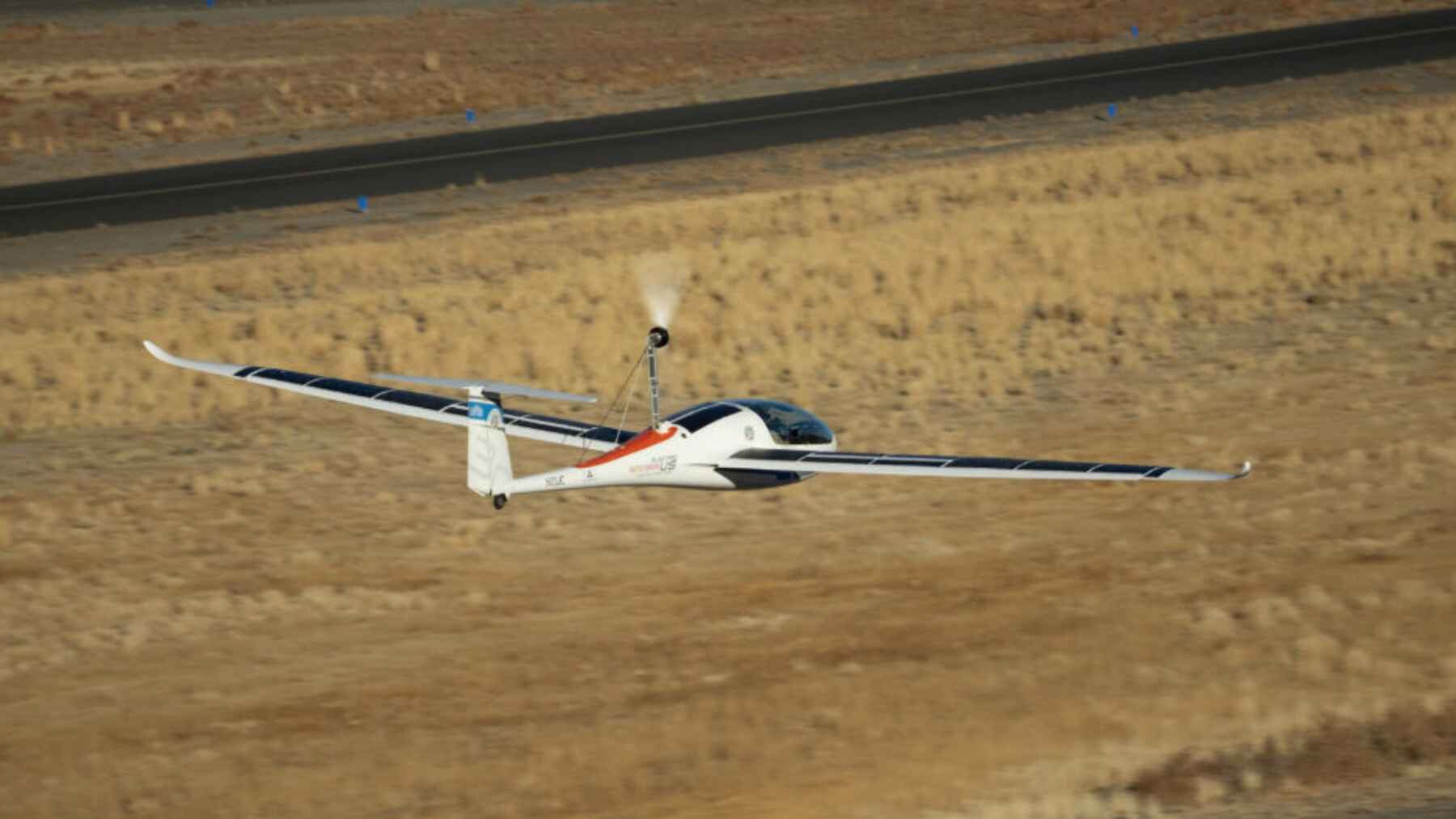
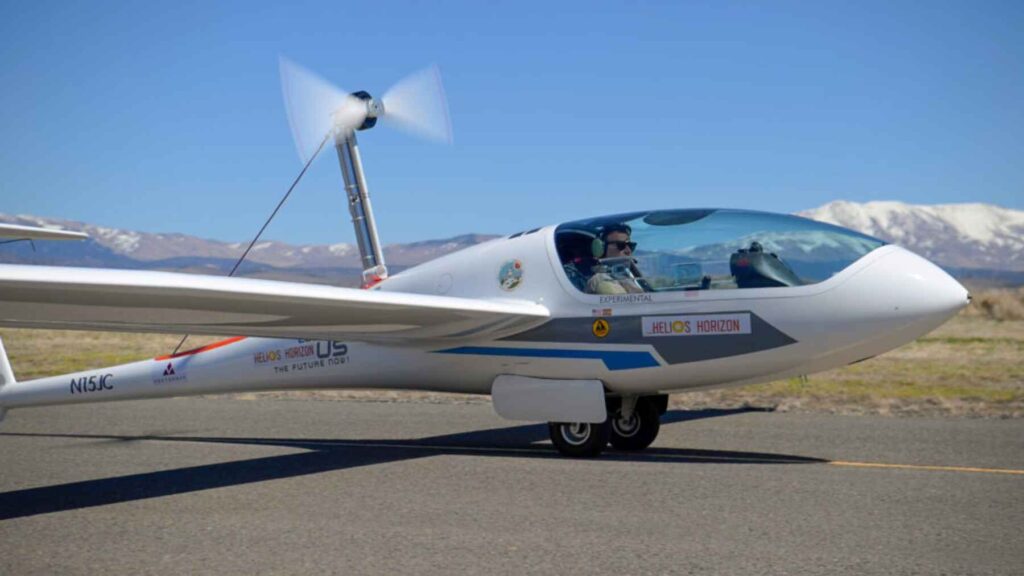
A Spanish test pilot has pushed electric aviation into new territory with a brief but closely watched flight in Florida. On June 5, Miguel Iturmendi lifted off from Zephyrhills Municipal Airport in the Helios Horizon, which the project describes as the first human-piloted fixed-wing electric airplane powered by solid-state batteries.
The flight was not about distance, speed, or a dramatic airshow moment. Its importance sits in a quieter place, inside the battery pack. For electric aircraft, storing enough energy without making the plane too heavy has long been the hard part, and this test suggests that problem may be starting to loosen.
A short flight with a big job
The Helios Horizon test was deliberately limited. Its purpose was to check how the aircraft behaved after a new solid-state battery system was installed, especially its weight, balance, and basic performance in the air.
That may sound modest. But in aviation, modest tests often matter most, because a plane has to prove the boring things before anyone can trust the exciting ones.
The aircraft began life as a Pipistrel Taurus motor glider, a sleek, light airplane designed to be efficient. Helios Horizon then turned it into a flying technology lab with custom battery management, electric propulsion controls, thermal systems, solar wing extensions, and other modifications.
Why these batteries matter
Most electric cars and many electric aircraft concepts use lithium-ion batteries with a liquid electrolyte, which is the material that helps charged particles move inside the cell. Solid-state batteries replace part or all of that liquid with solid materials, which can improve safety and store more energy in less weight.
The new pack in Helios Horizon stores about 186 watt-hours per pound, compared with about 118 watt-hours per pound in its previous lithium-ion system. That is a jump of nearly 60 percent, and every pound matters when a machine has to leave the ground.
Airbus has described energy storage as one of the main roadblocks for long-range electric vehicles and future hybrid-electric aircraft. In a 2022 agreement with Renault Group, the companies said all-solid-state designs could double battery energy density around the 2030 time frame.
Fast charging changes the equation
Helios Horizon says the solid-state system can charge from nearly empty to 80 percent in less than 15 minutes. In practical terms, that matters because aircraft do not earn their keep while sitting on the ground.
Think about a small airport on a hot afternoon. Pilots are waiting, mechanics are checking systems, and every delay adds cost. A battery that charges quickly would not solve every problem, but it could make electric flight easier to fit into real operations.
Iturmendi put the promise plainly in the project’s press release, saying, “For the first time, we have a battery technology” with the range, charging time, and safety needed for commercial electric aviation. That is a strong claim, and it still has to survive years of testing.
Solar wings and energy recovery
The Helios Horizon is not relying on batteries alone. Its wings include solar panels that can feed extra power into the system while the aircraft is flying.
The plane can also recover energy during some descents or gliding phases. When the motor is not needed for thrust, the propeller can spin in the airflow like a small wind turbine and send electricity back into the battery.
Is that enough to recharge the aircraft in the sky? No. But it can improve efficiency, much like regenerative braking in an electric car captures some energy when the vehicle slows down.
A flying lab, not an airliner
The most useful way to understand Helios Horizon is not as a future passenger plane, but as a testbed. Its job is to show what advanced batteries, light materials, solar assistance, and careful energy management can do together.
The aircraft has already reached 24,000 feet on earlier electric flights. The team’s next target is more than 40,000 feet, which is close to the cruising altitude of many commercial jets.
That goal is not just for bragging rights. High-altitude flight brings cold temperatures, thin air, and pressure challenges, all of which can reveal whether an electric system is truly robust or only impressive under easy conditions.
The race is moving fast
Helios Horizon is not alone. In China, EHang said its EH216-S pilotless passenger-carrying eVTOL completed a 48 minute and 10 second flight test using a solid-state battery in 2024, with a pack storing about 218 watt-hours per pound.
Battery giant CATL has also presented a condensed battery with energy density of up to about 227 watt-hours per pound, describing passenger aircraft as one possible use. The company said it was working with partners under aviation-level safety and quality requirements.
So the story is bigger than one pilot and one airplane. Around the world, engineers are trying to push batteries into roles once reserved for fuel tanks, and aviation may be one of the toughest tests of all.
The hard part comes next
There is still a long road from a short test flight to carrying passengers. Battery packs must prove they can survive vibration, heat, cold, damage, charging cycles, and rare failure events without creating unacceptable risk.
The regulatory side is just as important. The U.S. Government Accountability Office reported in May 2026 that the Federal Aviation Administration had not yet certified an electric aircraft for commercial operations and was reviewing electric aircraft and engine designs case by case.
That is why this flight should be seen as an early marker, not a finished revolution. The technology looks promising, but aviation does not move by promise alone. It moves by repeated proof.
What this could change
In the near term, solid-state batteries could be most useful in small aircraft used for training, environmental monitoring, emergency transport, and short regional trips. These are places where limited range is less of a problem and lower noise or reduced local emissions could matter right away.
Over time, better batteries may also help hybrid aircraft, where electric motors work alongside conventional systems. That kind of setup could reduce fuel use before fully electric passenger planes are ready for longer routes.
For now, the Helios Horizon flight lasted only a short time. Still, it put a pilot in the air using a battery chemistry many people still think of as future technology. Small step? Yes. But in aviation, small steps can change the flight plan.
The official press release has been published by Helios Horizon through Runway Girl Network.