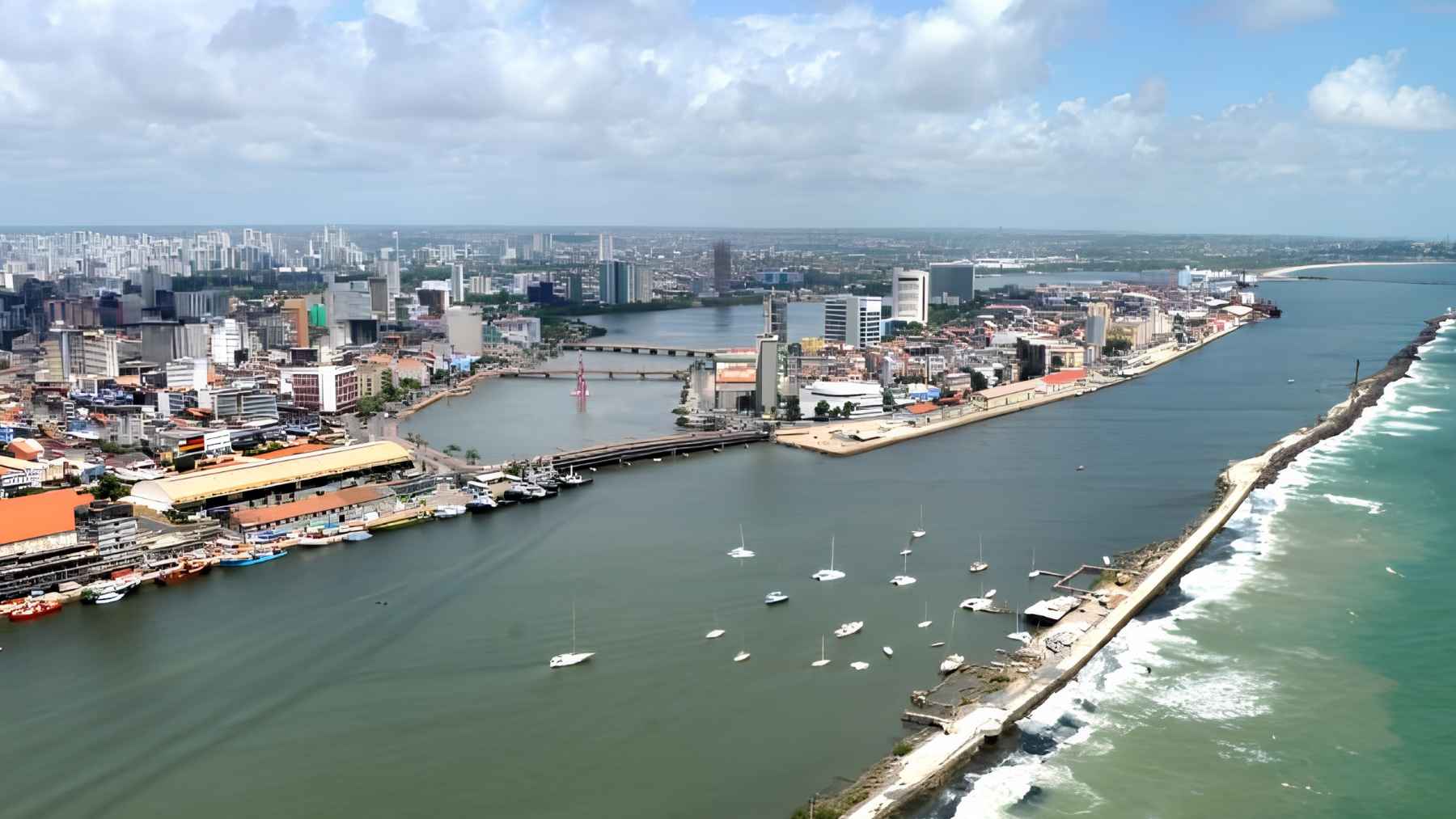
Brazil’s Port of Recife is preparing for a major dredging project worth about $20 million, a move that could allow the historic port in Pernambuco to receive ships up to 689 feet long. The federal contract, signed on January 30, 2026, is meant to deepen and reshape the port’s water access, giving the terminal more room for safer maneuvers and larger operations.
But this is not just a story about bigger ships. Dredging means removing sediment from the bottom of waterways, and that work can affect water clarity, seabed life, and nearby ecosystems if it is not monitored carefully. So the question is simple: Can Recife modernize its port while keeping a close eye on the water below?
A deeper route for larger ships
The plan calls for a minimum depth of about 39 feet, an operating draft of about 35 feet, a 787-foot-wide access channel, and a turning basin with a diameter of roughly 1,640 feet. In practical terms, that would let the Port of Recife receive larger vessels up to 689 feet long, expanding its ability to handle cargo and maritime services.
That may sound like a narrow technical upgrade, but ports live and die by details like draft, turning space, and timing. A few extra feet can determine whether a ship enters smoothly, waits for better conditions, or skips a terminal altogether.
A long-awaited project
Brazil’s Ministry of Ports and Airports says the dredging is tied to a bidding process approved on January 26, 2026. Work is scheduled to begin by March 2026, with completion estimated for May 2027.
The funding is split between about $10.8 million already committed in 2025 and about $9.1 million planned for 2026, based on conversion data from the Central Bank of Brazil. Minister Silvio Costa Filho described the project as one that has been “awaited for more than ten years,” while Pernambuco Governor Raquel Lyra framed it as part of a broader effort to strengthen logistics and development in the state.
Why dredging matters
Dredging is common in ports because sand, silt, and other materials gradually fill channels and harbors. The National Oceanic and Atmospheric Administration (NOAA) explains that dredging helps maintain or increase the depth of navigation channels, anchorages, and berthing areas so vessels can pass safely without touching bottom.
For Recife, the economic argument is clear. The Port of Recife said the contract was signed with DTA Engenharia and covers the external and internal channels, with the goal of allowing larger vessels to dock. The port also said every additional meter of operational draft can add about 2,645 U.S. tons of general cargo and 551 U.S. tons of solid bulk per vessel.
The environmental catch
Here is where the story gets more delicate. Dredging can stir up suspended sediment, and the U.S. Environmental Protection Agency (EPA) notes that sediment in the water can reduce light penetration, affect aquatic vegetation, and change fish and invertebrate communities.
That does not mean every dredging project causes serious damage. NOAA Fisheries notes that turbidity plumes from dredging are often expected to last less than 24 hours, although eggs and larvae can be especially sensitive to suspended sediments and deposition. In plain English, the timing, location, sediment type, and monitoring all matter.
Monitoring will be key
The Port of Recife had already listed a 2025 procurement process for environmental monitoring tied to the maritime dredging work. That matters because the most important environmental questions are not answered by the headline number or the ship size. They are answered in the water, day by day.
Monitoring can track whether sediment plumes stay within expected limits, whether disposal areas are being handled properly, and whether local marine life shows signs of stress. It is not glamorous, but it is essential.
More than a port upgrade
The federal government says the project should reduce logistics costs, improve operational safety, and strengthen Recife’s role in cabotage and foreign trade in Brazil’s Northeast. For people far from the docks, that can still matter. Ports shape the price of goods, the reliability of supply chains, and even the traffic and exhaust that build up when cargo moves inefficiently.
Cruise operations could also benefit. Pernambuco’s economic development secretary, Guilherme Cavalcante, said the deeper draft and improved maneuvering basin should help cruise activity and the tourist experience, according to the ministry’s statement.
What happens next?
If the schedule holds, Recife’s dredging will move from paperwork to machines by March 2026. By May 2027, the port could be operating under a new physical reality, with deeper access, wider navigation space, and a stronger pitch to cargo operators.
Still, the environmental side deserves attention all the way through. A modern port is not just one that receives bigger ships. It is one that can prove, with data, that its deeper channel is being managed responsibly.
The official statement was published on Brazil’s Ministry of Ports and Airports’ website.