On a hot afternoon, a thin metal roof can turn a small home into an oven. That is the problem behind ModRoof, an Indian modular roofing system that uses recycled cardboard and agricultural fibers to help low-income houses stay cooler, drier, and less noisy during heavy rain.
Engineering for Change describes it as an interlocking roof made for low-income homeowners, with panels produced from cardboard waste and natural fibers.
Hasit Ganatra, founder of ReMaterials in Ahmedabad, created ModRoof after visiting families living under fragile roof sheets and, as he told Fast Company, “I kept seeing these roofs which needed change.”
The idea is not to rebuild every house from scratch. It is to replace one of the most punishing parts of the home with a lighter panel that can last 15 to 20 years and, in some comparisons, make rooms about 11 degrees Fahrenheit cooler.
A roof made from waste
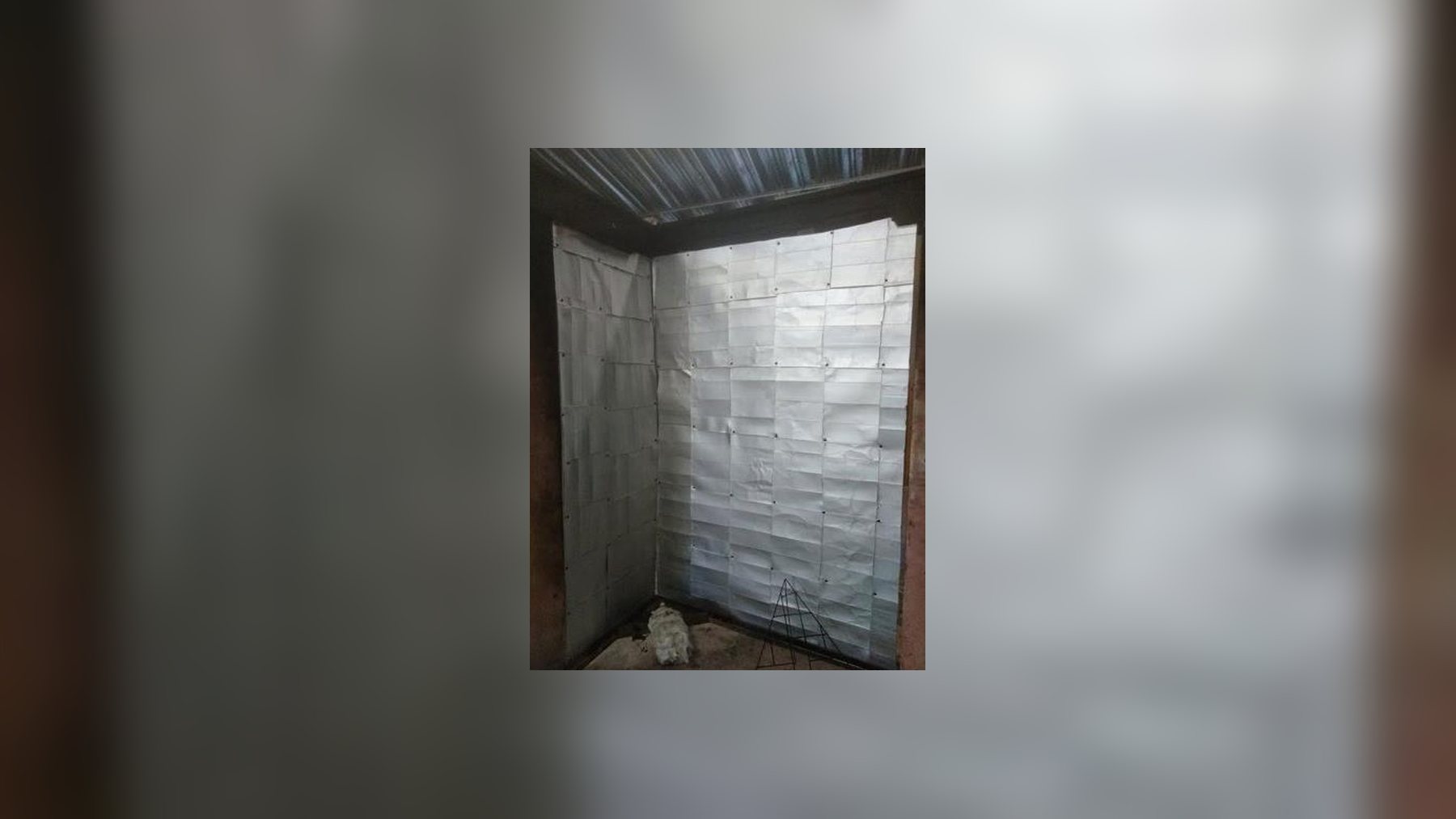
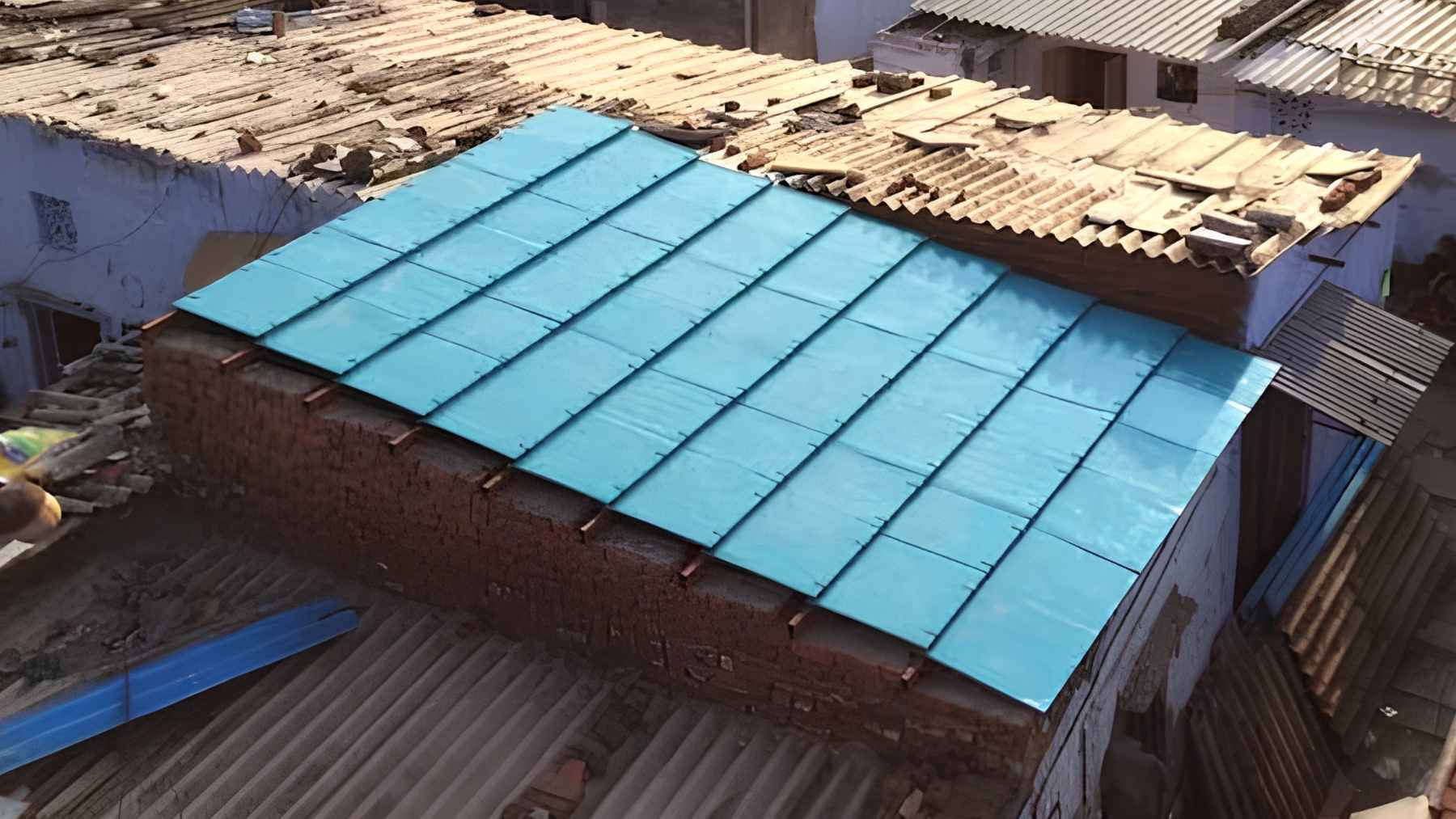
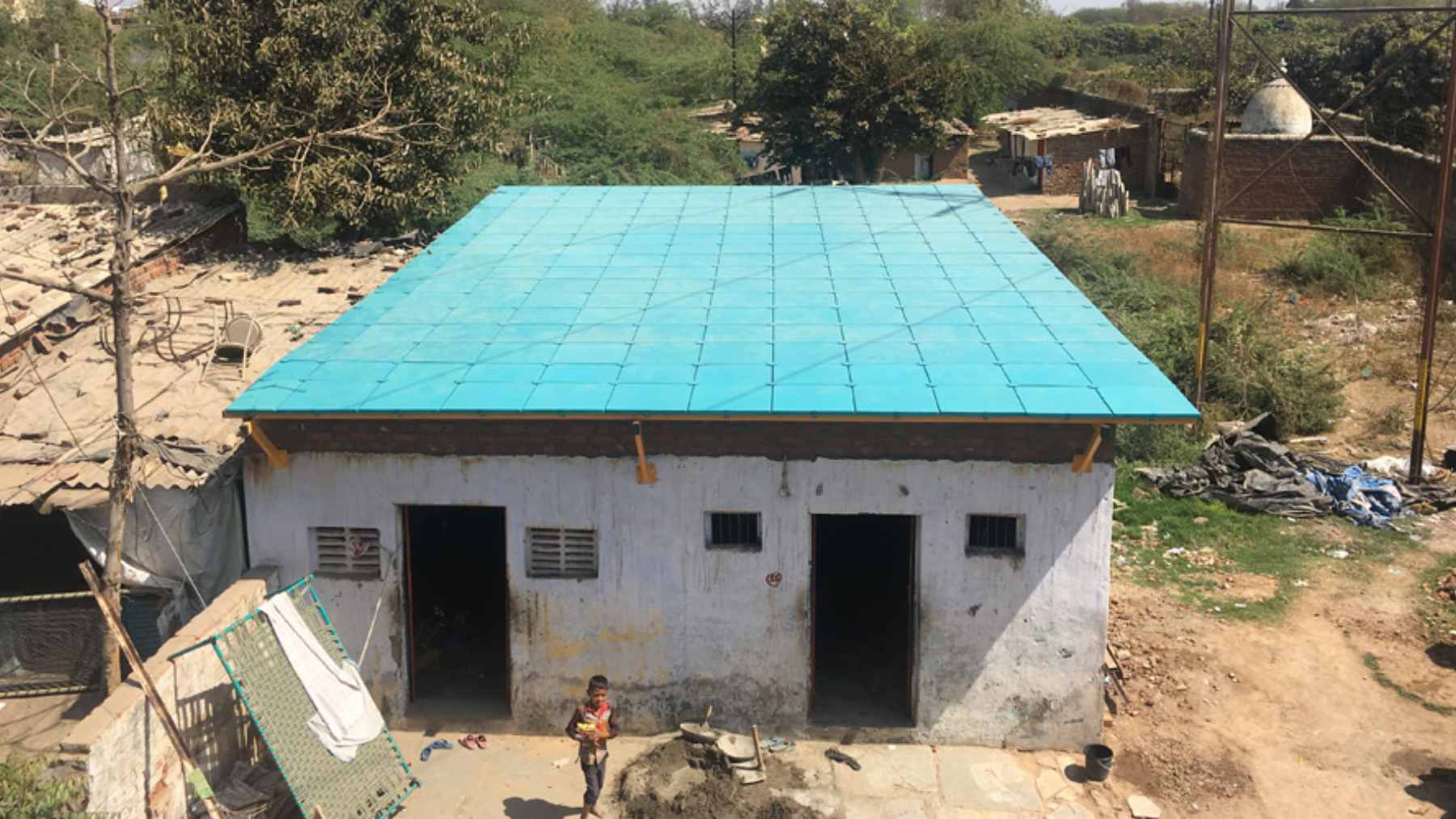
ModRoof panels are about 20 by 20 inches, small enough to move through dense neighborhoods and install without huge machines. The mix includes recycled packaging waste, coconut husk fibers, adhesive, waterproofing additives, and an outer coating.
Once the panels are set side by side on wood or metal rafters, a silicone sealant helps turn them into one watertight surface.
This matters in places where a roof is often a patchwork of thin metal, light cement, plastic, or whatever a family can afford at the time. Big custom sheets can be hard to transport through narrow lanes. A modular roof gives installers a repeatable piece, not a one-off fix.
Cooler rooms in summer
Can a roof really change daily life that much? A 2020 cool-roof study in Ahmedabad found that ModRoof lowered indoor temperatures by about 8 degrees Fahrenheit compared with conventional roof types such as tin, asbestos, cement sheets, and concrete slabs.
Selvakumar Vellingiri and Priya Dutta led the study, collaborating with researchers from Gujarat Institute of Desert Ecology, Indian Institute of Public Health Gandhinagar, and the Mahila Housing SEWA Trust.
Product comparisons describe an even sharper difference in some homes, with a metal-roof house reaching about 108 degrees Fahrenheit indoors while a similar home with ModRoof stayed around 97 degrees. For a family without air conditioning, that gap is not abstract. It can decide whether a room is bearable during that sticky summer heat we all know.
Thermal insulation is the key concept. In simple terms, it means slowing the movement of heat from the roof into the room below. Instead of letting the sun bake a metal sheet and push that heat inside, the panel acts more like a buffer.
Built for rain and repair
Heat is not the only everyday problem. Metal and improvised roofs can rattle in storms, corrode, shift, and leak, which means wet bedding, spoiled food, damaged schoolbooks, and another repair bill. The product is designed as a rain barrier as well as a cooling surface.
Engineering for Change says individual modules can be replaced when damaged, instead of forcing a household to redo the entire roof. Its product profile lists an estimated life span of 15 to 20 years and says one panel can withstand about 440 pounds of point load.
That means the system is meant to be practical, not decorative.
Tests also looked at strength, heat movement, flame behavior, water absorption, and long-term bending under stress. Nirma University is listed among the testing bodies, which is important because recycled material still has to behave like a real building component. Pretty colors alone do not keep a monsoon out.
Why cardboard can work
Cardboard on a roof sounds flimsy at first. But ModRoof is not a stack of old boxes nailed over a room. The waste is crushed, mixed, compressed, dried, waterproofed, and coated into an engineered panel, according to a case profile from IIMA Ventures.
The agricultural side matters too. Coconut husk fiber provides a use for material that can otherwise sit low in the value chain, while local production in Ahmedabad cuts the need for heavier conventional materials.
At the end of the day, the innovation is less about a futuristic building and more about making a familiar piece of the house work better.
That is why the project sits in the category of social technology. It takes a specific pain point, the roof, and improves it without asking a family to abandon its home. The promise is modest, but for the most part, that is the point.
Access remains the test
Cost is where good building ideas often meet reality. ModRoof is not simply a cheaper sheet of metal, but it is described as costing far less than a concrete-slab roof, and the company works with microfinance partners to spread payments over time. In practical terms, that can turn a one-time impossible purchase into a monthly decision.
Engineering for Change recorded about 500 systems installed by November 2019, after the product moved beyond a lab idea and into real homes.
Other innovation profiles describe the company continuing with larger roofing work, but the most compelling use case remains the same. A cooler, stronger roof can change the daily routine inside a small home.
The system will not erase India’s housing shortage by itself. Researchers have long noted that heat, urban density, and low incomes overlap in ways no single panel can solve. But ModRoof shows that discarded materials do not have to mean improvised housing. Sometimes, waste can become the roof over someone’s head.
The study referenced here has been published in the Indian Journal of Occupational and Environmental Medicine.