Deep under the water, many immersed tunnels depend on a strip of rubber to keep seawater outside. A new study of material from China’s Yuliangzhou tunnel suggests that this seal is weakening from the inside out faster than older tests predicted.
Engineers designed these GINA gaskets to help keep tunnel joints watertight for about 100 years. But when researchers tested seawater exposure together with the constant squeeze of heavy steel tunnel sections, the rubber lost 67.66% of its sealing force, a finding that changes how these hidden parts may need to be monitored.
A seal doing heavy work
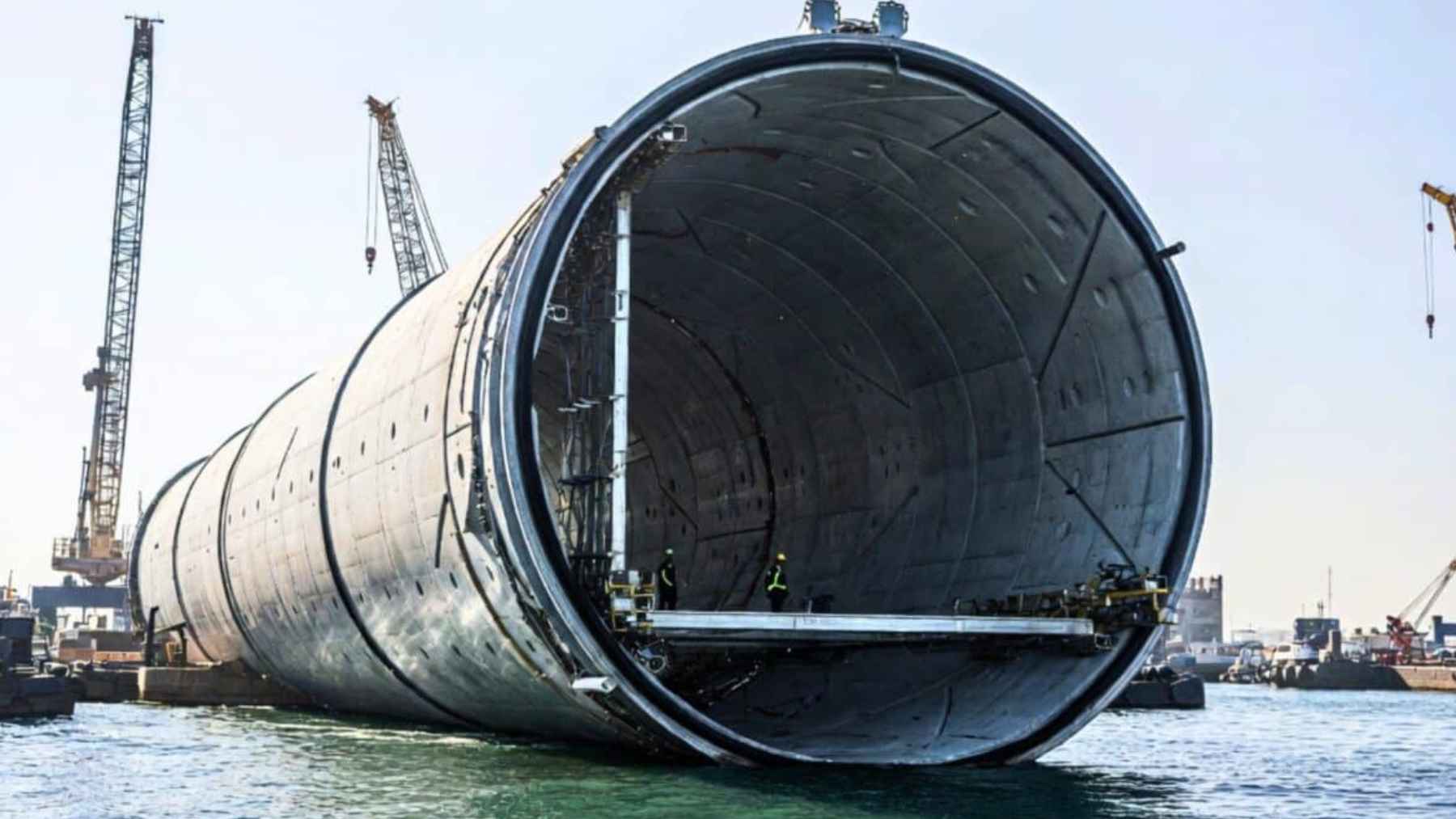
An immersed tunnel is not drilled like a mountain tunnel. It is built from large prefabricated sections that are floated into position, lowered into a trench, and joined together underwater.
At each joint, the GINA gasket acts like a thick rubber barrier. Think of the weather stripping around a car door, but under far more pressure and with the ocean pressing against it day and night.
The new work was carried out by Hongtao Mao, Zhinan Hu, and colleagues at Shijiazhuang Tiedao University. Their focus was simple but important: what really happens to this rubber when it is squeezed for decades while sitting in salty water?
Why older forecasts missed it
Earlier forecasts looked mostly at seawater aging. Those tests predicted that after 100 years, the gasket would still press with about 337 pounds per square inch, which is well above the minimum waterproofing target.
The updated model added a missing piece, long-term compression. Once that constant squeeze was included, the projected pressure after 100 years dropped to about 219 pounds per square inch, or roughly 35% lower than the older estimate.
That gap matters because pressure is what keeps the joint sealed. A related seawater-only study in Case Studies in Construction Materials also found that GINA gaskets can harden and lose performance over time, even when they still appear physically intact.
Harder rubber is not always safer
Here is the strange part. The rubber became harder by 14.18% and denser by 5.88%, which could look reassuring during a basic inspection.
But that tougher feel was hiding a loss of function. Inside the material, long molecular chains were breaking, and the inner web that gives rubber its bounce was becoming weaker.
“The essence of GINA gasket aging lies in material degradation caused by structural degradation,” the research team wrote. In everyday terms, the rubber was not just getting older on the surface; it was losing the springy structure that lets it push back against the tunnel joint.
The damage does not move evenly
The sealing force did not fall in one smooth line. The study describes three stages: a fast early drop, a slower steady decline, and then a phase where the rate of loss eased.
During accelerated aging tests, the team detected internal changes after 90 days. That does not mean a real tunnel fails in 90 days, but it does show that important damage can start long before the end of a 100-year design life.
The temperature at which the rubber stiffens also rose by about 5.8 degrees Fahrenheit. That detail sounds small, but for a material whose job is to stay flexible under pressure, even modest changes can matter over time.
The bottom edge is the weak spot
Not every part of the seal carries the same load. The lower edge of the GINA gasket has less contact pressure than other areas, making it the first place engineers should watch.
A related Yuliangzhou tunnel study found that the bottom of the gasket is the main leakage pathway. It also reported that once the joint opening reaches about 1.85 inches, waterproofing performance begins to fail.
Rotation can make the problem worse because it changes how the seal sits inside the joint. In practical terms, a gasket can still be visible and present while losing the pressure needed to keep water out.
The tunnel seal still works
This is not a warning that undersea tunnels are about to flood. The projected sealing pressure after 100 years, about 219 pounds per square inch, remains above the study’s waterproofing threshold of about 89 pounds per square inch.
Still, the safety margin is shrinking faster than engineers once thought. That is the real story here, not sudden failure, but less room for error as the rubber ages.
For tunnel owners, this turns the 100-year promise into a maintenance question. Inspections should focus less on whether the rubber looks firm and more on whether it still produces enough contact pressure, especially along the lower edge.
What future tunnels can learn
The study shows why real-world conditions need to be tested together. Salt water alone tells part of the story, but salt water plus decades of compression tells a much more useful one.
Designers may use these findings to adjust rubber formulas, compression targets, and inspection schedules before leaks appear. That is less dramatic than a tunnel emergency, but far more valuable.
At the end of the day, the ocean never takes a day off. A small strip of rubber may seem ordinary, but in an undersea tunnel, it is one of the quiet parts doing the most important work.
The main study has been published in Tunnelling and Underground Space Technology.