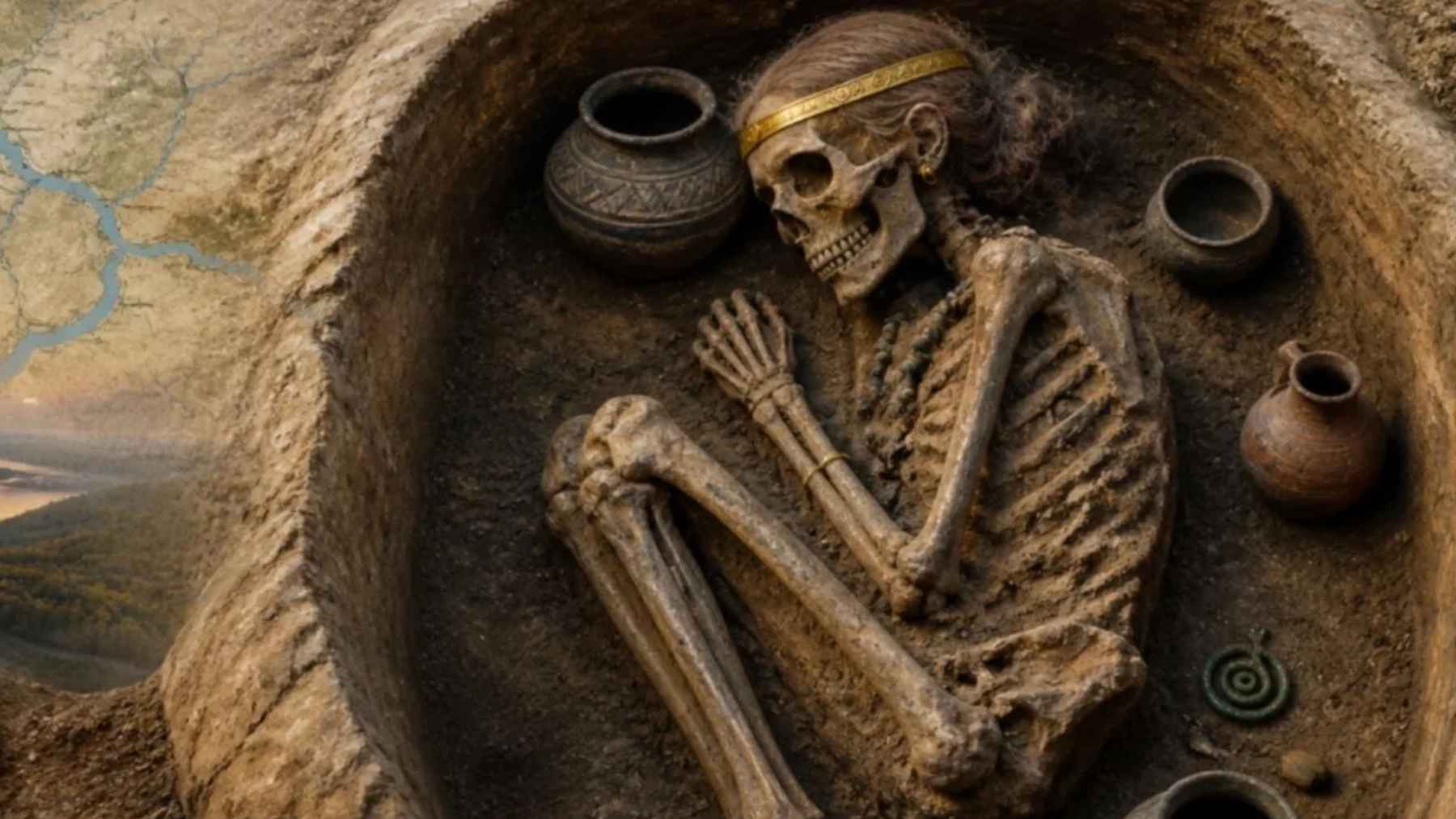
A gold band from a grave near the Danube grabs the eye, but the bigger story is hidden in three ancient teeth. New laboratory dates for burials at Vajuga-Pesak, Golokut-Vizić, and Šljunkara-Zemun are tightening the timeline of the Early and Middle Bronze Age in Serbia.
The work does not simply add one more old grave to a museum shelf. It changes how archaeologists compare communities along the Serbian Danube, the Carpathian Basin, and the Central Balkans, where metal objects, pottery, and funeral customs moved through human networks long before written records.
The Teeth Tell Time
For decades, these graves were placed in time mostly by typology, which means comparing the shape of pots, the style of metal objects, and the way a body was buried. That method can be useful, but it is a bit like dating an old family photo only by the clothes people wore.
The new study by Ognjen Mladenović and Aleksandar Bulatović, both from the Institute of Archaeology, National Institute of the Republic of Serbia in Belgrade, used tooth samples to give the burials a firmer calendar position. The analyses were carried out at Isotoptech Zrt. Laboratory in Debrecen, Hungary.
A Gold Diadem in Zemun
The most eye-catching object comes from Šljunkara-Zemun, where a gold-plate diadem was found around the skull, at the level of the forehead. A diadem is a head ornament, a special band that can point to status, identity, or ritual meaning depending on the burial context.
The study describes the gold band as having small attachment holes and a line of punctured decoration along the edges. It is the kind of object that makes headlines, but the real question is simple. When was it placed there?
The 4,600-Year Detail
The 4,600-year figure needs some care. The tooth from the gold-diadem burial at Šljunkara-Zemun was dated to between 2268 and 2039 BCE, which makes it roughly 4,200 years old in everyday terms.
The oldest result in the three-grave set comes from Vajuga-Pesak, where a human tooth dated the burial to between 2663 and 2474 BCE. That is where the 4,600-year signal fits best, and it matters because it may place that grave earlier than its pottery style alone suggested.
The Danube Was a Meeting Zone
The Serbian Danube was not a quiet edge of Europe. In practical terms, it worked like a corridor, helping connect people and ideas between the Carpathian Basin, the Balkans, and routes farther south.
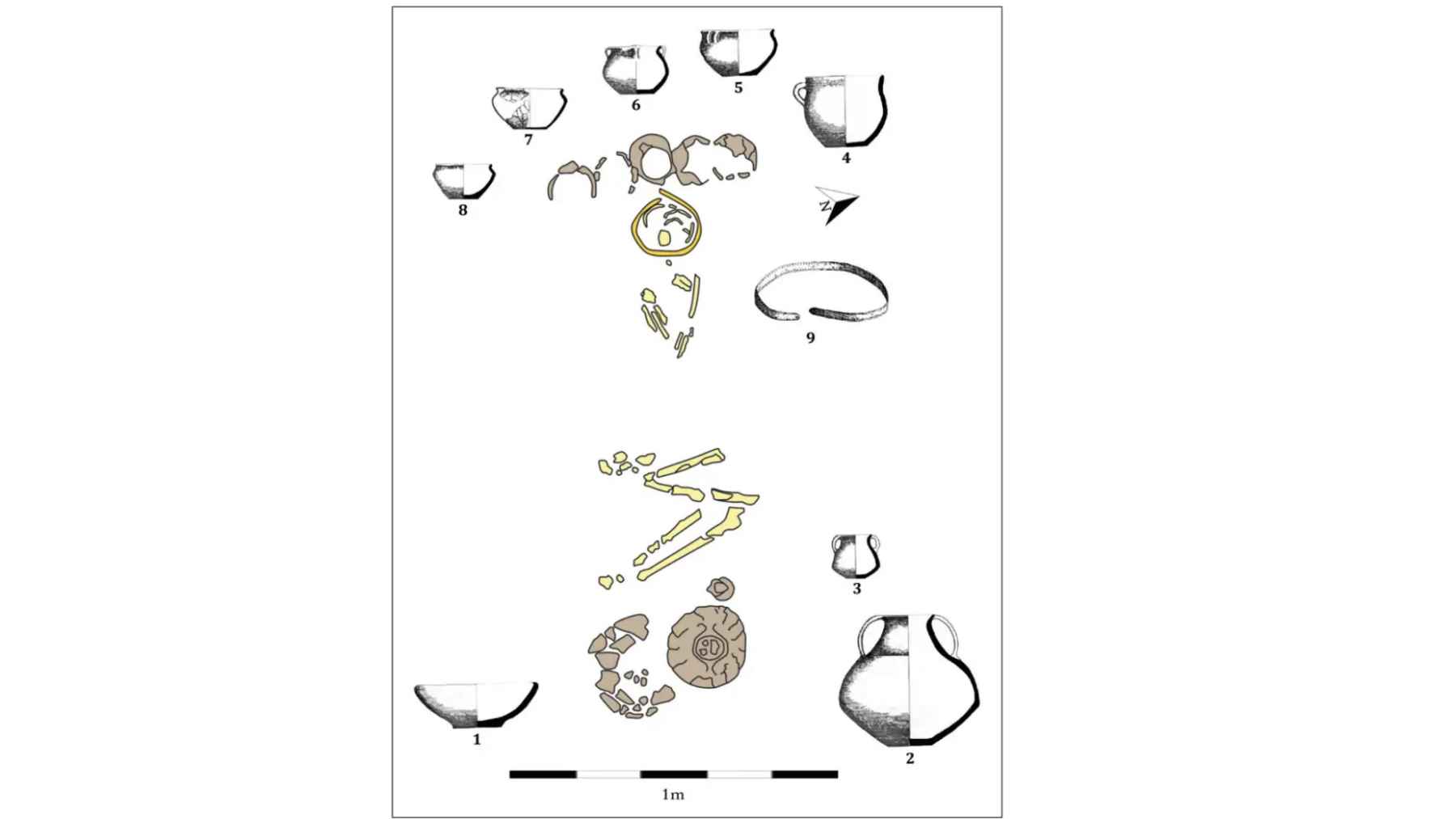
The study says the three graves share a basic burial pattern, with bodies placed in crouched positions and grave goods arranged around them. Inhumation, the technical word here, simply means the body was buried rather than cremated.
An Older Grave at Vajuga-Pesak
At Vajuga-Pesak, the dated tooth came from an adult woman buried in a crouched position with a bowl and a one-handled jug. The site lies on the right bank of the Danube, in a place that had already produced finds from several other prehistoric and later periods.
That new date pushes archaeologists to look again at links with the Somogyvár-Vinkovci cultural world. The researchers argue that contacts may have reached farther east than previously thought, which is exactly the kind of shift that can redraw a prehistoric map.
Golokut Adds Another Piece
The third grave, Golokut-Vizić, is later than the other two. A human tooth dates it to between 1880 and 1699 BCE, placing it in the Middle Bronze Age.
Its value is not drama, but placement. The study says this grave is one of the few published absolute dates for the Vatin Group, helping confirm that different regional versions of that group existed at the same time and had links to decorated pottery traditions across the Danube.
Why Teeth Matter
Radiocarbon dating works because organic material keeps a tiny amount of radiocarbon while alive, then loses it after death. Measuring what remains helps estimate when a person, animal, or plant stopped living, although the result still has to be adjusted into calendar years.
That is why a tooth can be more powerful than gold in this story. Gold can suggest prestige and craft, but the tooth gives archaeologists the clock.
A Wider Balkan Puzzle
The new Serbian Danube dates also fit a wider wave of research in the region. A related 2025 study at Svinjarička Čuka reported an Early Bronze Age burial with gold ornaments dated between 2469 and 2288 BCE, showing that unusual gold-bearing graves were not limited to one spot.
Still, the takeaway is not that one object rewrites everything overnight. The sharper point is that a few well-dated teeth can rearrange the order of events, and in archaeology, order is everything.
What Changes Now
For the most part, the study strengthens earlier cultural labels rather than throwing them away. Vajuga-Pesak looks earlier than expected, Šljunkara-Zemun sits at a crossroads between neighboring groups, and Golokut-Vizić gives the Middle Bronze Age a firmer anchor.
At the end of the day, this is how prehistory moves from educated guesswork toward a sharper map of real lives.
The official study has been published in Archaeologia Austriaca.