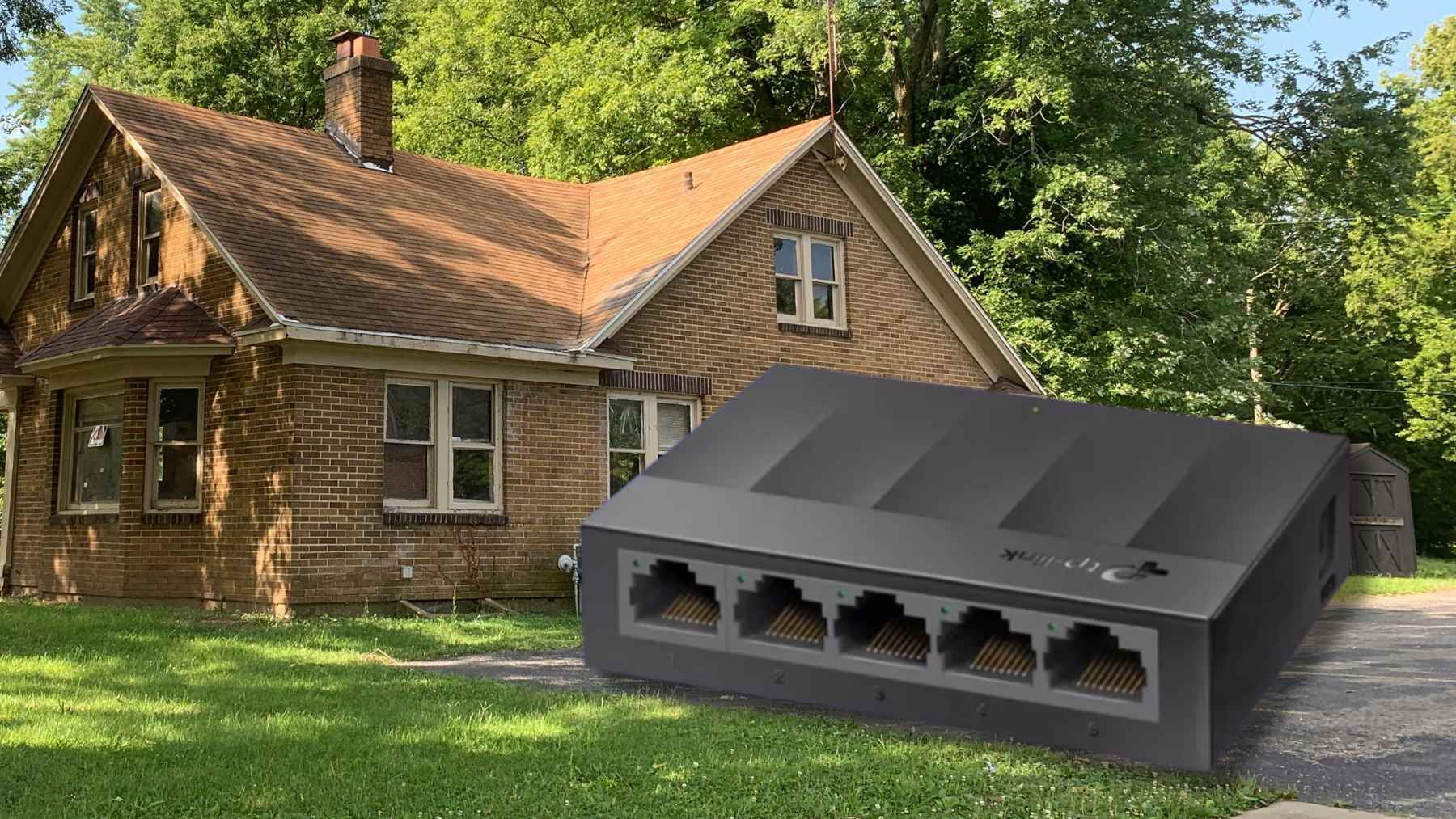
What if the fastest connection in your house is already there, hidden behind a dusty phone plate? A London-based developer recently showed how old telephone wiring can be reused to deliver a stable, wired connection in rooms where Wi-Fi tends to fade.
In a post published January 22, 2026, he said he was tired of lag and dropped links from powerline adapters, so he switched to hardware designed to send Ethernet over phone cables.
He reported a physical connection around 1.7 gigabits per second, with a connected rate around 1.4 gigabits per second, before confirming a full gigabit in a direct phone-to-computer test.
Why powerline can feel like a gamble
Powerline networking turns your electrical wiring into a data path. It can be convenient, especially when running new cable feels like a weekend you do not have. But electrical wiring was built to deliver power, not to carry clean digital signals.
Interference from appliances, older circuits, and “noisy” wiring can drag speeds down and make them jump around from hour to hour. That is why many powerline kits look impressive on the package but land closer to “good enough” once you try them across floors. If you have ever watched a video call freeze right as you start talking, you have felt that gap.
The small box that does the translating
At the center of this story is a type of adapter often described as a “bridge.” It sits between your router and a wall phone jack, translating a normal Ethernet signal into something that can travel over the home’s phone wiring. Then another bridge at the far end translates it back.
One example is the G4201TM from German networking company GIGA Copper Networks GmbH, which includes an RJ11 port for the phone line and an RJ45 port for gigabit Ethernet, along with its own power adapter.
The specification sheet lists power use under 3 watts, and the device is physically small, about 4.4 inches long and roughly 6.7 ounces, so it can tuck next to a wall plate without turning the room into a cable jungle. Sometimes the best upgrade is the one you do not notice.
Why phone wiring can beat the wall outlet
Phone wiring and Ethernet both rely on copper, and copper is still very good at moving data across short distances. In many older houses, phone jacks are everywhere, even in rooms where nobody has used a landline in years. So the question becomes: can those runs be reused for modern internet without rewiring the whole place?
The answer depends on the cable and on how it was installed. Some homes have newer twisted-pair cable in the walls, while others have older, thinner wiring and messy splices. Still, the blogger’s results suggest that when the wiring is decent, the payoff can be dramatic.
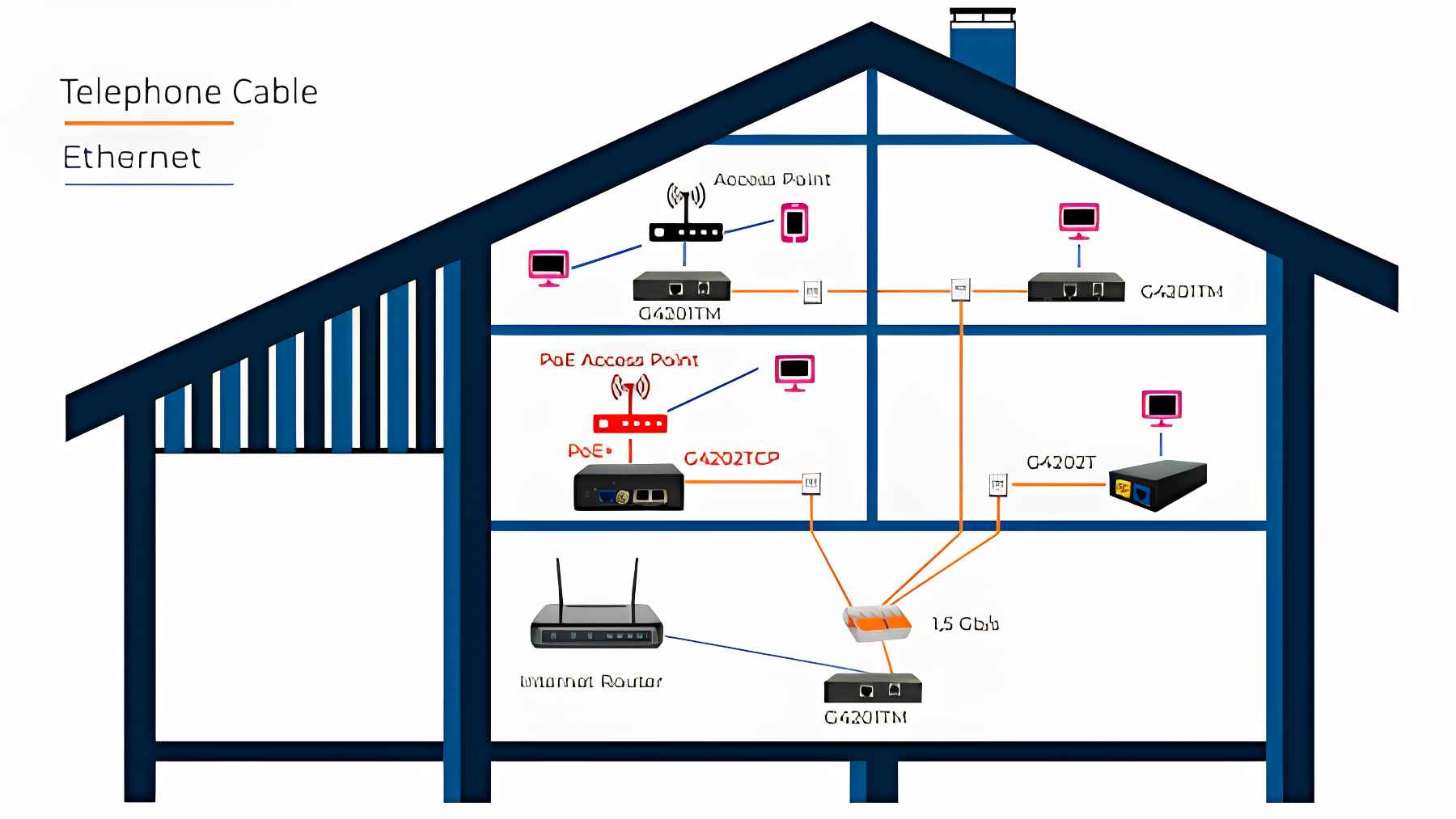
Schematic showing how adapters convert Ethernet signals to run over existing telephone wiring for fast, stable home internet.
G.hn, the standard behind the trick
The key technology here is G.hn, short for “Gigabit Home Networking,” a family of standards from the International Telecommunication Union. The goal is to push high-speed data over wiring that is already in buildings, including telephone lines, coax cables, and power lines, with the ITU describing speeds up to at least 2 gigabits per second in some setups.
Instead of treating the wire like one single channel, G.hn splits the signal into lots of smaller frequency slices and adjusts them on the fly.
It also uses heavy-duty error correction, which is a fancy way of saying it can recover when noise flips some bits. In everyday terms, it is like sending a message as many smaller notes and then checking them against each other so the full meaning still arrives.
The wiring catch that trips up most DIY plans
If you have ever opened a phone wall plate, you know the wiring is not always neat. Phone systems often use “daisy chaining,” where one jack feeds the next like a string of lights, while traditional Ethernet prefers a star layout with each room wired back to a central point. That mismatch is why simply swapping phone jacks for Ethernet jacks does not work in most houses.
One reason this approach is appealing is that it can tolerate real-world layouts. On its home networking page, the device maker says its “InHome” setups can work over two-wire phone cabling in point-to-point runs, star wiring, “in series” layouts, and mixed combinations, with up to 16 modems sharing the same network.
Still, anyone trying something similar has to be careful about what the phone wiring is connected to, because active landline service and mystery junctions can complicate things fast.
Why this niche hack is getting attention
This is not a peer-reviewed study, but it is a crisp example of a bigger trend. People expect stable internet everywhere in the house now, from basements turned into home gyms to bedrooms used for remote school, and Wi-Fi alone does not always deliver. When it fails, the instinct is to blame the provider, but the bottleneck is often the last 50 feet inside your own walls.
The story has been picked up by tech outlets, including Tom’s Hardware and Adafruit, because it hints at a market for “no wall damage” wired networking in older buildings. It will not replace running Ethernet during a remodel, and results will vary with cable quality and layout. But for many homes, it could be the difference between a frustrating connection and one that just works.
The main write-up has been published on The HFT Guy blog.