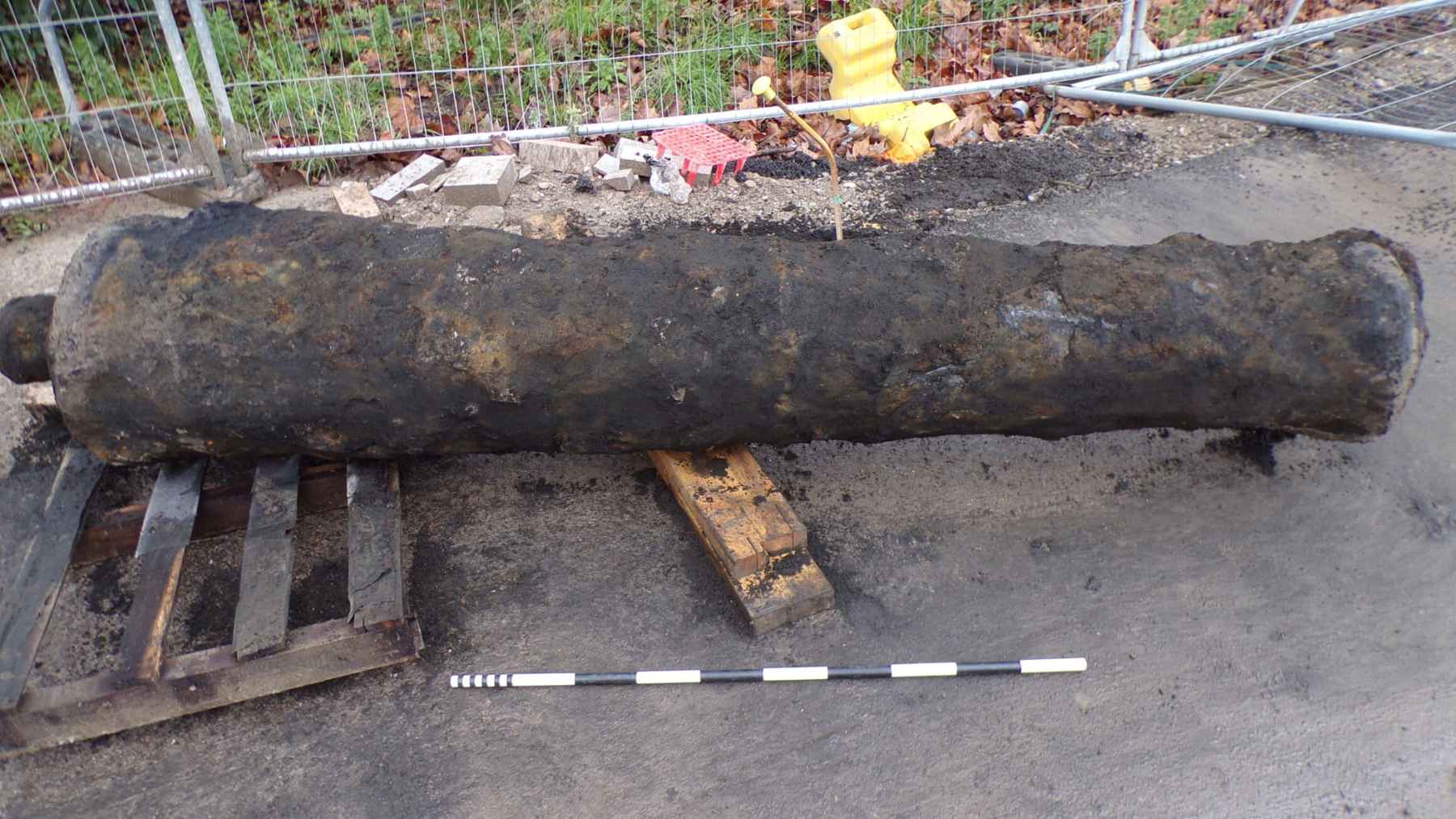
What do you expect to find under a city park during a construction dig? In Hull, England, crews working in Queen’s Gardens just uncovered a cast-iron cannon that weighs more than 2,200 pounds and may date back to the late 1600s or 1700s.
The discovery popped up during a renovation meant to make the downtown park easier to access and better at handling rainwater. Early signs suggest the cannon was purposely put out of action, then reused for dock work before it was buried when the site was filled in during the 1930s.
The moment the digger hit iron
On February 13, 2026, construction worker Jon Jacobs, part of a crew with contractor C R Reynolds, was digging a trench for an underground water-control tank when his equipment struck something hard. He said he briefly worried it could be a World War II-era bomb, a real concern on some British building sites.
Instead, the team pulled up an 8.5-foot cannon that appears to be made of cast iron. Jacobs told BBC News reporters Becki Bowden and Grace McGrory, “I’ve never dug up anything like this,” adding that most days bring up “just junk.”
Once the shape became clear, the work shifted from digging fast to digging carefully. That usually means pausing the machines, documenting what is in the ground, and bringing in specialists who know what to look for.
A flood-control tank under a former dock
The cannon was found during excavation for what engineers call an attenuation tank. In simple terms, it is a large underground container that temporarily holds rainwater so drains do not get overwhelmed during heavy storms.
Queen’s Gardens has been under major reconstruction since June 1, 2023, with the work expected to wrap up in spring 2026. The Maritime Hull project page says the plan focuses on accessibility, biodiversity, and better surface-water management.
There is also a deeper reason old objects keep turning up here. The park was created after an earlier dock was filled in, so digging for modern drainage can cut straight into layers of waterfront history.
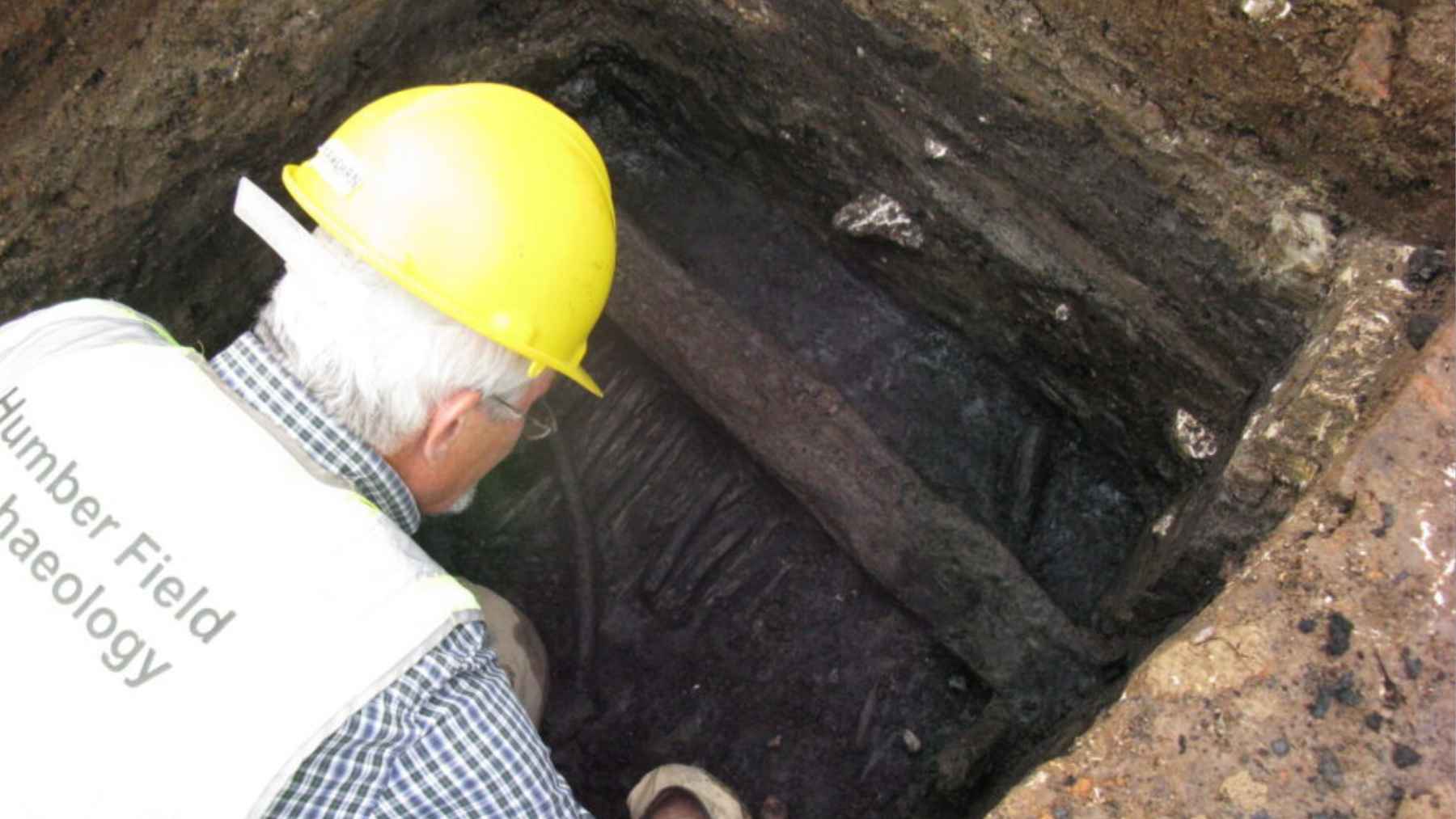
An archaeologist inspects a centuries-old cannon uncovered during construction in Hull, shedding light on the site’s maritime past.
Clues about the cannon’s age
In a Hull City Council press release, officials said early assessments place the cannon somewhere in the 17th to 18th century. That is still a wide window, but it gives archaeologists a starting point as they look for markings, manufacturing details, and signs of how it was used.
Cast iron is a clue by itself. It is iron that has been melted, poured into a mold, and hardened into a specific shape, which made it possible to produce heavy weapons in a consistent way.
Investigators also noted the cannon’s nozzle appears to have been deliberately capped, suggesting it was decommissioned before it was buried. Peter Connelly, archaeology manager at Humber Field Archaeology, called it “a fascinating discovery” and said, “We just don’t know yet” whether it originally sat on a ship or on land to help defend a port entrance.
From weapon to dock hardware
A big mystery is why a cannon ended up underground in the first place. One leading idea is that it was reused as a mooring post, basically a strong fixed object that ships can tie their ropes to when they dock.
That kind of reuse was common in the late 1800s and early 1900s, when an old cannon could still be useful even if it was no longer a working weapon. The press release also suggests this cannon was later pushed into the dock area before the site was filled in.
By the mid-1900s, the space had been reshaped into a public garden designed by Sir Frederick Gibberd. It is an odd timeline to picture, but it fits how ports evolve, with yesterday’s hardware becoming today’s landscape.
Hull’s recent digs reveal more than weapons
This cannon is not the only major find to surface during recent construction. Archaeologists have previously uncovered other cannons in Hull, which hints that heavy military equipment was sometimes stored, recycled, or simply discarded around working docks.
In January 2026, workers laying pipes for a district-heating network also exposed part of Hull’s medieval brick defenses, completed around 1356, according to Hull Story reporter Angus Young in this report. The discovery forced crews to slow down and survey the brickwork before work could continue.
Other excavations are filling in a different side of the city’s story. In an archaeology update, National Highways said 31 skeletons from Hull’s Trinity Burial Ground showed fracture injuries to the face, hands, or ribs that could suggest boxing, with four of those individuals being women, while noting the cause cannot be confirmed.
What happens to the cannon now
For now, the cannon is being taken off-site to be assessed, recorded, and analyzed in more detail. Researchers are trying to narrow down when it was cast, how it was used, and whether any identifying marks survived time underground.
Excavation continues in the immediate area as the Queen’s Gardens project moves forward. That means this is not only an archaeology story, but also a reminder of how modern construction can uncover unexpected chapters of local history.
For a crew expecting dirt, rubble, and the occasional bottle, a 2,200-pound cannon is a different kind of surprise.
The main press release has been published on Hull CC News.