You’ve probably seen it on a poster, in a classroom, or floating past on social media. “Life is like riding a bicycle. To keep your balance, you must keep moving.” It’s short, catchy, and easy to remember.
But that line did not begin as a polished slogan for the internet. It traces back to a private note, and the original wording is a little sharper. In a way, it also lines up with what modern psychology and health research says about resilience, especially when life feels unsteady.
The quote that keeps resurfacing
The bicycle metaphor shows up in many languages, including the popular Spanish version that says you keep your balance by pedaling forward. That helps explain why it spreads so fast. It feels like something you could tell a friend who is stuck, right when they need it.
Also, the image is simple because most people know what balancing on a bike feels like. Try staying upright when you stop completely at a red light. For most riders, wobbling starts almost immediately.
Still, the way the line is shared today can hide where it came from. It often appears without context, without a date, and without the rest of the message around it. That’s how famous words get “smoothed out” over time.
A personal letter, not a physics lesson
In a 2021 essay, writer Marie Bassford notes that the thought appears in a 1930 letter to his son Eduard, and the German wording is “Beim Menschen ist es wie beim Velo. Nur wenn er faehrt, kann er bequem die Balance halten.” A literal translation reads “People are like bicycles. They can keep their balance only as long as they keep moving.”
That detail matters because it changes the tone. It sounds less like a grand statement about the universe and more like everyday advice from a parent. In the version people repeat today, “people” becomes “life,” and the message turns into something more general and more motivational.
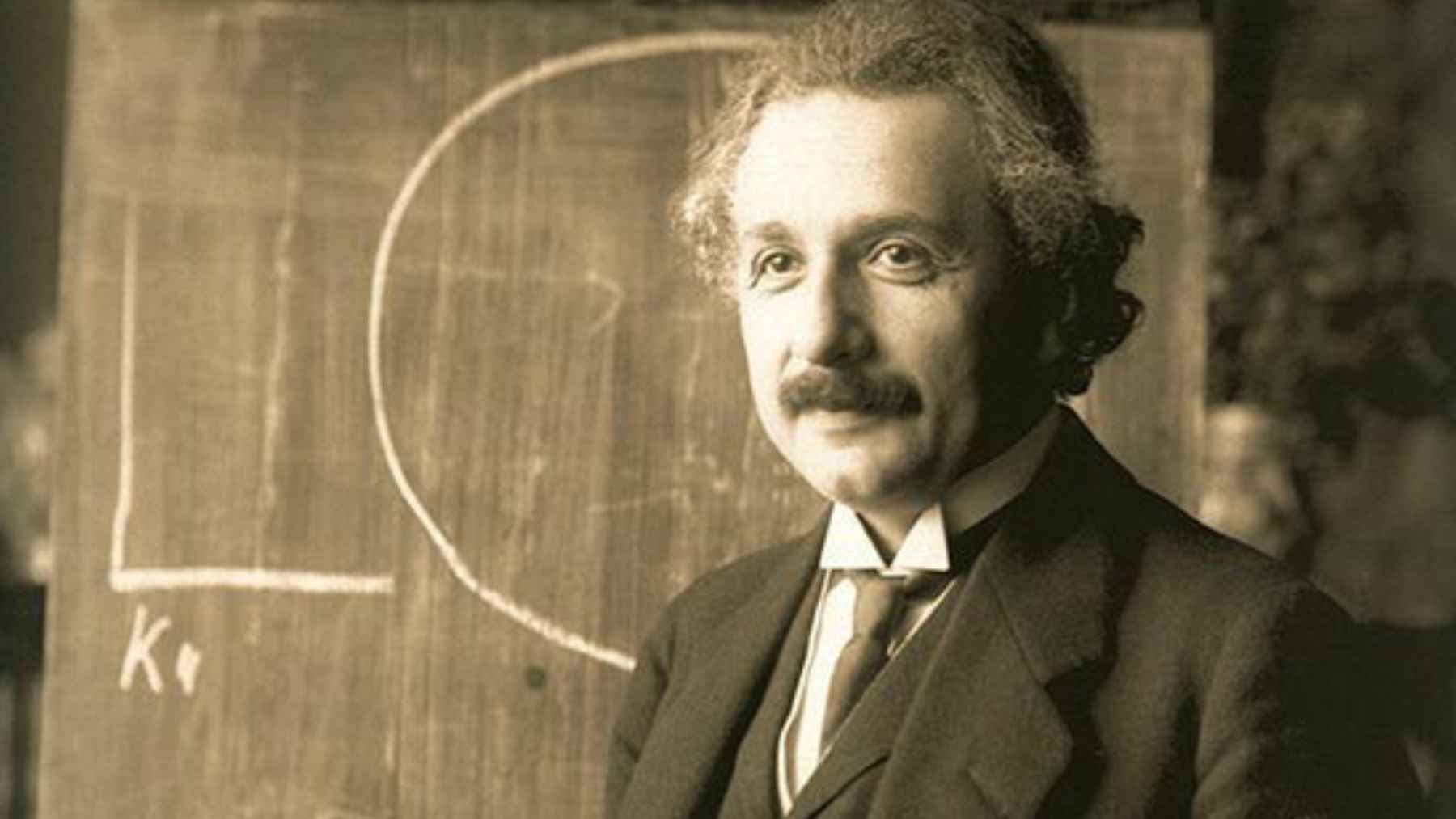
It also fits what many biographies and historians highlight about Einstein as a public figure. He often pushed against rigid thinking and argued that education should teach people how to think, not just how to obey. In that light, “keep moving” is not just about speed – it is about refusing to get mentally stuck.
The science behind “keep moving”
Psychologists have a name for one version of this idea, and it is called “behavioral activation.” The basic concept is simple even if the label sounds technical. You start doing small, planned activities again, even when you do not feel like it, because action can help restart motivation.
A 2014 meta-analysis in PLOS ONE led by David Ekers reviewed 26 randomized trials with 1,524 participants and found that behavioral activation reduced depression symptoms compared with control groups, and it also performed well when compared with medication in the studies that tested that head to head.
The researchers also noted important limits, including that many studies were short and study quality was often low.
Movement matters in a more literal way too. A 2024 review indexed on PubMed, led by researcher Michael Noetel, concluded that exercise can be an effective treatment for depression, with walking or jogging, yoga, and strength training among the stronger performers across the trials they combined.
The authors also flagged an important caveat that many studies had a higher risk of bias, which means the results are promising but not perfect.
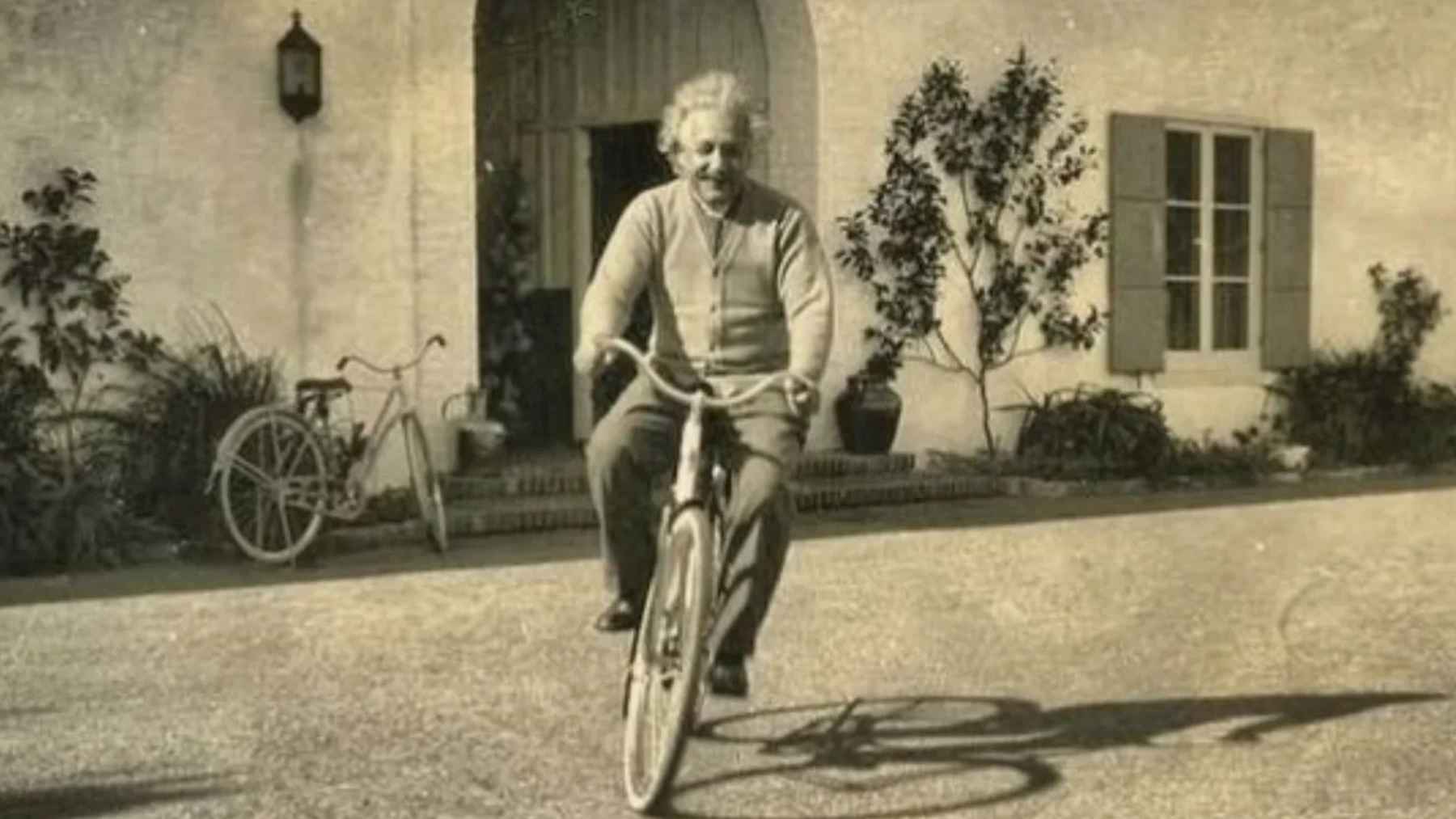
Albert Einstein rides a bicycle in a now-iconic image that reflects his widely shared quote about balance and the need to keep moving.
Why everyday motion shows up in health guidance
This is not only about therapy sessions or gym plans. Public health agencies keep coming back to the same theme because it is practical. It is easier to build stability when there is at least some routine and movement in the week.
The World Health Organization says regular physical activity has mental health benefits and can reduce symptoms of depression and anxiety. It also reports that about 80% of adolescents worldwide do not meet recommended activity levels, which helps explain why schools and communities keep looking for realistic ways to get teens moving.
None of this means a short walk “solves” serious mental health problems. But it does support the basic logic behind the bicycle metaphor. For many people, doing something small can be better than doing nothing, especially when the alternative is staying frozen in place.
What resilience means in plain language
Resilience is often described as the ability to adapt successfully in the face of stress and adversity. A 2016 review archived by the Centers for Disease Control and Prevention uses that framing and also notes that most people experience major stressful events in their lives, yet many do not develop long-term disorders afterward.
That’s the bicycle connection in everyday terms. Balance is not a permanent state you “achieve” once. For most people, it is closer to a set of tiny corrections you keep making, like adjusting your steering when the road tilts.
And yes, sometimes you still fall. The metaphor does not promise a smooth ride, and real resilience is not about pretending everything is fine. It is about staying engaged with your life, getting support when you need it, and finding a pace you can actually sustain.
How the internet reshapes famous words
Quotes travel the way rumors do. They get shortened, translated again, reposted without context, and sometimes attached to the wrong moment in history. Over time, the cleanest version usually “wins,” even if it is not the most accurate one.
One reason it is easier to double-check today is that more primary documents are available online.
In a December 5, 2014, announcement, director Diana K. Buchwald described the launch of the Digital Einstein Papers as a public resource offering access to translated and annotated writings, including personal correspondence, through a collaboration involving the Einstein Papers Project at the California Institute of Technology, Princeton University Press, and the Hebrew University of Jerusalem.
That kind of access does not stop misquotes from spreading, but it gives readers a way to verify what they are sharing. It also adds something most reposts leave out. Context. The words hit differently when you know they were written to one specific person, in a real moment, not crafted for applause.
The main official work has been published in The Collected Papers of Albert Einstein.