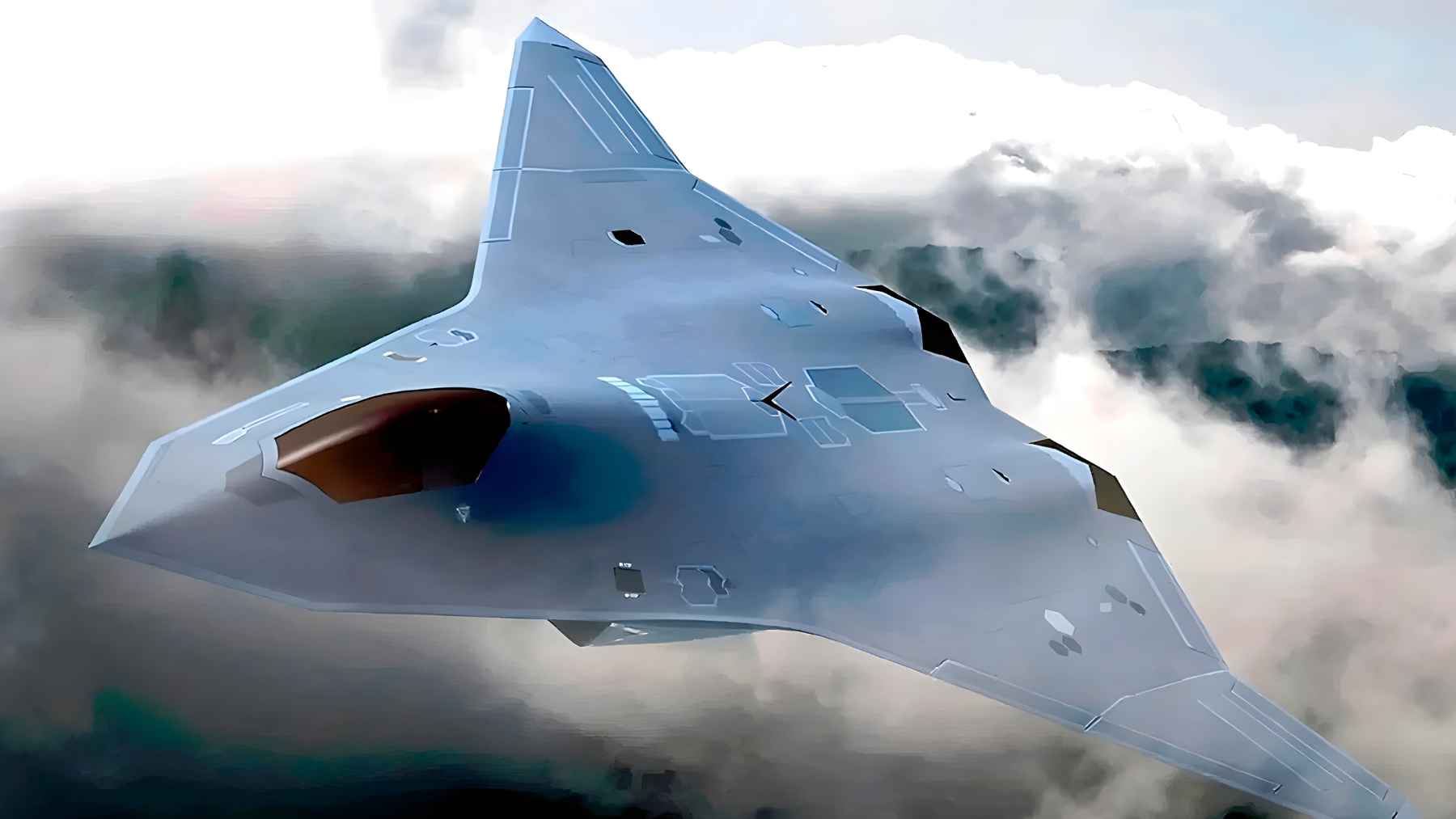
The U.S. Air Force says its F-47 sixth-generation fighter is still on schedule to make its first flight in 2028, with leaders pointing to steady progress and an aggressive plan. The update matters because new military aircraft often take many years to move from contracts to real jets in the air.
If the timeline holds, the F-47 would take over the air-superiority job now carried by the F-22, meaning control of the skies so other aircraft can operate safely. That could shape how the service plans long-distance missions and how long it has to rely on older fighters. Can a program this secretive really move that fast?
Timeline stays aggressive
At the Air & Space Forces Association Warfare Symposium in Aurora, Colorado, acquisition official Dale White told reporters on February 25, 2026, that the program is “doing exceptionally well” and remains “on time and on target,” as reported by journalist Chris Gordon.
White also said the first airframe is already in production and pointed to staffing gains, adding that “Boeing has done a really good job of ramping up the personnel piece,” even as the company deals with other work like the KC-46 Pegasus tanker.
The Department of the Air Force announced the development contract award on March 21, 2025, and described the F-47 as the crewed fighter element of its Next Generation Air Dominance platform. Officials also said many technical details and even some milestones will stay classified, which limits outside scrutiny.
A new kind of fighter
In public statements, officials describe the F-47 as the centerpiece of a broader “family of systems,” not a standalone jet expected to do everything by itself. The plan is for the crewed aircraft to connect with sensors, networks, and uncrewed teammates so the whole group can share information quickly and act together.
“Sixth-generation” is mostly a shorthand. In practical terms, it points to longer range, higher survivability in contested airspace, and a design that can be upgraded over time without waiting for rare and expensive overhauls.
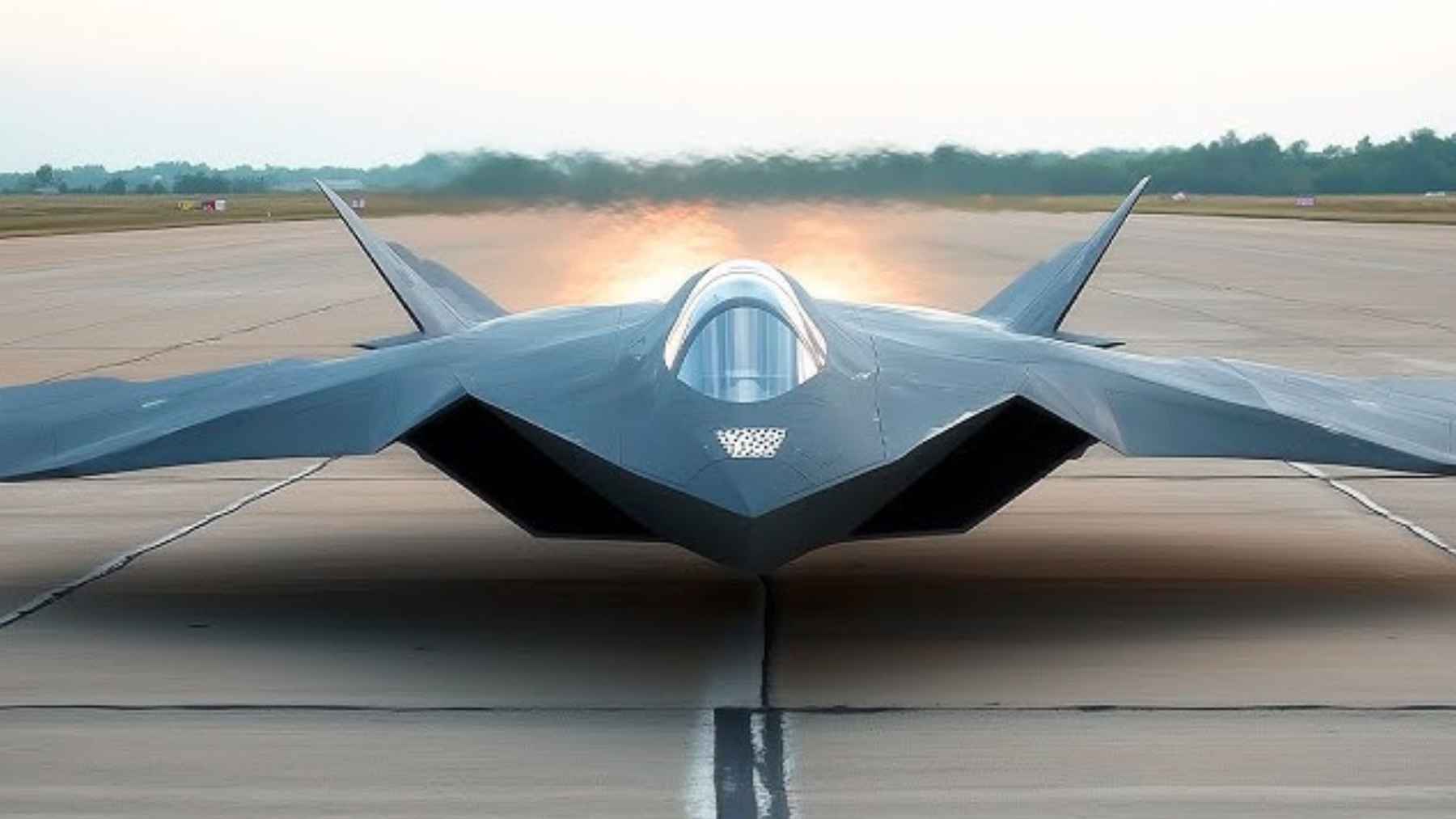
A next-generation fighter concept sits on a runway, illustrating the U.S. Air Force’s push to bring the F-47 into service by 2028.
Range and speed in plain terms
One of the few concrete numbers made public so far is range. The Air Force has said the F-47 should have a combat radius of more than 1,000 nautical miles, which is about 1,150 miles, and “combat radius” is how far it can fly out, do a mission, and still return without refueling.
For comparison, the F-22 has been cited at about 590 nautical miles, roughly 680 miles, depending on the mission.
Why does that matter? Tankers are the gas stations of the sky, and in a fight those gas stations may need to stay farther back for safety. More range can give planners more options, especially in huge theaters where distance can swallow fuel fast.
Speed is part of the promise too. Officials have said the jet should fly faster than Mach 2, which one report translated as more than 1,500 miles per hour, and they have also talked about buying at least 185 aircraft to match or exceed the current F-22 fleet.
How the Air Force got a head start
The schedule looks less surprising once you zoom out beyond the contract date. In a March 21, 2025, statement, Air Force Chief of Staff Gen. David W. Allvin said experimental “X-plane” test aircraft had been flying for years to lay groundwork for the F-47, logging hundreds of hours while much of the work stayed out of public view.
X-planes are flying testbeds that help engineers find problems before a production design is locked in.
There is also a historical yardstick for comparison. The official Air Force fact sheet on the F-22 notes that its engineering and manufacturing development phase began flying in 1997 after years of competition and design work, showing how long it can take to move from selection to flight even for a top-priority fighter.
Pressure on the industrial base
Behind every advanced fighter is the unglamorous reality of parts, people, and production space. In a March 2025 statement, the contractor said it had made its largest investment in its defense business to prepare for the NGAD fighter, signaling that it expects the program to be a long-term anchor for its military aircraft work.
Factory space can become a hidden bottleneck. Reuters reported in September 2025 that the company planned to relocate some F/A-18 service-life modification work out of the St. Louis region beginning in 2026, in part to free up capacity for newer programs including the F-47.
Big questions still unanswered
The timeline sounds crisp, but the public still sees only silhouettes of the program, not the full budget math or the hardest engineering tradeoffs. A Government Accountability Office report on tactical aircraft investments warned that the Air Force and Navy face real affordability pressures as they modernize existing fleets while pursuing next-generation air dominance efforts.
A first flight is a milestone, not a finish line. After the jet gets airborne, it still has to prove it can be built consistently, maintained efficiently, and upgraded without turning every change into a multi-year rewrite.
What to watch next
One key storyline is how the future fighter pairs with uncrewed aircraft that can scout, jam, or carry extra weapons, while a human pilot stays responsible for the most sensitive choices. The Air Force has described its Collaborative Combat Aircraft effort as a key component of the Next Generation Air Dominance family of systems, built around modular designs and rapid updates.
For now, the simplest test is whether the program keeps meeting near-term milestones without a major reset. If the F-47 flies in 2028 as planned, the next debate will quickly shift from “Can it fly?” to “How soon can it scale, and at what cost?”
The main report has been published in Air & Space Forces Magazine.