A team of U.S. engineers says it has built a fiber composite that can “heal” internal damage more than 1,000 times, a breakthrough that could dramatically extend the lifespan of everything from wind turbine blades to airplane parts.
In lab tests, the material repeatedly repaired a common failure called delamination, and the researchers estimate it could stretch typical composite lifetimes from a few decades into the range of centuries.
Why does that matter for the environment? Because modern clean-energy and low-emission technologies lean heavily on lightweight composites that are hard to repair and often difficult to recycle, so they tend to be replaced rather than truly fixed.
If a critical component can be repaired again and again in place, fewer massive parts get manufactured, shipped, and scrapped. And that changes the math on industrial waste.
The hidden weak spot in today’s “super materials”
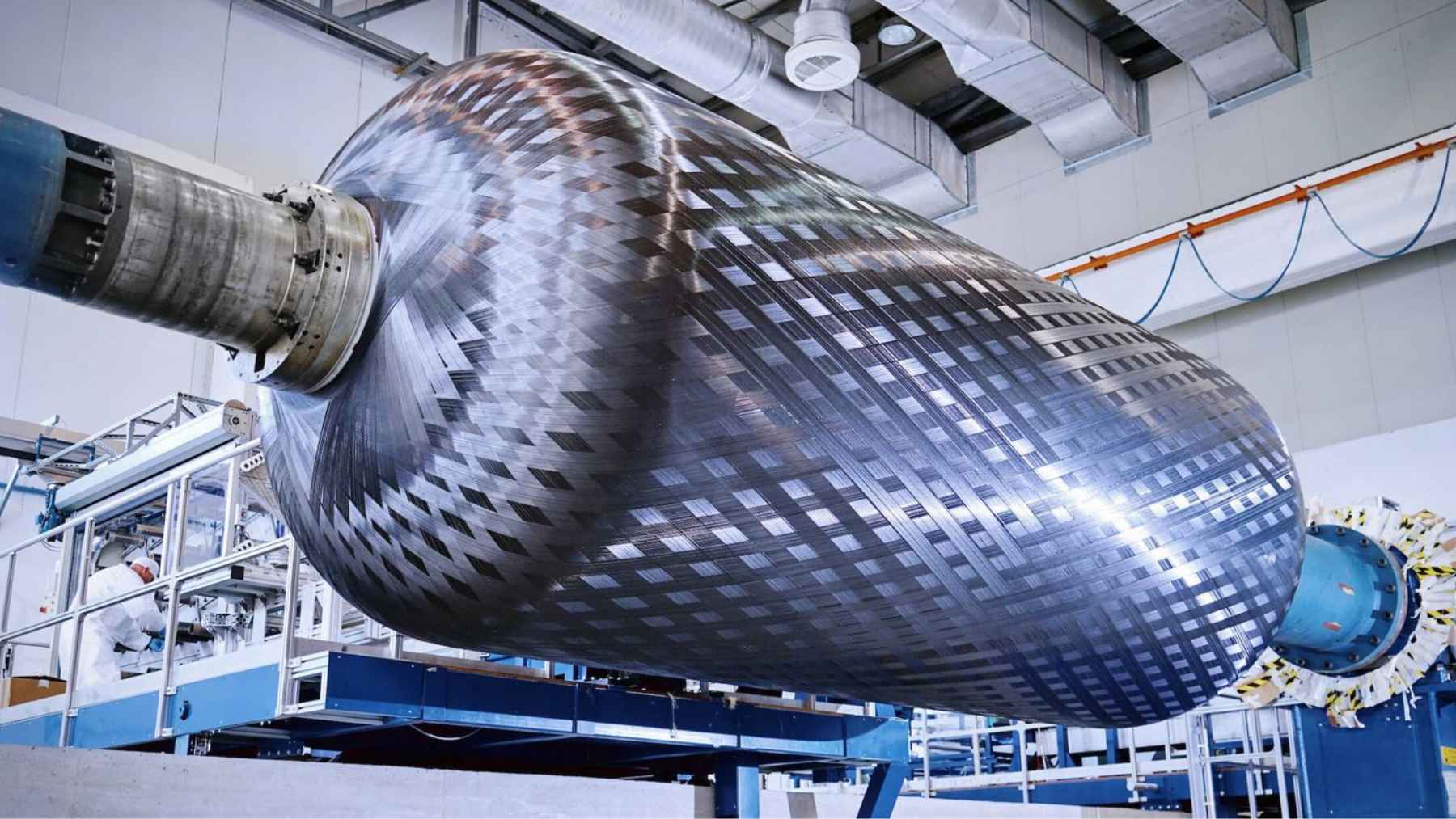
Fiber-reinforced polymer (FRP) composites are popular for a simple reason. They deliver high strength without the weight, which is why they show up in aircraft, cars, wind turbines, and even spacecraft.
But they have an Achilles’ heel called interlaminar delamination — when layers inside the composite begin to separate after cracks form. Once that separation starts, structural integrity can drop fast, and operators often end up in a cycle of inspections, repairs, and part replacement.
Jason Patrick, a civil and environmental engineering professor at North Carolina State University and corresponding author of the research, puts it bluntly. “Delamination has been a challenge for FRP composites since the 1930s,” he said, adding that conventional FRP composites often have a design life of about 15 to 40 years.
A “printed-in” layer that makes cracking harder from day one
The new material looks like a standard FRP composite, but it hides two key upgrades inside. First, the team 3D-prints a thermoplastic healing agent directly onto the fiber reinforcement to create a patterned interlayer between the composite’s laminates.
That interlayer is made from poly (ethylene-co-methacrylic acid), known as EMAA, and it does more than just wait around for damage. The researchers report it makes the laminate about two to four times more resistant to delamination right from the start, which is a big deal because preventing cracks is always easier than chasing them later.
Think of it like building a flexible seam into a stiff structure. It is still one component, but it is less likely to “peel apart” internally when it gets stressed, hit by debris, or repeatedly flexed in the real world.
Heat, electricity, and a repair that happens inside the material
The second upgrade is a set of thin, carbon-based heater layers embedded in the composite. When an electrical current runs through those layers, they warm up and melt the EMAA interlayer so it can flow into cracks and microfractures and then re-bond the damaged interface.
In other words, the composite is designed to re-weld itself, not with an external patch, but with material that is already inside the structure. The researchers describe the mechanism as “thermal remending,” a repair process that relies on the thermoplastic softening and re-entangling at the fracture site.
Of course, it is not magic. You still need a way to trigger the heating safely, and in many applications that means sensors, power management, and maintenance protocols that decide when a “heal cycle” is worth running.
What 1,000 break-and-repair cycles actually tells us
The headline number is impressive, but the testing details matter. To evaluate long-term performance, the team built an automated system that repeatedly applied tensile force until it produced a delamination about 2 inches long, then activated the heating process and measured how much load the material could handle before delaminating again.
They ran 1,000 consecutive fracture-and-heal cycles over 40 continuous days, measuring resistance after each repair. The team described this as roughly an order of magnitude beyond its previous record in this area of work.
Lead author Jack Turicek said the composite starts out “significantly tougher” than conventional versions and resisted cracking better than existing laminated composites for at least 500 cycles. The researchers also report that toughness declines with repeated healing, but “very slowly,” and they estimate components could remain functional for about 125 years with quarterly healing or up to 500 years with annual healing.
Why this could matter for renewable energy waste
Wind power is clean at the point of generation, but the hardware is not weightless, and blades are built from stubborn composite materials for a reason. The trouble is that those same materials can be difficult to recycle, and blade replacement creates a growing end-of-life challenge for the sector.
Researchers at the National Renewable Energy Laboratory note that large wind turbine blades are tough to recycle, and they estimate cumulative U.S. blade waste could total about 2.2 million tons by 2050 based on current decommissioning rates.
They also point out that wind turbines have an estimated lifespan of about 20 years, sometimes less if repowered.
Extending blade life does not eliminate the recycling problem, but it can delay it and shrink it. If fewer blades need to be replaced over time, fewer truckloads of giant composite parts end up waiting for landfills, cement kilns, or the limited recycling pathways that exist today, and that can help keep clean electricity cheaper when that summer heat pushes the electric bill up.
From airplanes to deep space, plus the real-world hurdles
Patrick argues the approach could reduce costs, labor, energy consumption, and waste across multiple industrial sectors by lowering the need to replace damaged components. He also says the technology could be “exceptionally important” for spacecraft, where on-site repairs may be difficult or impossible.
Still, experts will want to see how the system behaves outside the lab. Certification testing, moisture and temperature cycling, long-term fatigue, and real damage scenarios like hail and bird strikes will all matter, especially when human safety is on the line.
The team has patented and licensed the technology through its startup Structeryx Inc., signaling it is already thinking about scale-up and deployment rather than keeping it on a shelf.
At the end of the day, the promise is simple and practical. Repair more, replace less, and cut the material footprint of machines we rely on.
The study was published in Proceedings of the National Academy of Sciences.