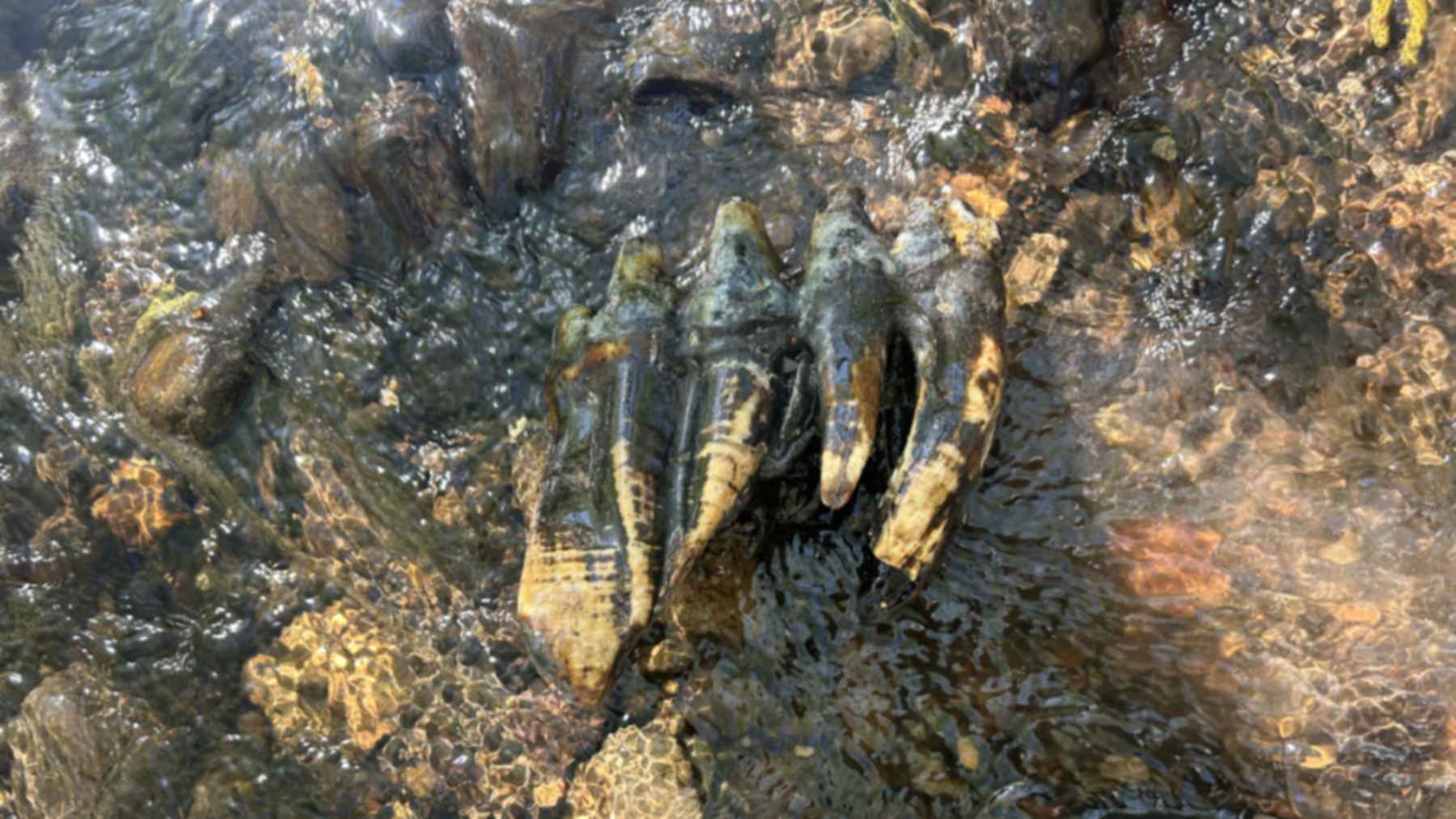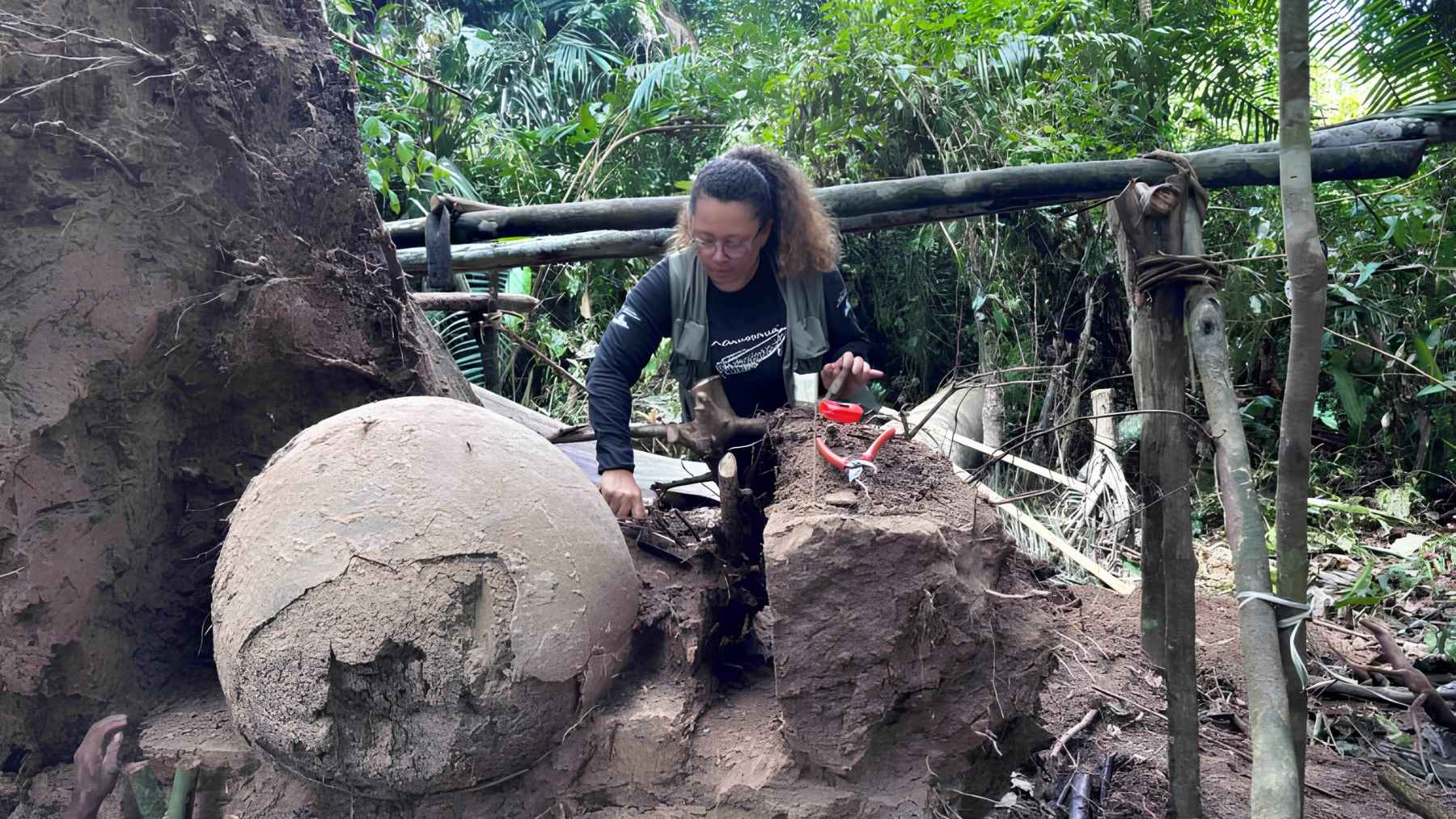
A fallen tree in the Brazilian Amazon has exposed seven ceramic burial urns under its roots, opening a rare window into how ancient Indigenous communities lived, mourned, and adapted to seasonal floods. Several vessels held human bones, along with fish and turtle remains, and the largest was nearly 3 feet wide and weighed around 770 pounds.
The find at Lago do Cochila, near Fonte Boa in Amazonas state, is not just another archaeological surprise. It strengthens a bigger idea now reshaping Amazonian archaeology: that many river communities did not simply pass through the floodplain. They built, stayed, and remembered their dead there.
Urns under the roots
The urns were found about 16 inches below the surface, tucked into soils where people once lived. That is shallow enough to make the discovery feel almost unbelievable, yet deep enough to show the vessels were deliberately placed.
“They are large and have no visible ceramic lids,” said researcher Geórgea Layla Holanda in field reports. The absence of ceramic lids suggests that the vessels may once have been sealed with plant fibers, wood, or other organic materials that slowly disappeared.
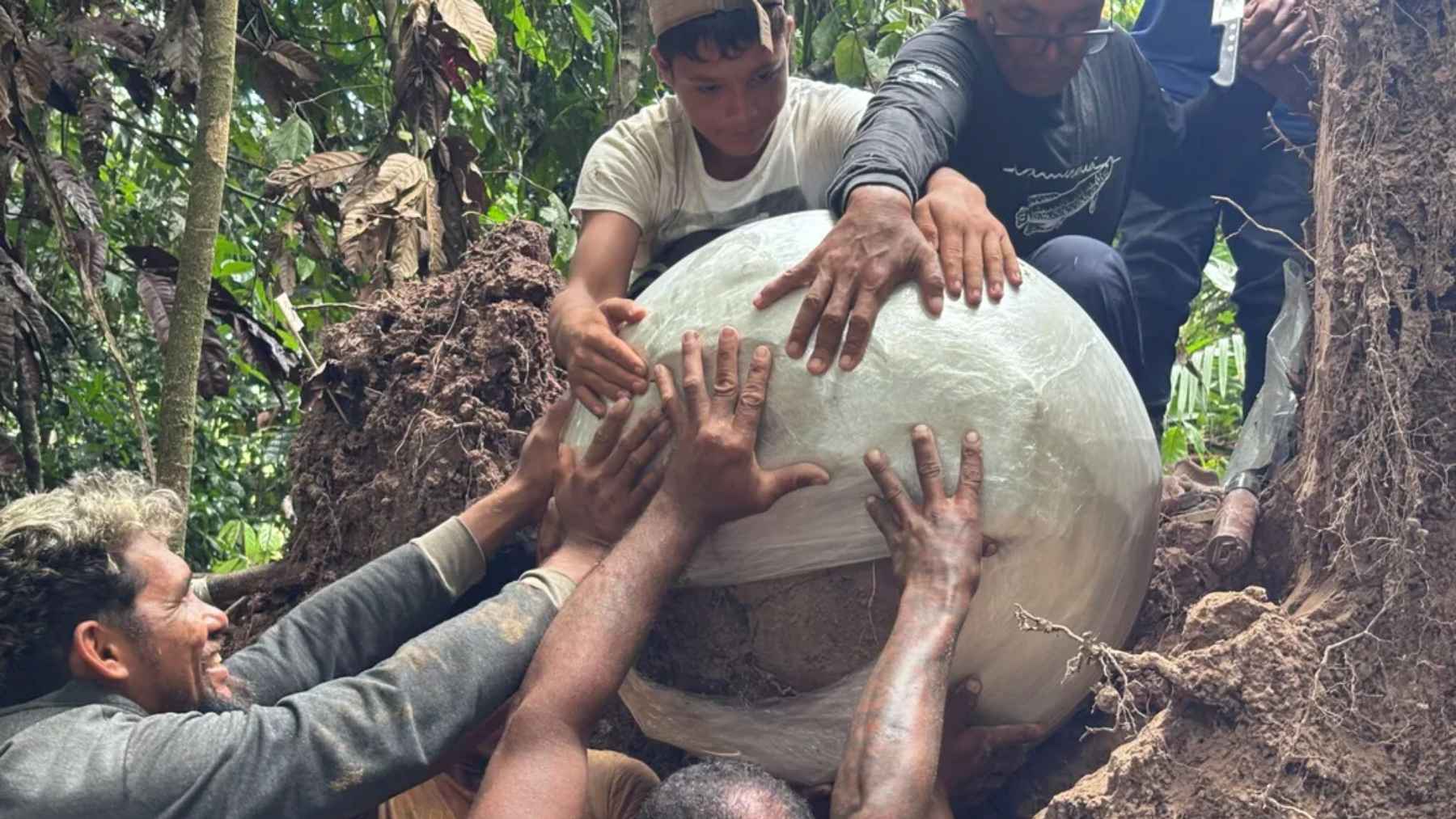
That detail matters. If the urns were placed under old house floors, they were not isolated in a distant cemetery. They were part of daily life, sitting beneath the same spaces where families cooked, slept, talked, and waited out the river’s rise.
A home built above water
Lago do Cochila sits in a floodplain, the kind of place where water can change the map for months at a time. Ancient residents answered that challenge by raising parts of the land with earth and broken pottery, creating artificial islands that could support homes during seasonal floods.
Think of it as engineering with mud, clay, and patience. In practical terms, that meant a family could stay close to fishing grounds without packing up every time the water rose.
Archaeologist Márcio Amaral, of the Mamirauá Institute for Sustainable Development, helped lead the work and described these raised islands as evidence of sophisticated Indigenous engineering. That is why the fallen tree is more than a lucky break. It exposed a buried part of a planned landscape.
Bones, fish, and turtle remains
Inside several vessels, researchers found human bones as well as remains of fish and turtles. The combination suggests funerary practices linked to offerings, feasts, or meals that marked important stages in the treatment of the dead.
What was happening in those ceremonies? Archaeologists are cautious, but the evidence fits broader patterns from parts of lowland South America, where death could involve more than one step. Bones might be cleaned, gathered, and later placed in containers that gave the dead a new resting place.
The fish and turtle remains add another layer. These animals were everyday food in river communities, but inside burial urns they may have carried ritual meaning too. The line between meal, offering, and memory was probably not as sharp as it might seem today.
A rescue built by neighbors
The discovery began with local residents who noticed pottery in the roots of a fallen tree. Walfredo Cerqueira helped alert the right people, while Nádia Silva organized meals for the team during fieldwork near the remote site.
Getting the urns out was slow, physical work. The crew built a wooden platform with vines, about 10 and a half feet high, so they could work against the tangled root mass without crushing the fragile ceramic walls.
The largest urn was stabilized with bandages, plaster, plastic wrapping, and wooden supports before being moved by river. Fonte Boa is about 118 miles from Tefé in a straight line, and the trip by water can take 10 to 12 hours depending on river conditions. No shortcut here.
A ceramic style that does not quite fit
The pottery itself is part of the mystery. Some fragments show a rare greenish clay, red bands, and thin clay coatings used to change the look of the surface.
The urns also appear rounder than typical regional funerary vessels and lack visible ceramic lids. For the most part, they do not fit neatly into well-known Amazonian ceramic traditions, including the Polychrome Tradition that spread across parts of the Solimões region between about the eighth and sixteenth centuries.
That does not prove a lost civilization in the sensational sense. It suggests something more useful to science. The Lago do Cochila pieces may reflect a local style, an undocumented tradition, or a household way of making burial vessels within a wider river network.
Why this discovery matters
For a long time, outsiders often imagined the Amazon floodplain as too wet, too unstable, or too difficult for lasting settlement. Finds like this push against that old picture. The urns show people investing in place, building raised islands, shaping ceramic vessels, and tying family memory to the house floor itself.
The discovery also shows how modern archaeology works best in places like the Amazon. Local knowledge did not just help the researchers arrive. It shaped the timing, logistics, safety, and care of the excavation.
Now the lab work begins. Sediments, bone fragments, and microscopic traces inside the urns may reveal more about diet, age, burial customs, and whether fish or turtle remains were linked to season, status, or ceremony.
The official statement was published on the Instituto Mamirauá’s website.