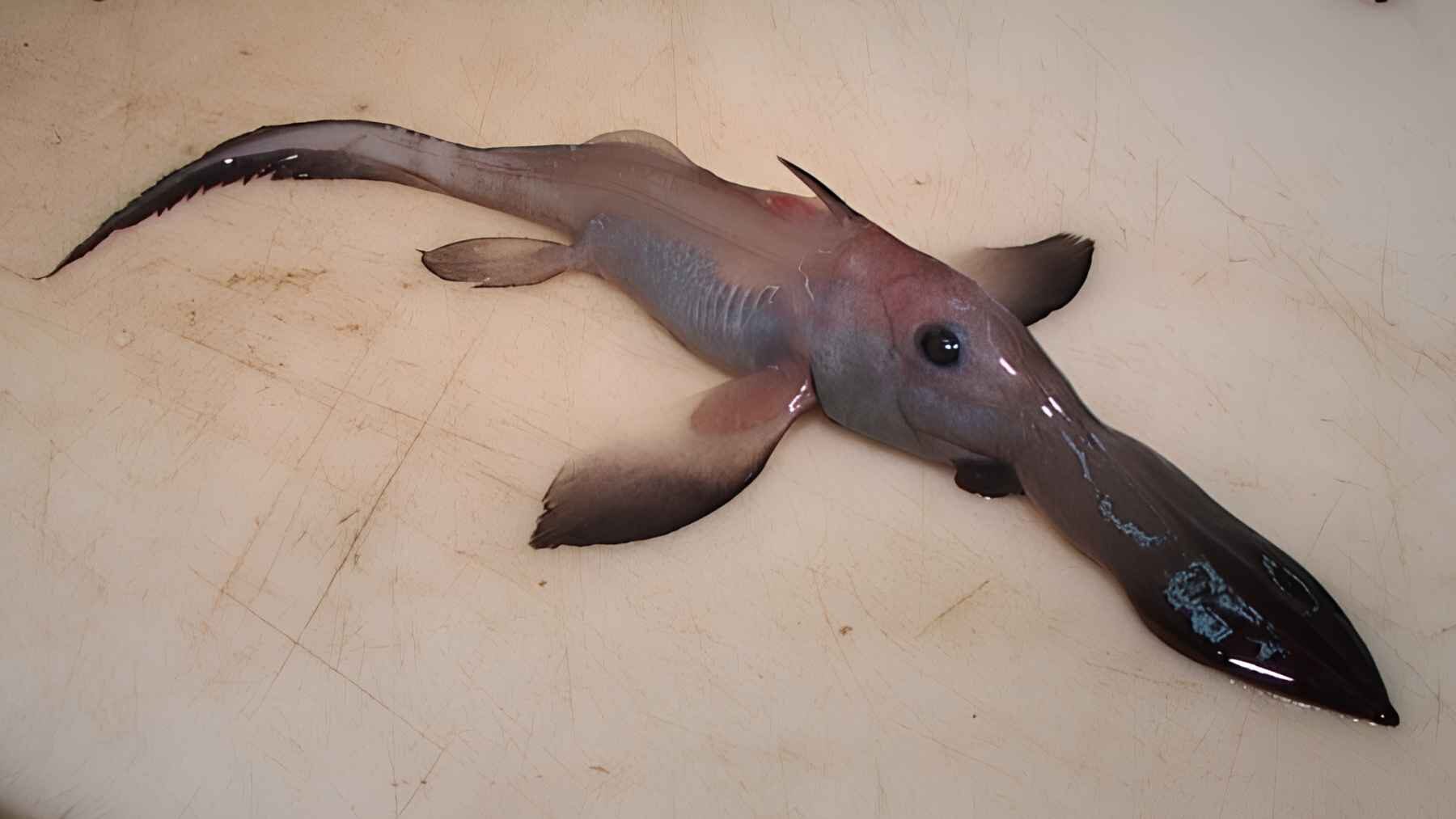
Most travelers see Costa Rica through green mountains, bright birds, cloud forests, and warm beaches. Far off its Pacific coast, however, in cold, dark water far below recreational diving, scientists have now put a new animal on the map. Its name is Rhinochimaera costaricana, and its discovery adds a ghostly new chapter to the country’s biodiversity story.
The fish is a long-nosed chimaera, a group often called ghost sharks. That nickname sounds dramatic, but the science is even more interesting. Chimaeras are cartilaginous fishes related to sharks and rays, yet they sit on their own branch of the family tree.
A deep Pacific discovery
The species was described by researchers affiliated with Costa Rica’s Fisheries and Aquaculture Institute, the University of Costa Rica, and Brazil’s Federal University of Pará. The scientific paper was published on June 10, 2026, and formally places the fish in the genus Rhinochimaera.
Researchers based the description on three male specimens collected off Costa Rica’s Pacific coast between 2000 and 2023. The animals were found between about 1,280 and 2,580 ft. deep, which places them well beyond the world most ocean lovers ever see. Down there, no beachgoer, snorkeler, or casual diver is getting a glimpse.
These specimens were not tiny curiosities. The formal type series measured about 30.5 to 32.7 in. in total length, meaning this was a fully visible animal hidden mainly by depth, not by size. That is the trouble with the deep sea, it can hide large secrets in plain darkness.
What makes it different
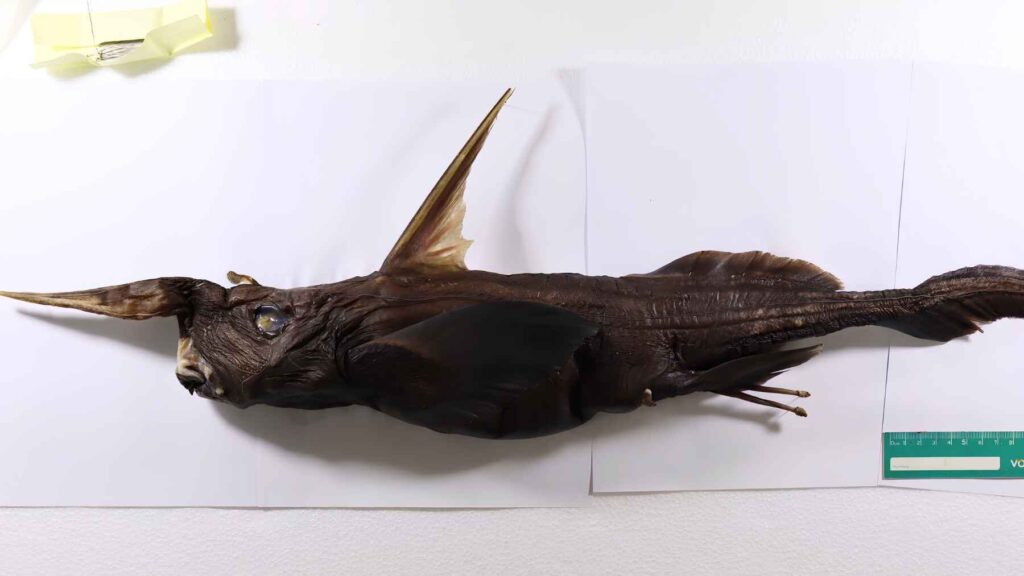
At first glance, a long-nosed chimaera can look like a creature drawn from spare parts. It has an elongated snout, broad fins, a smooth body, and a tail that tapers into the darkness. However, identifying a new species takes more than an eerie look.
The team compared 49 body measurements from the Costa Rican specimens with data from more than 90 individuals representing the three species previously recognized in Rhinochimaera. The Costa Rican fish stood out by a combination of traits, including a shorter snout, a taller first dorsal fin and spine, a wider space between dorsal fins, and fewer tubercles along the tail.
That matters because species are rarely defined by one dramatic feature. More often, the difference is a pattern, a set of traits that line up when researchers compare enough specimens. In practical terms, this was not just an oddball chimaera pulled from deep water.
DNA sealed the case
The study also used molecular analysis, which is now changing how scientists confirm life forms that look similar. Researchers analyzed COI sequences from two specimens and found genetic divergence from the other Rhinochimaera species, including 3.9% from R. africana, 4.5% from R. atlantica, and 4.7% from R. pacifica. Species delimitation methods also supported its recognition as distinct.
That may sound like a small gap, but in taxonomy, small numbers can carry a lot of weight when they match the body evidence. The anatomy pointed one way. The DNA pointed the same way.
Ghost sharks are not really sharks
So, is this fish a shark? Not quite. “Ghost shark” is a common name used for chimaeras, but these animals are not true sharks.
Like sharks and rays, chimaeras have skeletons made of cartilage rather than bone. The Smithsonian notes that they are related to sharks but differ in important ways, including having only one gill opening on each side of the body. Their eerie eyes and deep-water habits helped earn them the ghostly nickname.
They are also easy to overlook. The ocean animals most people know are the ones that wash into headlines, appear in aquariums, or swim through documentaries. Chimaeras usually live beyond that familiar stage.
Costa Rica’s hidden ocean story
Costa Rica is famous for forest trails, volcanoes, birds, frogs, and national parks. However, the new species is a reminder that national biodiversity does not stop at the tide line. A country can protect rainforest canopies and still have major questions waiting in the deep Pacific.
The discovery also shows why museum collections and long-term sampling matter. The specimens used in the description were collected over more than two decades, from 2000 to 2023. Sometimes science does not move like breaking news. Sometimes it waits in jars, records, measurements, and DNA results.
New tools are helping researchers catch up. By combining traditional anatomy with genetic analysis, scientists can identify animals that might once have been folded into a known species. That’s where the deep sea keeps surprising us.
Why this matters now
Finding a new species is exciting, but it is also a warning. If scientists can still identify a fish this distinctive off a well-known country such as Costa Rica, what else is down there? And how many species are living near habitats affected by fishing, warming seas, or pollution before we even know their names?
The study does not answer every question about Rhinochimaera costaricana. It describes the species, compares it with close relatives, and gives researchers a clearer starting point. Its population size, full range, behavior, and conservation status still need further work.
At the end of the day, naming a species is not just a label. It is the first step in noticing it, studying it, and, when needed, protecting the place it calls home.
The official study was published in Zootaxa.