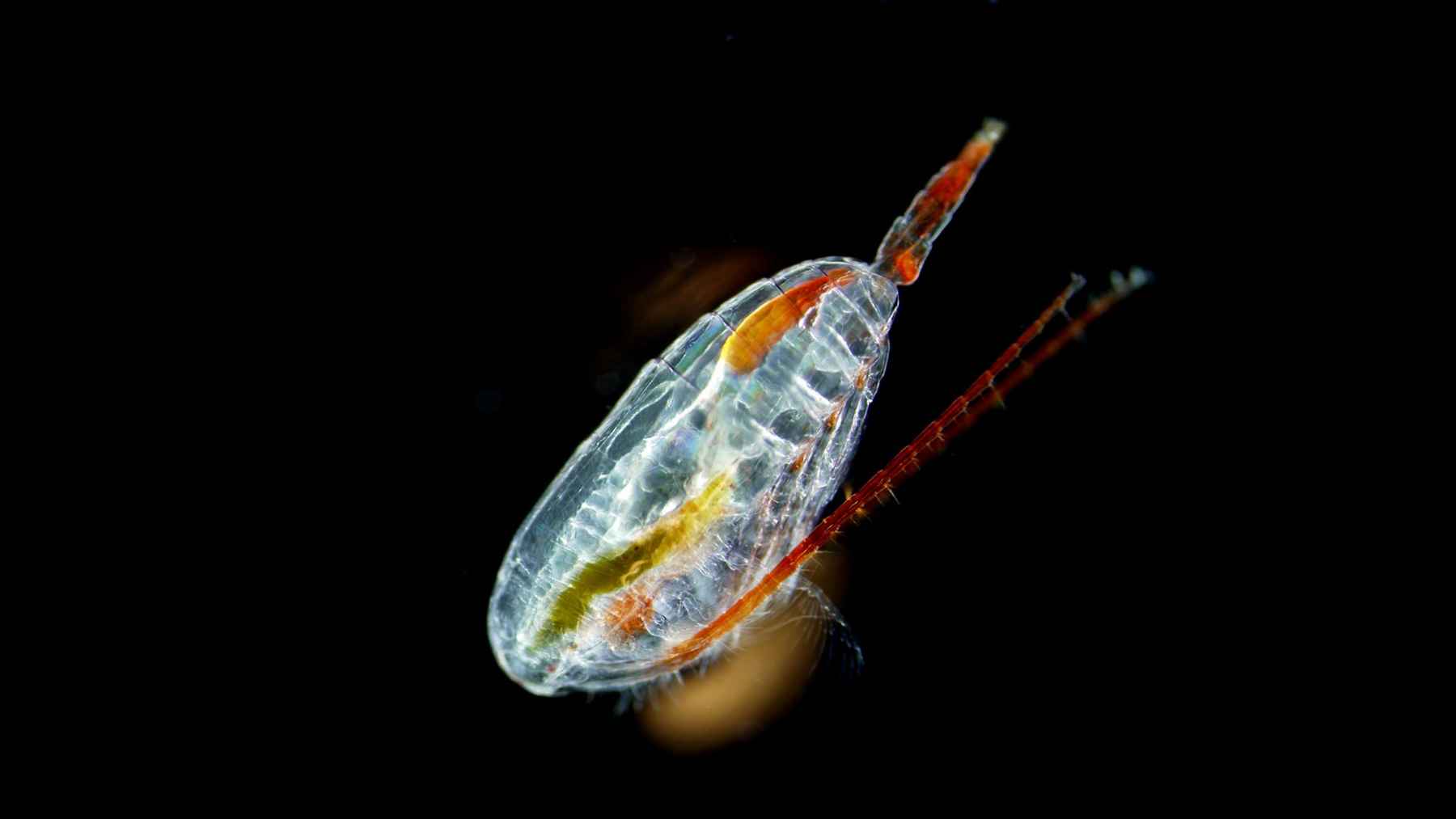
A tiny animal pulled from the deep North Atlantic has opened a fresh page in marine biology. Researchers have described a new family of copepods, small crustaceans found across the world’s waters, from a single specimen collected in the Irminger Basin southeast of Greenland.
The animal, now named Thalassodoron bathyale, was found about 8,323 feet below the surface, far deeper than most people will ever imagine when looking out over the ocean. The discovery matters because, since 1852, scientists had formally recognized only one family within its unusual order, Monstrilloida. One small creature changed that map.
A surprise below Greenland
The specimen came from a region of cold, dark water where sunlight never reaches and pressure is crushing. In everyday terms, this is not a blue, postcard ocean. It is a remote world where animals must survive without the rhythms that shape life near the surface.
Researchers from Germany, Italy, and Mexico worked on the study, including Dr. Nancy Mercado Salas of the Leibniz Institute for the Analysis of Biodiversity Change. The team used both body-shape comparisons and genetic tests to show that this animal did not fit inside the only family previously known for its group.
That is a big claim in taxonomy, the science of naming and organizing life. Scientists do not create a new family lightly. They do it when the evidence says the usual boxes no longer work.
What is a copepod?
Copepods are small crustaceans, distant relatives of crabs and shrimp. Many are so tiny that they drift as part of plankton, the living soup that feeds fish, whales, and countless other marine animals.
However, Monstrilloida are odd, even by ocean standards. Their young live as parasites inside other marine animals, while adults swim freely and do not feed. Imagine growing up hidden inside another creature, then spending adulthood moving through the water without eating at all.
That strange life cycle has made them difficult to understand. Their bodies also lack normal mouthparts and some features usually seen in crustaceans, which is one reason scientists have debated their place in the marine family tree for so long.
Why this one was different
The new species stood out because of its unusually long, backward-pointing antennules. These are sensory structures, somewhat like feelers, that help small crustaceans read the water around them.
The team also reported body structures not seen in other known members of the order. This means the animal was not just a slightly unusual cousin. It looked different enough, and its genes backed that up, to justify a new family called Thalassodoridae.
The name Thalassodoron bathyale roughly means “gift from the deep sea.” It is a fitting name, because the find was unexpected and came from a part of the planet that still feels more like a frontier than a fully mapped habitat.
A deeper family tree
Since the mid-19th century, scientists had grouped Monstrilloida under one known family, Monstrillidae. The new family expands that picture and gives scientists another branch to study.
A phylogenetic tree is basically a family tree for living things. Instead of tracking grandparents and cousins at a holiday table, it tracks how species and groups are related through evolution.
This discovery suggests that the story of Monstrilloida is more complicated than scientists once knew. It may also help explain how some of these animals evolved their strange adult bodies and their parasitic early lives.
One specimen, big questions
There is an important catch. So far, scientists know this animal from one collected specimen. That makes the discovery exciting, but it also means many questions remain open.
Where does it live most of the time? How common is it? What host does its larval stage use? Those answers will require more deep-sea sampling, and that is never simple or cheap.
Still, one specimen can matter. A single fossil can rewrite a chapter of ancient life, and a single living animal from the deep can do something similar for today’s oceans.
The deep sea still hides life
Dr. Mercado Salas said the discovery shows that the deep sea “still harbors life forms previously unknown to science.” That line is worth sitting with for a moment. We often talk about space as the great unknown, yet Earth’s own oceans still keep many secrets.
The deep sea is hard to reach, hard to sample, and easy to overlook. Yet it covers huge parts of the planet, and its animals may help scientists understand evolution, climate-linked ecosystem changes, and the resilience of life under extreme conditions.
At the end of the day, this tiny crustacean is not just another name in a database. It is a reminder that life’s family tree still has blank spaces, even in 2026.
Why it matters now
Discoveries like this also arrive at a time when deep-sea environments are drawing more attention from science, conservation, and industry. The more humans look toward the ocean floor for resources, the more urgent it becomes to know what actually lives there.
For the most part, people never see these animals. They do not appear on beaches, in aquariums, or in seafood markets, but they are part of the machinery of the ocean, the hidden web that keeps marine ecosystems working.
So, what did scientists really find south of Greenland? Not a giant monster, not a glowing alien, but something quieter and perhaps more meaningful. A small animal that forced biology to add a new branch.
The official study has been published in PeerJ.