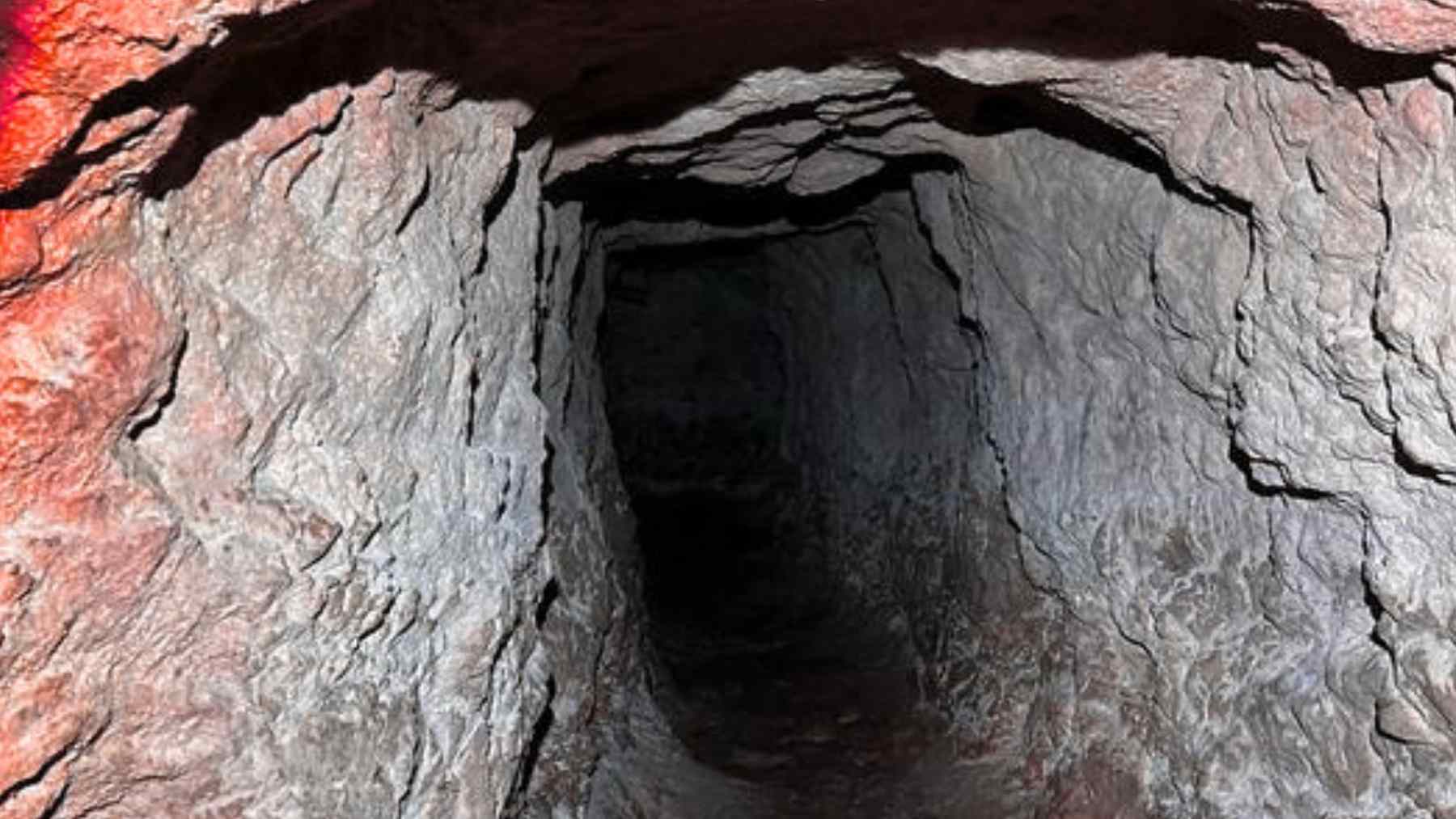
Researchers exploring a man-made tunnel on the tiny Greek island of Kastellorizo found something clinging to the walls in the dark. It was not a monster from fiction, thankfully, but a newly described cave cricket now named Dolichopoda balrogi, after the Balrog from J.R.R. Tolkien’s The Lord of the Rings. The insect was discovered in an artificial tunnel about 82 feet deep on the slopes of Mount Vigla.
The discovery may sound like a fun nod to fantasy, but the bigger message is very real. Even places that look ordinary, forgotten, or built by humans can hide species unknown to science, and those species may be fragile from the moment we find them. That’s where this small brown cricket becomes much more than a biodiversity curiosity.
A “Balrog” without the fire
The new species belongs to Dolichopoda, a group of cave crickets that live in dark, humid underground habitats across southern Europe and the eastern Mediterranean. These insects are built for places where sunlight barely reaches, with long legs that help them move across walls, ceilings, and damp stone surfaces.
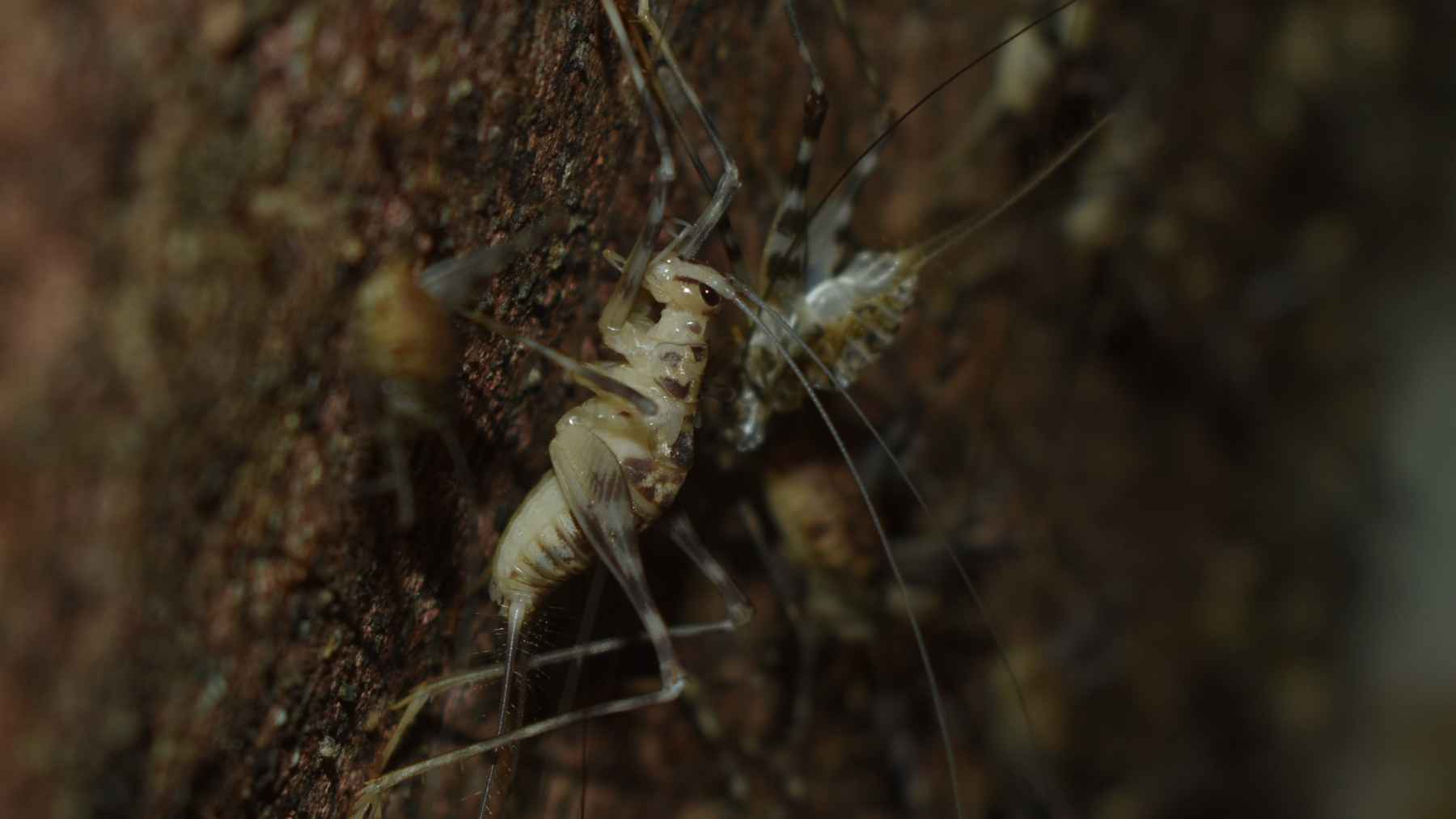
D. balrogi has a brown body and long, arching legs, which researchers say help it cling firmly to vertical and overhanging surfaces. Picture walking into a tunnel and noticing the walls are not empty at all. They are alive, quietly holding creatures that most people would pass without ever knowing what they were.
The Tolkien reference fits the setting. In the story, the Balrog is hidden deep below the mountains, revealed after miners “delved too deep.” This cricket is harmless, but its name captures the same idea of hidden life emerging from darkness.
Why Kastellorizo matters
Kastellorizo is small, measuring roughly 3.7 miles long and 1.9 miles wide. Yet small islands can be packed with biological surprises, especially when they sit in busy natural crossroads like the eastern Mediterranean.
Biologists already know the island for rare invertebrates, including scorpions, isopods, grasshoppers, and beetles. Now, this new cave cricket adds another piece to that hidden puzzle. Tiny island, big story.
The island’s location also matters because Kastellorizo sits near the meeting zone between Europe and Asia. By the researchers’ analysis, D. balrogi appears to reflect the island’s unusual biogeographic character, showing links to nearby Anatolian lineages rather than simply matching better-known Aegean patterns.
How scientists knew it was new
How do you prove a cricket is not just a familiar species in an unfamiliar place? Not with a quick glance.
Researchers used detailed morphological analysis and DNA testing to compare the specimens with known Dolichopoda species. In practical terms, that means they looked at body structures and genetic evidence before confirming that the cricket represented a species new to science.
The official study says the discovery raises the known number of Dolichopoda species to 68. It also highlights Greece as an important region for these cave-dwelling insects, even though the animals themselves often live in places most people never visit.
A tunnel becomes a refuge
One of the most interesting details is where the cricket was found. The researchers surveyed an artificial tunnel that serves as the island’s only accessible land cave, rather than a large natural cave system.
That does not mean every human-made structure is good for wildlife. Far from it. But in this case, the tunnel may have offered the kind of stable, dark, humid environment that cave-adapted organisms need.
Think of a basement that stays cool while that sticky summer heat builds outside. Underground spaces can hold a steady microclimate, and for some small creatures, that steadiness can be the difference between surviving and disappearing.
Fragile life in the dark
The discovery also comes with a warning. Cave-adapted species often have very restricted ranges, sometimes living in only one cave or one underground system. That makes them especially vulnerable to disturbance.
For the most part, animals like these do not have many backup options. A change in moisture, temperature, access, or human activity could affect an entire population if that population is confined to one narrow habitat.
The study authors called for more specialized surveys of the island’s caves and underground systems to learn whether other populations exist. They also said it would be valuable to consider management strategies to protect the known population.
What this tiny cricket teaches us
Lead researcher Konstantinos Kalaentzis summed up the larger lesson clearly. “These findings remind us that biodiversity discoveries are not limited to remote tropical forests or deep oceans. Even familiar landscapes and human-made structures can harbor species that have remained unnoticed.”
That may be the most important part of the story. We tend to imagine new species turning up in rainforests, coral reefs, or deep-sea trenches, but sometimes they are found in a tunnel on a small island that people thought they already understood.
The new cricket is not dangerous, flashy, or large. Still, it changes the scientific map in a small but meaningful way. It reminds us that conservation is not only about famous animals or grand landscapes. Sometimes, it begins with noticing what is clinging quietly to a wall in the dark.
The study was published on the Journal of Orthoptera Research.