A narrow stream of near-boiling water has cut through more than 2.1 miles of East Antarctic ice, giving scientists a verified path toward one of the most isolated lakes on Earth. The operation was carried out by China’s 42nd Antarctic expedition above Qilin Subglacial Lake, a buried body of water that has been cut off from the surface for a very long time.
The immediate headline is the depth. On February 5, 2026, the team drilled about 11,200 feet into the ice sheet, beating the previous hot-water drilling mark of about 8,330 feet by nearly 3,000 feet.
However, the bigger story is what comes next, because that clean hole could soon let researchers lower instruments into a dark lake that may preserve clues about ancient climate, hidden ecosystems, and life in places with no sunlight.
A hole cut by hot water
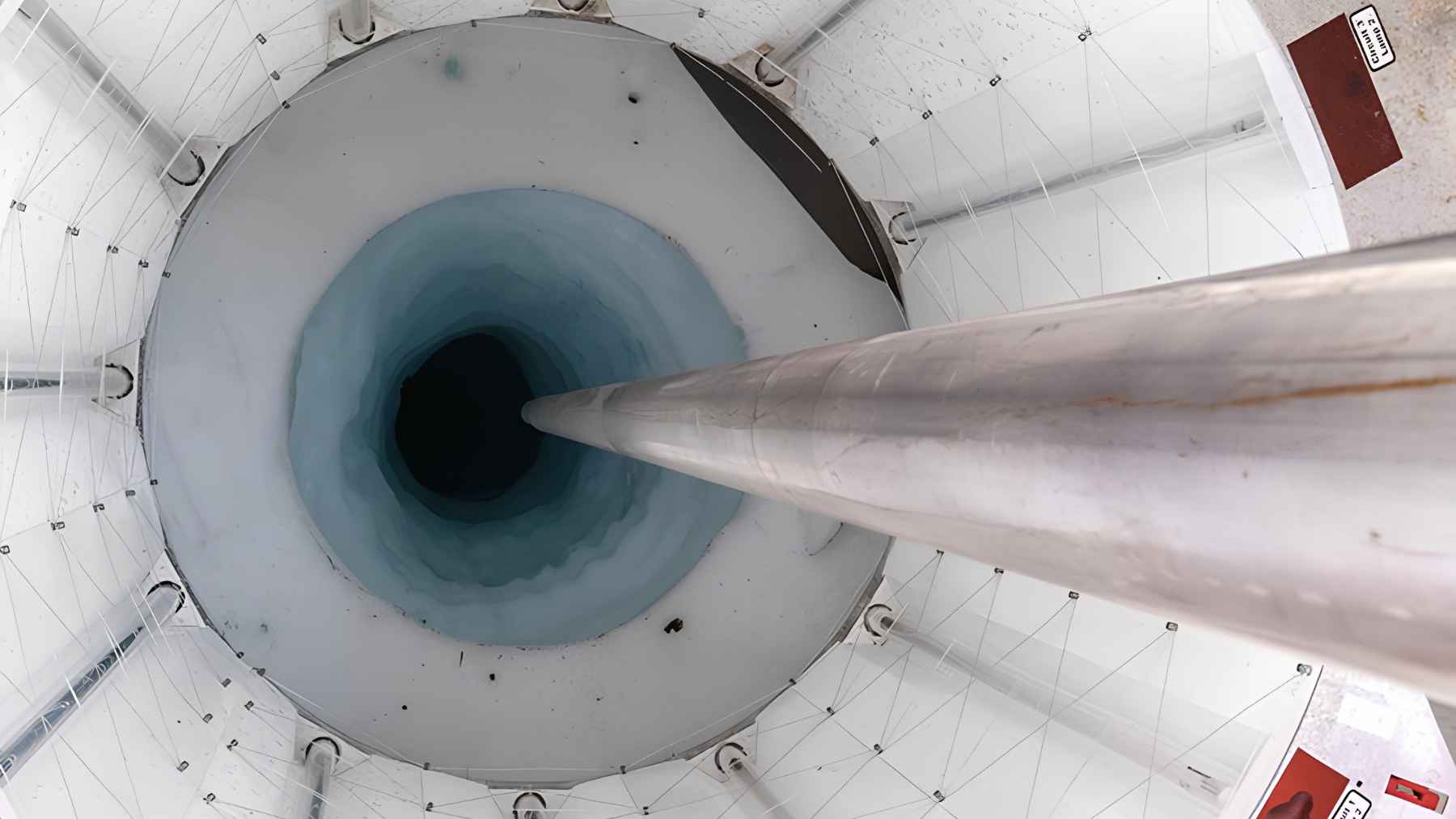
The idea sounds almost simple. Engineers heat water at the surface, push it under high pressure through a long hose, and let the jet melt its way down. As the hole deepens, the hose follows.
No metal drill bit has to chew through the ice. That matters because a subglacial lake is not just another field site. It is a sealed world, and a smear of fuel, surface microbes, or drilling fluid could ruin the very samples researchers hope to study.
This is why hot-water drilling has become a leading method for reaching deep polar targets. It can make a wide, clean borehole with less disturbance to surrounding ice and can reach places such as buried lakes, the underside of ice shelves, and bedrock far below the surface.
The lake beneath East Antarctica
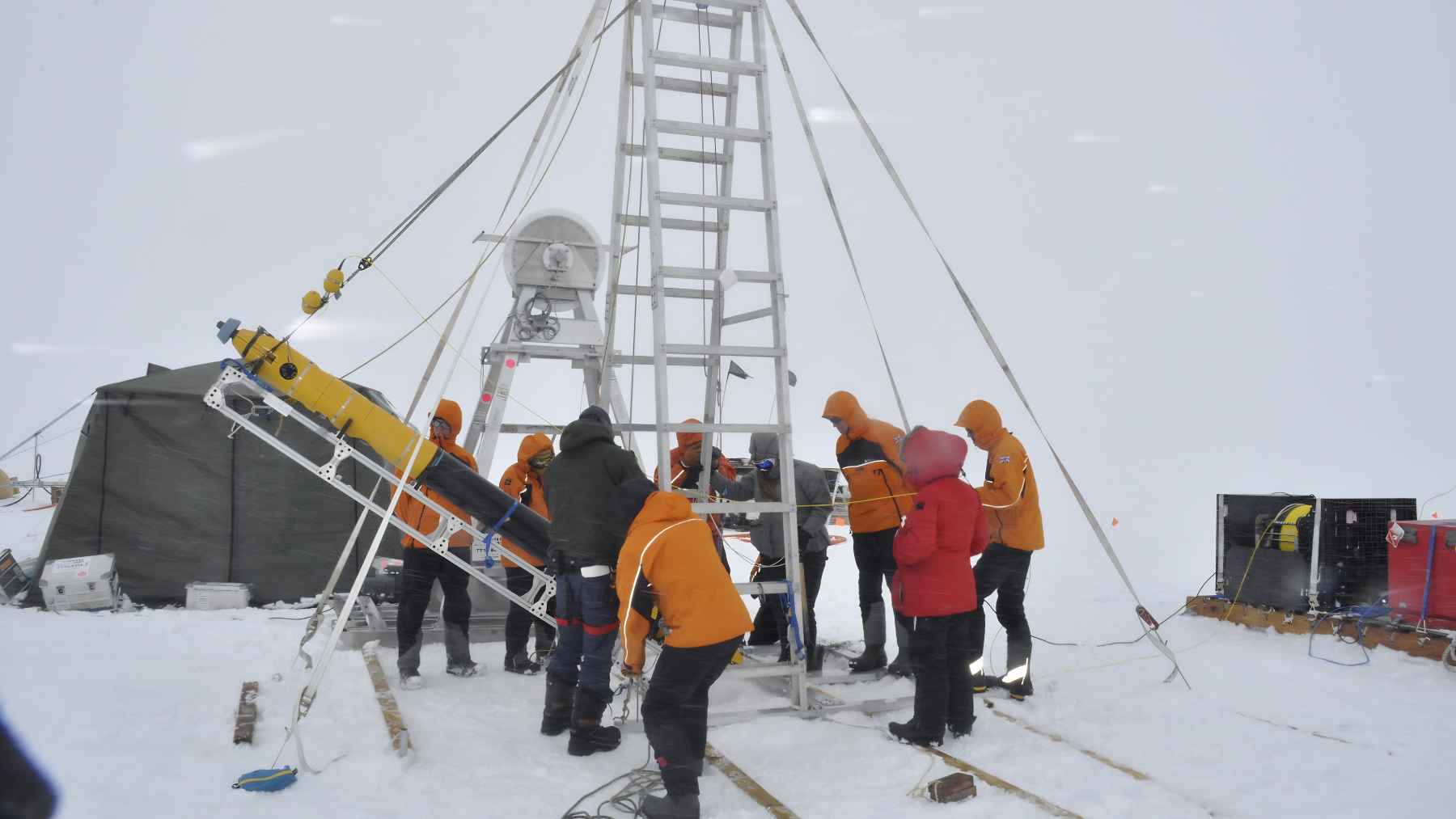
Qilin Subglacial Lake sits in Princess Elizabeth Land, about 75 miles from China’s Taishan Station in the interior of East Antarctica. China officially named the lake in 2022, and Chinese state media describes it as one of the largest buried lakes found on the continent.
A subglacial lake is a lake trapped under an ice sheet. It can remain liquid because pressure, the slow movement of ice, and heat rising from Earth help keep water from freezing solid, even when the air above is brutally cold.
What would a lake like this hold? Not fish or plants, at least as we know them. Scientists are looking for water chemistry, sediment from the lake floor, and tiny microbes that may survive by using minerals instead of sunlight as an energy source.
Why clean access matters
Clean access is the quiet hero of this story. If a team wants to know what lives in an untouched lake, it cannot bring the modern surface down with the drill. Even a few unwanted microbes could confuse the results.
That is why the Chinese test focused not only on depth, but also on contamination control. Xinhua reported that the team had to manage cold-weather operation, outside contamination, deep hoses, winches, transport, assembly, and process monitoring during the field test.
Guo Jingxue, head of the subglacial lake team and a senior engineer at the Polar Research Institute of China, described these lakes as extreme environments marked by pressure, low temperature, darkness, and limited nutrients.
Zhang Nan, a professor at Jilin University, said the drilling was designed to support future observations and the collection of water and lakebed sediment samples.
A record with a bigger purpose
The Ministry of Natural Resources said the test shows China can carry out drilling research across more than nine-tenths of the Antarctic ice sheet and all of the Arctic ice sheet. That is a technical statement, but it means more targets are now within reach.
For China, this was also a full-system shakedown in one of the hardest workshops on Earth. Equipment had to work at polar temperatures, over thick ice, far from normal supply lines. Anyone who has watched a garden hose freeze in winter can grasp a tiny part of the challenge.
The announcement also pointed to “green exploration” and environmentally responsible technology. That phrase can sound polished, but here it has a concrete meaning. The cleaner the access hole, the more useful the science and the lower the risk to a hidden environment.
A possible window into life without sunlight
Antarctic subglacial lakes are often described as natural time capsules. Their water and mud can preserve records of past ice movement, old climate conditions, and chemical reactions taking place far from air and sunlight.
There is already a reason to take that possibility seriously. In 2014, researchers reported in Nature that samples from Subglacial Lake Whillans in West Antarctica confirmed a viable microbial ecosystem beneath the ice sheet. Those organisms did not depend on sunshine in the way plants do at the surface.
That makes Qilin interesting well beyond Antarctica. NASA’s astrobiology program has noted that Antarctic subglacial lakes can help scientists think about icy worlds such as Europa and Enceladus, where liquid oceans may lie beneath frozen crusts.
Are those places alive? No one knows, but Earth’s buried lakes are one of the closest training grounds we have.
What happens next
The February drilling test did not end the story. It built the doorway. The next major step will be sending clean instruments through the borehole to measure the lake directly and collect water and sediment from below.
Those samples could help scientists reconstruct old environmental conditions, test whether microbes live in Qilin, and compare its chemistry with other hidden Antarctic waters. It may also help researchers understand how ice sheets move, because water at the base of ice can affect how glaciers slide.
For now, the achievement is both a record and a promise. More than 11,000 feet below the surface, a cold, dark lake is waiting for its first direct scientific look.
The main study describing the Qilin drilling system has been published in Arctic and Antarctic Research.