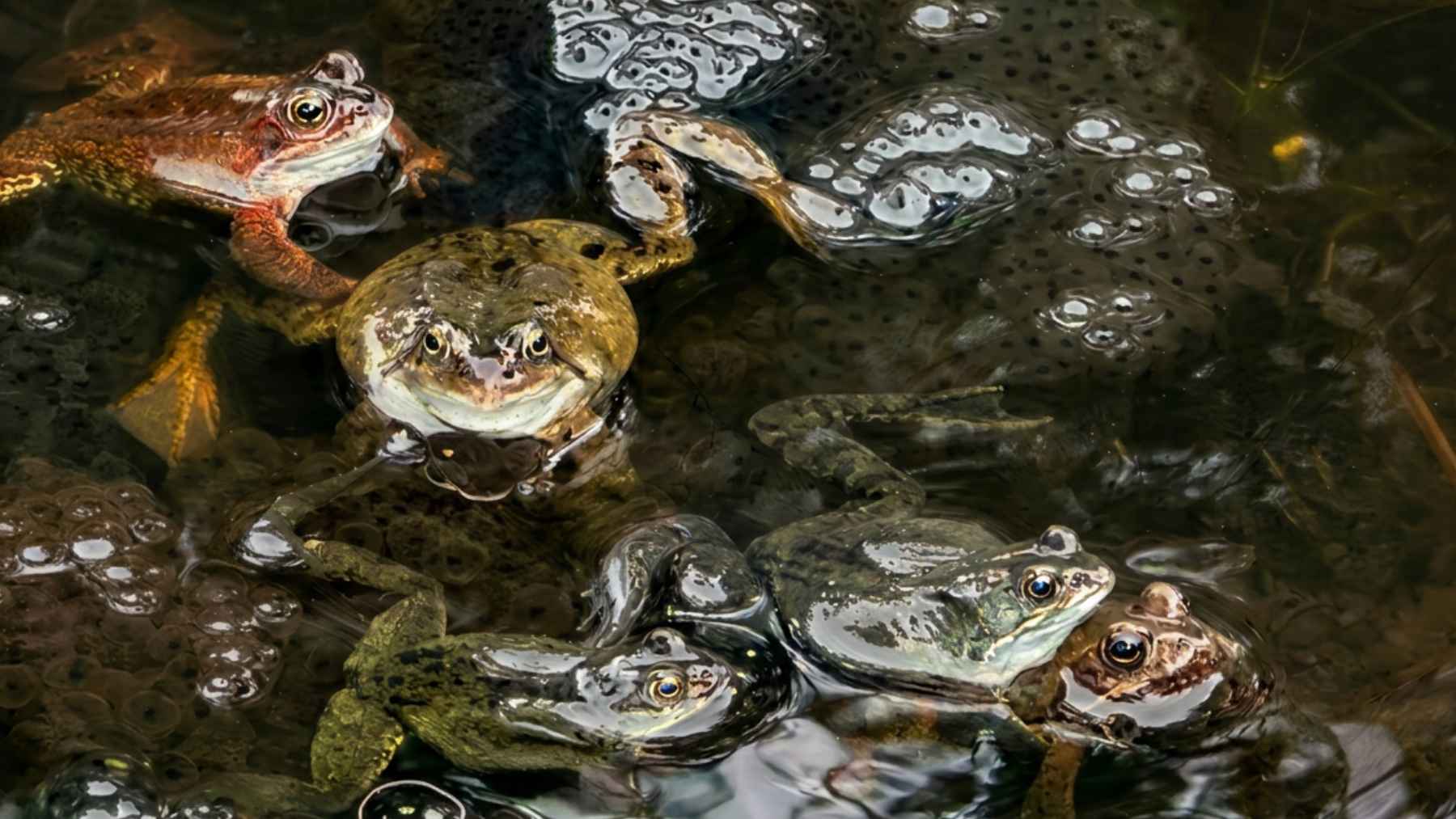
A shallow pond dug into a wet patch of lawn has quickly become a small but powerful reminder that wildlife habitat does not always need to start big. The basin, only about 2 feet deep, was designed to catch snowmelt and rainwater before it escaped toward a roadside ditch, and within weeks it held five masses of wood frog eggs.
The surprise is not simply that frogs found water. It is that they found the right kind of water. This basin was not meant to be a decorative pond or a tiny lake. It was built more like a seasonal nursery, the kind that fills, warms, supports young life, and then dries before fish can move in.
Why frogs came so fast
A vernal pool is a temporary wetland that fills with rain, melting snow, or groundwater and typically dries out by summer’s end. That annual drying cycle is the whole point, because fish cannot survive there year-round, leaving eggs and tadpoles with a better chance of avoiding one of their most dangerous predators.
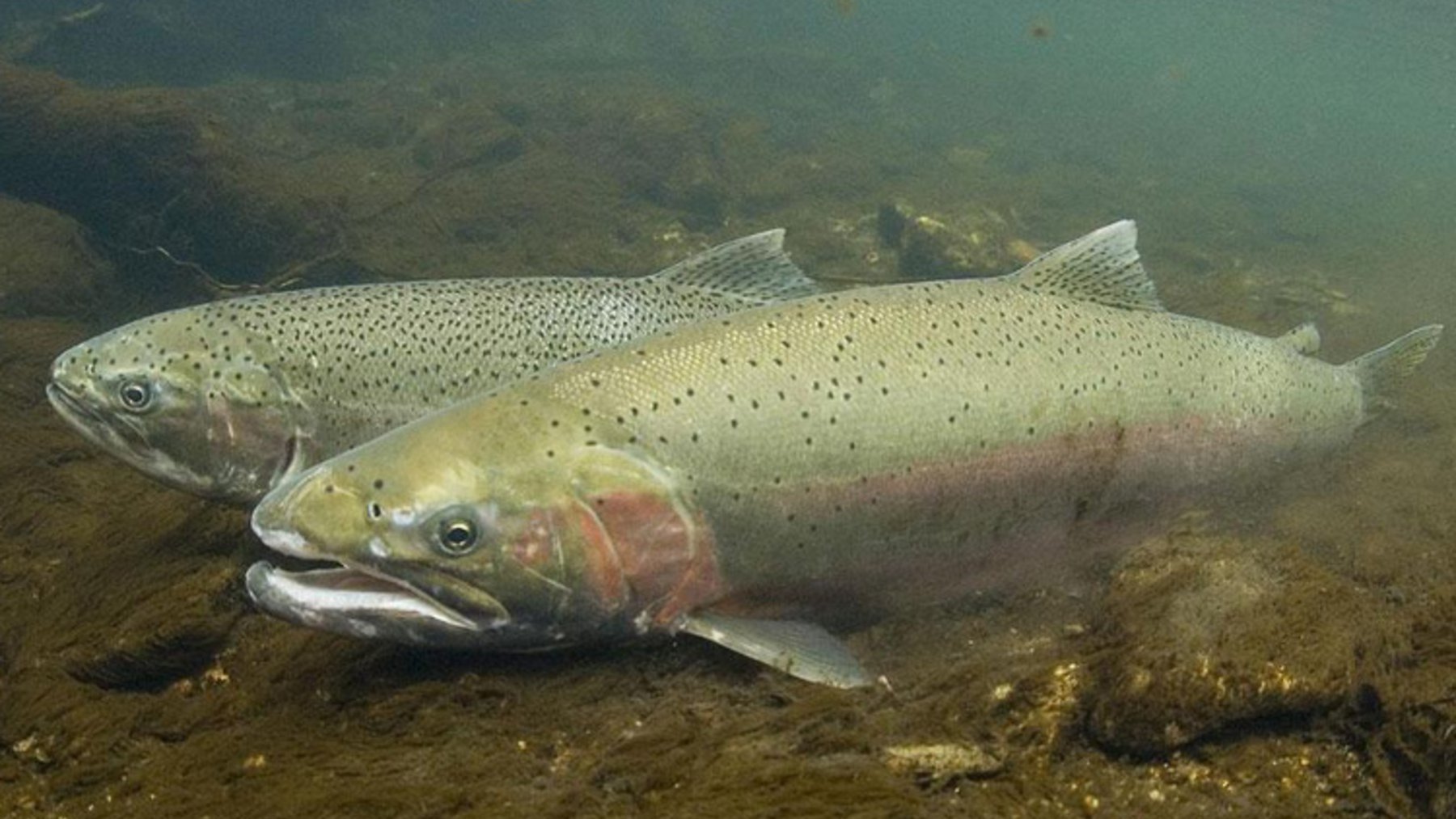
That helps explain why the landowner avoided using the nearby trout pond as the main breeding site. Trout may be welcome in a fishing pond, but for young amphibians, fish can turn a nursery into a buffet. A fish-free pool gives wood frogs a safer place to lay eggs and gives tadpoles time to grow before the water disappears.
The water was already there
The site was chosen because water already moved through that grassy low spot in spring. Instead of letting runoff slip away, the new basin intercepted part of that flow and held it long enough to create a seasonal wet area. It was a simple shift, but a meaningful one.
Before the main pond was dug, small shallow depressions were opened to slow the faster spring flow and reduce erosion. Then an excavator carved out the main basin, while the removed soil was piled on the lower side to form a small barrier.
It was not a formal engineered dam, and that may have been useful because too much sealing could have stopped the pond from drying on schedule.
A rough pond still worked
At first, the new pond looked raw. The water had just settled, the vegetation had barely started, and the edges were still exposed. Even so, branches were added for egg attachment and insect landing spots, while leaves helped create shade, cover, and a richer microhabitat.
Then came the frogs. After a few quiet days, wood frogs appeared, and the landowner observed them from a distance until the breeding period ended. The final count was five egg masses in a basin that was still in its earliest stage, suggesting that the basic recipe of fish-free water, nearby habitat, and simple structure was enough to invite use.
More than a frog pond
The pond was also planned with birds in mind. Leaving some mud exposed near the edge could give swallows and other nest-building birds a nearby supply of material, the kind of small resource that can matter around a house, garage, or barn. Wetland edges can also draw insects, which in turn support songbirds and bats.
That is why a bat box was added behind the new pool, even though bat occupancy can take time. Around it, the broader plan includes thinning pines; leaving logs, branches, and leaf litter; and creating more native plant cover.
That matters because amphibians do not live only in the water. Many spend most of the year in surrounding uplands, where ground cover helps keep the forest floor moist and safer to cross.
The real test is timing
The goal is not to keep the pond full forever. The plan is for it to hold water into early or late August, then dry out completely. That is a delicate balance, especially during hot summers, when a shallow pool can shrink faster than expected.
There is a backup plan, too. The nearby trout pond is fed by an underground spring and tends to overflow even during dry spells, so the landowner could temporarily redirect its excess water to recharge the seasonal pool if it dries too early. For now, the smarter move is to watch first and intervene only if needed.
Small success, cautious lesson
Still, one burst of frog eggs does not prove long-term success. Created vernal pools can work, but experts warn that they need monitoring over time because hydrology, soil, forest cover, and local amphibian populations all shape the outcome.
A 2024 study on created vernal pools found that well-designed pools can support local amphibian persistence, while a poorly created pool can act as a population sink.
The same study pointed to several key factors for restoration, including a wet period of 12 to 35 weeks, volume above about 1,765 cubic feet, depth of at least about 12 inches, and surrounding forest cover above 60%.
In other words, a backyard pond is not magic, but when placed where water already wants to go, and when allowed to behave like a seasonal wetland instead of a permanent fish pond, it can become a surprisingly fast ecological shortcut.
The study was published in Ecology and Evolution.