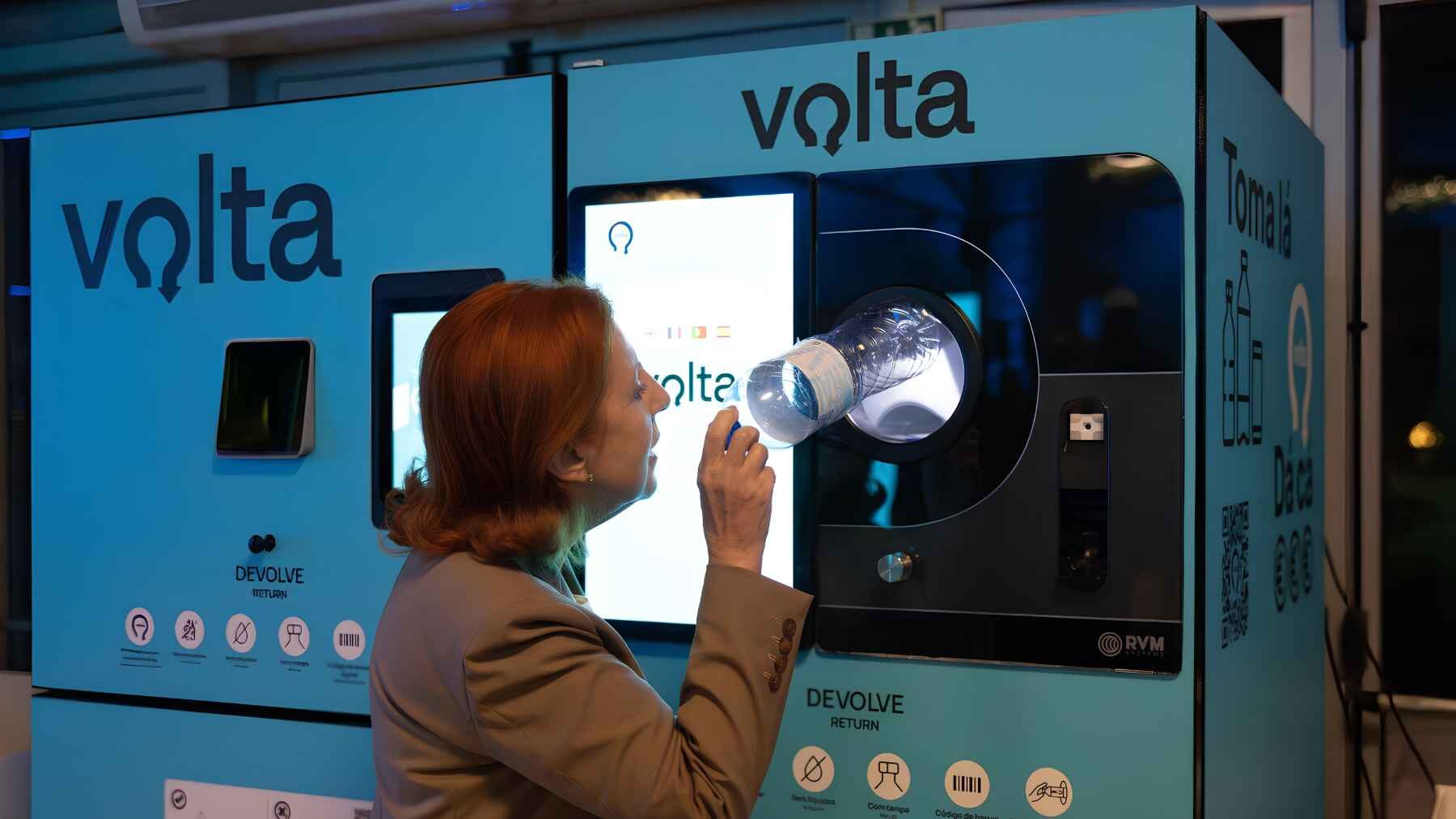
Portugal’s new Volta deposit-return system is meant to recover more bottles and cans for recycling while reducing plastic pollution.
But in central Lisbon and Porto, it has produced an uncomfortable side effect. People are opening public trash cans to search for containers that still carry a refundable deposit.
The behavior has led to scattered garbage, damaged bins, and complaints about urban hygiene.
Yet environmental groups and neighborhood advocates say the answer is not to stigmatize people collecting the containers.
It may be to redesign city bins so valuable bottles and cans can be left outside the trash, cleanly and safely.
Why bottles are being pulled from bins
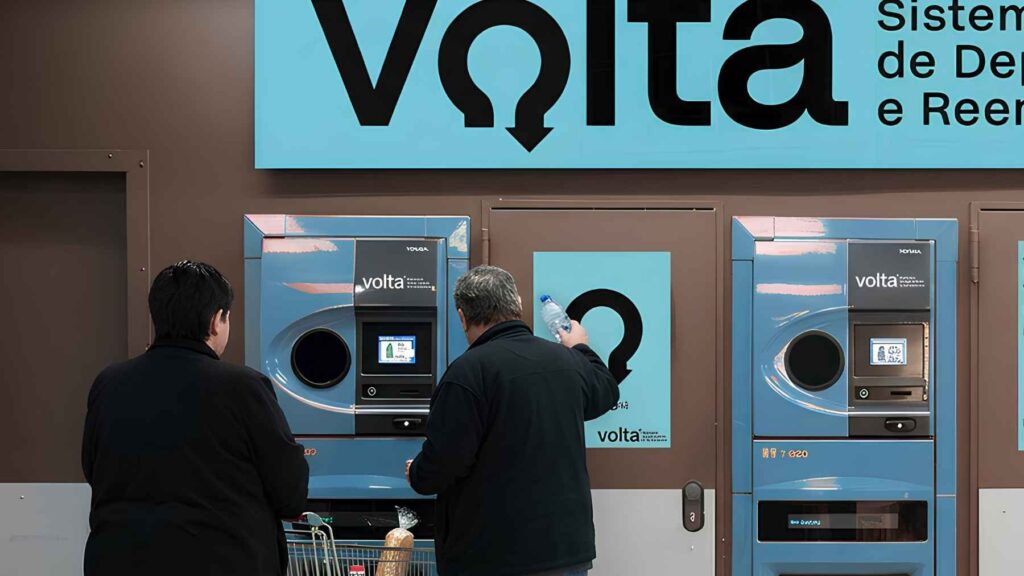
Under Volta, consumers pay a deposit of 10 euro cents per eligible bottle or can, equal to about 11 U.S. cents using the European Central Bank’s July 24, 2026 reference rate.
They recover that money when the empty container is returned through the system. The idea is simple. Packaging gains a small cash value, giving people a reason to return it instead of throwing it away.
The trouble begins when someone decides not to claim the refund and drops the container into a regular public bin. For a person with little or no income, those small deposits can add up.
Finding them, however, may mean reaching into mixed trash, coming into contact with contaminated waste, or emptying a bin onto the sidewalk.
Susana Fonseca, vice president of the environmental group ZERO and a sustainability specialist, believes cities should make that collection safer.
“The ideal would be to have specific spaces where people could, if they wished, leave empty Volta bottles for solidarity purposes, without the risk of the containers being carried away by the wind,” she told Azul.
Lisbon receives a bin redesign proposal
The neighborhood association Vizinhos de Lisboa has sent a proposal to Lisbon City Council calling for mini-containers or dedicated Volta points beside recycling stations and used-cooking-oil collection bins.
It also suggests attachable holders for public litter baskets, allowing residents to leave refundable bottles and cans where they remain visible.
The proposal openly recognizes that people experiencing homelessness, as well as others in vulnerable situations, collect the packaging for its deposit value.
Its goal is what the association calls “dignified collection,” with less exposure to cuts, contaminated waste, and other hazards that may be hidden inside public trash.
A pilot project could begin in the busiest areas of Misericórdia, Santo António, Arroios, and Lisbon’s historic center.
Organizers want officials to track practical results, including the number of containers collected and changes in reports of garbage scattered on the street.
After all, a good-looking device means little if it becomes another place for ordinary trash.
Reports from Lisbon and Porto raise pressure
Officials in Lisbon have described disruptions to street cleanliness in central neighborhoods.
In Porto, the municipal company Porto Ambiente has also recorded cases in which bins were searched, emptied onto public streets, and sometimes vandalized so bottles and cans could be removed.
SDR Portugal, which manages the deposit-return program, says these incidents should be viewed as early implementation problems rather than proof that the environmental policy has failed.
Its position is that the deposit itself is not the main cause.
The bigger issue is that containers carrying money are still being placed inside public trash cans.
That changes the practical question. Instead of asking how to stop people from collecting bottles, cities can ask how to make the bottles accessible without forcing anyone to dig through waste.
Outside racks, separate compartments, and small structures beside bins are relatively modest changes, but they could protect both street cleanliness and human dignity.
Germany offers a simple urban fix
Germany is often presented as the clearest example.
Several cities use metal holders known as “Pfandringe,” or deposit rings, mounted around the outside of public bins.
Anyone who does not want the refund can place a bottle or can in the ring, and another person can collect it without opening the trash.
The design does not try to erase informal collecting.
It accepts that the practice exists and adjusts the public infrastructure around it. In everyday terms, it turns a messy search through garbage into a visible handoff between strangers who may never meet.
The approach also keeps refundable packaging away from mixed waste, making it more likely to reach the return network.
A small ring on a bin will not solve poverty or homelessness, of course, yet it can remove an unnecessary layer of risk and humiliation.
The Netherlands shows what a wider plan can do
Major Dutch cities have combined exterior holders with adapted municipal bins, dedicated drop-off points, and public campaigns aimed at tourists, schools, and large events.
According to information cited by the Portuguese system manager, the new infrastructure was followed by a 25% reduction in municipal cleaning costs.
The share of refundable containers found in public trash also reportedly fell from 4% to 2%.
Those figures suggest urban design can deliver measurable benefits when it is supported by clear signs, convenient return locations, and public awareness. The hardware is only one part of the system.
Ireland offers a warning.
Tests in Dublin produced mixed results when some exterior holders began filling with ordinary garbage, while concerns continued over damaged bins and trash left nearby.
A metal rack is not magic.
Volta still faces a learning curve
The European experience suggests these problems are most common during the first phase of a deposit-return program, especially in dense city centers.
Over time, they may ease as return networks expand, residents understand the new routine, and municipalities adapt their street furniture.
Fonseca expects Portugal to follow that path. “These situations will be overcome as the system matures.
It is a learning curve that has already occurred in other European countries,” she said, adding that Volta should become more stable on Aug. 10, 2026, when containers with and without the symbol stop coexisting on the market.
For now, public space is showing where the policy still needs work, and the next step may be as ordinary as changing the shape of a trash can.
Most read
- US scientists poured 16,500 gallons of lye into the Gulf of Maine and dyed the water bright pink to track it, the first federally approved try at reversing ocean acidity
- Soviet scientists released giant red king crabs into the Barents Sea in the 1960s to build a fishery, but decades later those invaders are still changing the seafloor
- New Orleans is collecting thousands of used Christmas trees and dropping them from helicopters to slow the loss of land, which has already exceeded 5,000 square kilometers
- The U.S. will pay up to $65 million to leave Colorado River water in Lake Mead, and Hoover Dam explains why
- Britain is dropping 20 concrete reef cubes and 44 tons of scallop shells into the sea, and the goal is to bring back oysters down more than 95% since the 1800s