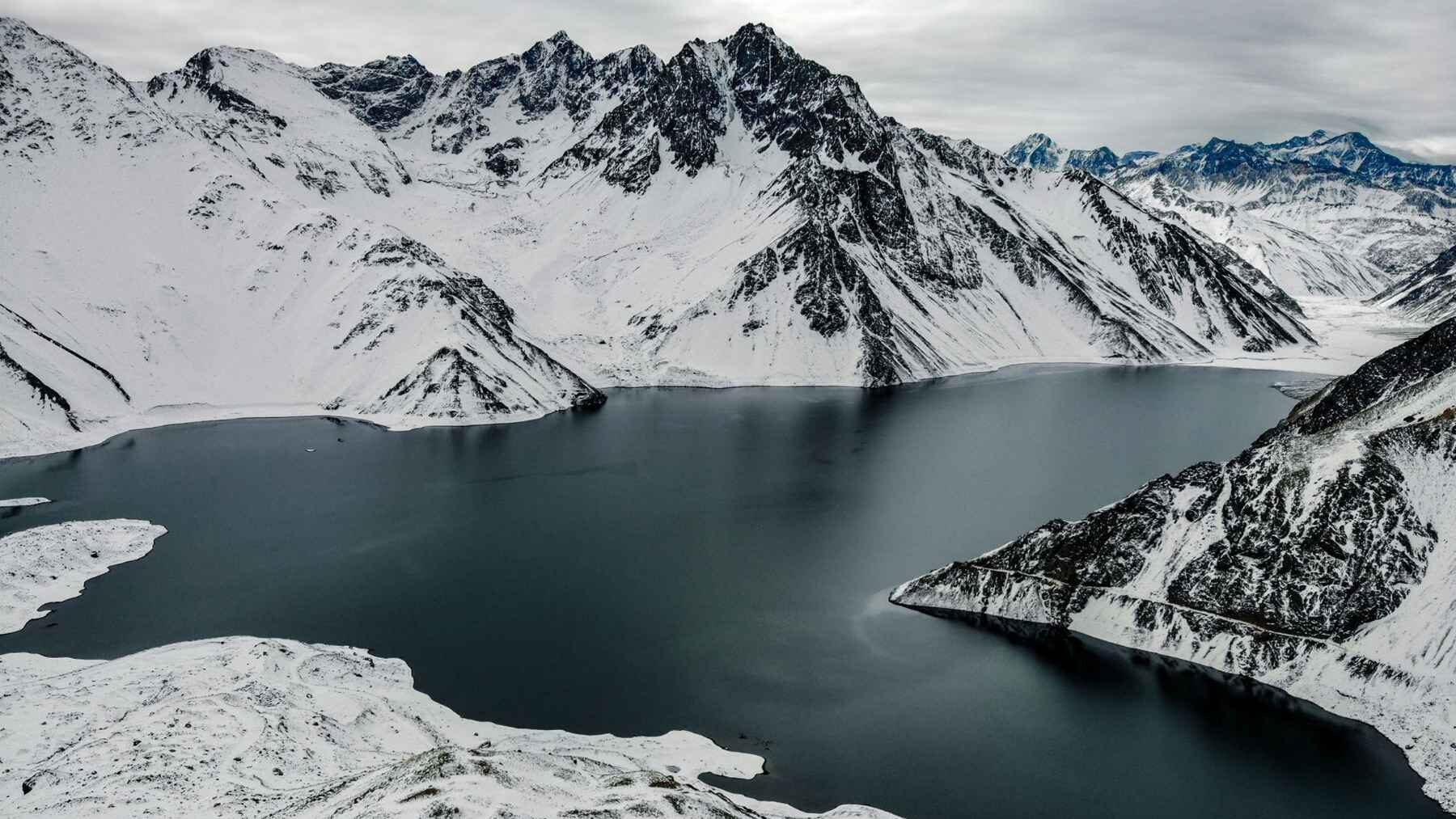
A powerful winter storm has sharply rebuilt snow cover across parts of central and northern Chile, improving the outlook for irrigation, drinking water, hydropower, and mountain tourism.
Across 10 snow routes monitored from the Elqui River basin to the Biobío basin, average snow depth reached about 59 in. on July 20, 2026, which was 51% above the historical average of roughly 39 in.
That is a dramatic turnaround from the same date in 2025, when those routes averaged only about 11 in., but there is an important catch.
The snow’s average water content remains 15% below normal, showing why a deep white blanket does not always translate into the same amount of runoff for rivers and reservoirs.
Storm rebuilds the snowpack
The frontal system that arrived on July 16 left significant snowfall from the Coquimbo Region south to Biobío.
The same weather also caused serious disruption, especially in northern Chile, but its moisture added water to reservoirs and rebuilt what officials often describe as the country’s natural mountain storage.
Snow performs like a slow-release reservoir.
It holds winter precipitation high in the Andes and releases part of it during warmer months, when farms, cities, and power generators need water most.
That can matter long after the roads have cleared and the ski jackets have gone back into the closet.
The figures represent conditions measured at about 8 a.m. on July 20 and are compared with the 1991–2020 historical average. More snow fell after that snapshot, so subsequent monitoring could produce a different picture.
Northern basins lead the rebound
The most striking gains appeared in the northern portion of the monitoring network.
At Cerro Olivares in the Elqui basin, snow depth reached about 47 in., compared with a historical average of only 7.5 in. The General Directorate of Water (DGA) calculated a 545% surplus, and the route had recorded no snow at the same point last year.
Quebrada Larga in the Limarí basin reached nearly 71 in., versus a normal level of about 16.5in., producing a 326% surplus.
Cerro Vega Negra recorded roughly 91 in., El Soldado about 76 in., and Nacimiento del Sobrante almost 72 in. All three were at least 101% above their historical averages.
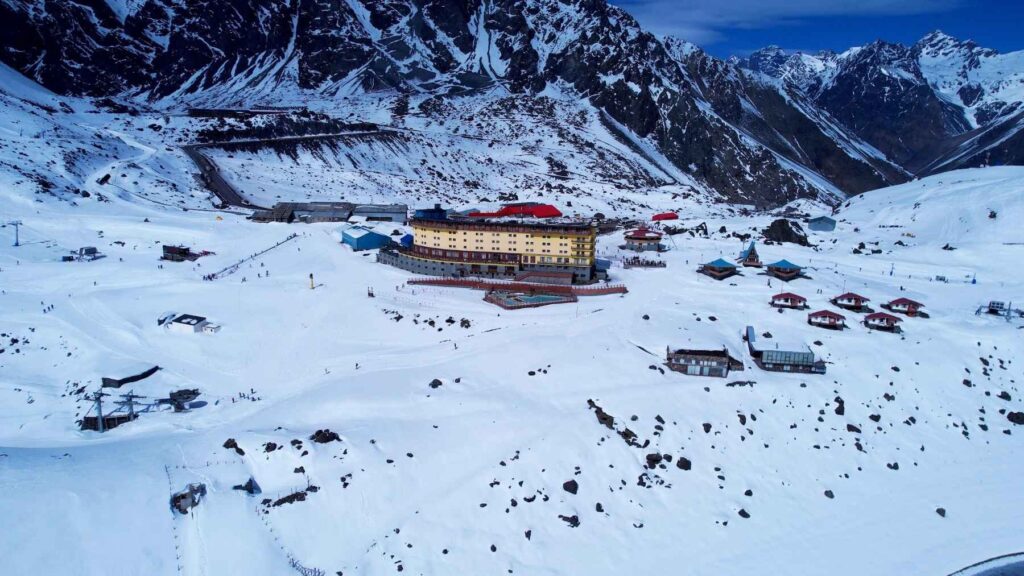
Portillo in the Aconcagua basin also stood out with about 85 in. of snow, nearly double its usual 44in. Farther south, however, the rebound was less complete.
Lo Aguirre, Volcán Chillán, and Alto Mallines remained 29%, 43%, and 53% below their normal snow depths.
Summer water and power outlook improves
For farmers and water managers, the value of this snow will become clearer during spring and summer, when meltwater begins feeding rivers and reservoirs.
A stronger snowpack can support irrigation in the north and improve water availability during the dry season, although the final benefit will depend on temperatures, additional storms, and how quickly the snow melts.
The energy sector is watching closely too.
Humberto Verdejo, an academic at the University of Santiago, said that “good snow accumulation improves generation prospects” through spring, summer, and part of fall.
He added that it can strengthen supply security and reduce the need for higher-cost technologies and, to some extent, fossil fuels.
Former electric distribution industry executive Rodrigo Castillo called mountain snow “a kind of natural reservoir.” Daniela González of Domo Legal also said hydropower can help ease tight supply conditions, keep system costs more reasonable, and provide the operational flexibility needed for a secure grid.
That flexibility can eventually matter to households as well, even if the connection to the electric bill is not immediate.
Ski season may run into September
The snowfall is also welcome news for Chile’s mountain tourism sector.
Once safety conditions allow normal operations, ski centers could benefit from better-quality snow and make fuller use of the investments and improvements made to attract winter visitors.
Mónica Zalaquett, executive president of Fedetur, said continued favorable conditions could allow the season to last until the end of September.
The industry is projecting close to 1.3 million visitors during the winter, including travelers from Brazil and longer-distance markets such as the United States and Europe.
A longer season would spread spending beyond ski resorts.
Hotels, restaurants, tour operators, stores, and local workers in mountain communities can all benefit when visitors stay more nights and spend more during their trips.
Snow is not only a water reserve. It is also part of a regional economy.
The water deficit has not disappeared
Here is the key warning. Snow depth measures how tall the snowpack is, while snow water equivalent estimates how much water it contains.
Across the 10 routes, the average water equivalent was about 13 inches, below the historical average of roughly 15.4 inches.
The contrast is particularly sharp farther south. Laguna Negra matched its normal snow depth at about 50 inches, yet its water equivalent was 57% below average.
Lo Aguirre had a 68% water-equivalent deficit, Volcán Chillán was 69% below normal, and Alto Mallines showed the largest shortfall at 76%.
The current snowpack is encouraging, but it is not a complete answer to Chile’s long-running water pressure. A deep layer of light, dry snow can contain less water than a shallower but denser pack.
The coming weeks, later storms, temperatures, and the speed of the thaw will decide how much of this winter gain reaches reservoirs, farms, turbines, and household taps.
The hydrometeorological bulletin was published on the Chilean General Directorate of Water’s website.
Most read
- US scientists poured 16,500 gallons of lye into the Gulf of Maine and dyed the water bright pink to track it, the first federally approved try at reversing ocean acidity
- Soviet scientists released giant red king crabs into the Barents Sea in the 1960s to build a fishery, but decades later those invaders are still changing the seafloor
- New Orleans is collecting thousands of used Christmas trees and dropping them from helicopters to slow the loss of land, which has already exceeded 5,000 square kilometers
- The U.S. will pay up to $65 million to leave Colorado River water in Lake Mead, and Hoover Dam explains why
- Britain is dropping 20 concrete reef cubes and 44 tons of scallop shells into the sea, and the goal is to bring back oysters down more than 95% since the 1800s