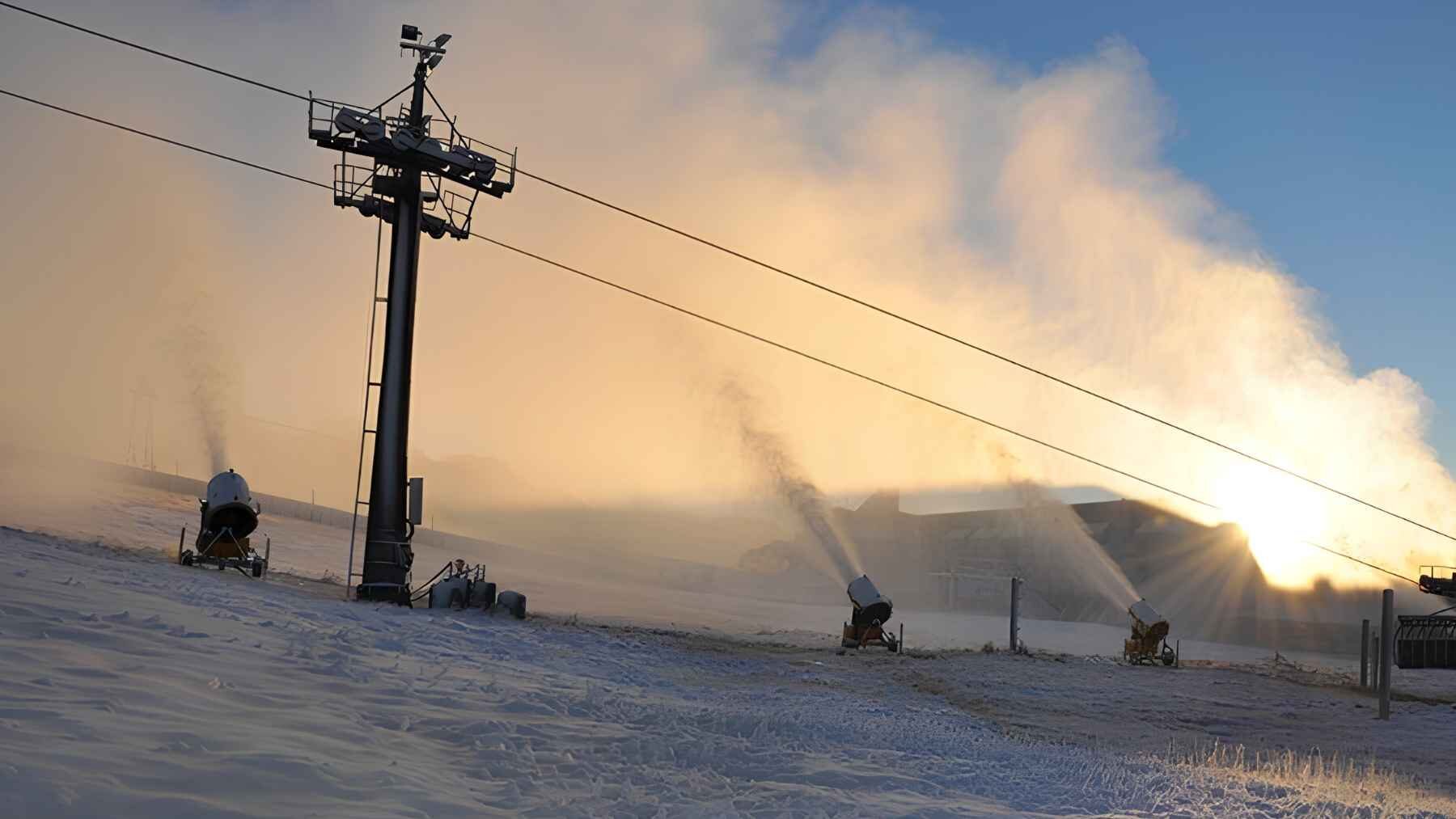
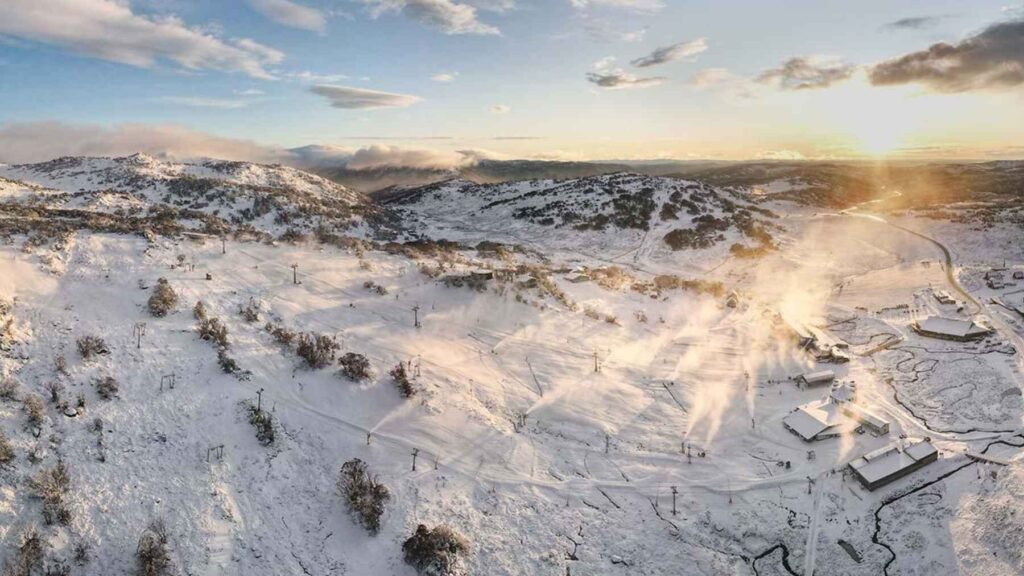
On July 1, Perisher’s Front Valley in Kosciuszko National Park appeared mostly brown, crossed by narrow white lanes of manufactured snow. Ray Wills estimated that creating 16 to 18 strips on that slope may have used about 4,000 to 7,000 kWh of electricity and released several tons of carbon dioxide, although he labeled the figures “my calculations” rather than audited resort data. The scene was striking because it looked less like winter arriving and more like winter being assembled.
The bigger story is not one bare morning or one resort. Artificial snow is becoming basic infrastructure for Australia’s ski industry, yet using it inside protected public land should come with current, resort-level reporting on energy, water, and emissions. Snowmaking may preserve bookings and give families a usable run, but it cannot replace the climate and ecosystems that make alpine tourism possible.
A bare slope is not the whole season
The empty snow stake on July 1 was a warning sign, not a final verdict on 2026. By July 15, Snowy Hydro listed about 27.9 inches of snow at Spencers Creek, while Three Mile Dam still recorded zero. Australia’s Bureau of Meteorology notes that the season is highly variable and that one storm can quickly reshape conditions.
Still, natural variability does not erase the long-term direction. The bureau says maximum snow depth, snow-cover duration, and the number of snow days have declined since the late 1950s, with the Spencers Creek trend falling by about 0.28 inch per year from 1954 through 2025. A late dump can rescue a weekend, but it does not reverse the line on the chart.
Snowmaking is now basic infrastructure
What happens when the snow arrives late but school-holiday bookings do not? Perisher answers with a network covering about 132 acres and 236 snow guns, backed by storage ponds, pumps, compressors, pipes, crews, and electricity. The resort says roughly 93% of the water used returns to streams during the spring thaw.
That machinery turns a brown hillside into a skiable ribbon, but the July 1 energy and carbon numbers should be treated as an estimate rather than a measured inventory. The actual footprint depends on operating hours, gun efficiency, the electricity supply, on-site fuels, and how renewable energy purchases are counted. Effectively, the question is not whether snowmaking uses energy, but how much fossil energy remains behind each run.
The climate trap is tightening
Snow guns cannot operate in any weather. They need sufficiently cold and dry air, and New South Wales projections indicate that suitable snowmaking conditions could decline by about 20% from 2020 to 2039 and by 50% to 60% from 2060 to 2079. The warmer the nights become, the harder and potentially more expensive it is to manufacture the thing that warming is taking away.
That creates a difficult feedback risk. Resorts may need more equipment and narrower operating windows just as natural snow becomes less reliable, while alpine habitats are already under pressure from climate change and tourism. The white strip can preserve a run. It cannot preserve the surrounding winter by itself.
Public land raises the standard
Perisher is a private resort operating inside Kosciuszko National Park, and that changes the public-interest test. New South Wales requires each alpine resort management unit to maintain an environmental management system. Visitors are not simply buying lift access; they are entering protected public land.
The commentary behind the July image argues that the framework stops short of binding greenhouse limits. However, the current 2025 policy does include resort-wide targets of 55% renewable energy by the 2030-31 reporting year, a 50% reduction in stationary fossil-fuel use by 2035 from a 2018-19 baseline, and net-zero greenhouse emissions by 2050. What it does not appear to provide is a snowmaking-specific emissions cap or a simple public dashboard showing current performance.
That distinction matters. The debate should not pretend that no targets exist, but it should ask whether broad deadlines are strong enough for an alpine climate that is changing now. Protected land deserves more than promises that are difficult for the public to track.
The missing number is current performance
Transparency is the weak spot. The latest New South Wales alpine environmental performance report listed online was published in March 2025, yet it covers the 2020 to 2021 reporting year. For skiers, local workers, and taxpayers trying to understand today’s footprint, that is a long gap.
A useful annual report would show the electricity used for snowmaking, the verified renewable share, diesel consumption, water withdrawn and returned, and carbon emissions calculated with a consistent method. It should also separate snowmaking from lifts, buildings, grooming, and transport. Otherwise, the public sees the white slopes but not the electric bill.
A practical path through shorter winters
Perisher says its owner is pursuing net-zero operations by 2030, purchasing renewable electricity equivalent to its total use and investing in lower-energy snowmaking. Those commitments are relevant, but they should be matched by local and independently verifiable results. A company-wide promise is not the same thing as a current number for Front Valley on a cold July night.
For the most part, the sensible path is neither an immediate ban nor business as usual. Resorts can prioritize efficient equipment, verified clean power, strict ecological limits, and year-round tourism that is less dependent on one cold stretch of weather. Public agencies can make those conditions enforceable when leases and approvals are renewed.
For families, workers, and mountain towns, manufactured snow can keep part of a season alive. However, a white ribbon on a brown slope should be treated as a warning light, not proof that winter has been saved.
The official explainer was published on the Bureau of Meteorology’s website.