In August 1999, workers sent a 1,020-ton reactor vessel package from Oregon’s retired Trojan nuclear plant to a burial site in eastern Washington. Rather than cut the radioactive equipment into smaller pieces, they filled it with concrete and moved it as one sealed load. Its route included a barge trip up the Columbia River.
The striking journey illustrates why shutting down a nuclear plant is not simply a demolition job. Keeping the vessel intact reduced the need to handle radioactive components, but it did not solve the separate problem of spent fuel. More than two decades later, that fuel is still stored at the former plant.
Why the reactor stayed in one piece
Why not just take it apart? The Nuclear Regulatory Commission estimated that the intact shipment would avoid more than 40 radioactive shipments and save about 67 person-rem of collective radiation dose compared with alternatives. That figure represents exposure added across a group, not a single worker’s dose.
Project manager Steve Nichols told the Project Management Institute that “taking the reactor out as one piece was a much better solution than the alternative.” His team had compared worker safety, public safety, transportation risks, waste volume, and cost before choosing that approach.
The project’s final cost was $21.9 million, according to the institute’s account, about $19 million below the estimated cost of conventional disposal. Those savings came alongside lower expected radiation exposure, showing why breaking the equipment into smaller loads was not necessarily the better option.
Concrete turned the vessel into a shipping package
The vessel was more than 42 feet long and contained stainless steel structures that had directed cooling water during operation. Workers welded closures over its openings, drained it, and filled it with about 200 tons of low-density cellular concrete. Getting it out also required cutting a large opening in the containment building.
The concrete immobilized loose radioactive contamination, while added steel shielding reduced external radiation levels. Crews decontaminated and painted the exterior, then added plastic shrink wrap. These precautions contained radioactive material and limited exposure rather than making the radioactivity disappear.
A 270-mile voyage, followed by a crawl
A specially built, 240-foot barge and two tugboats carried the load through four sets of locks. According to the NRC, the 270-mile Columbia River voyage took about 36 hours, with Coast Guard vessels providing an escort.
At the Port of Benton, the load continued overland on a trailer with 20 axles and 320 wheels. The NRC describes this final leg as approximately 30 miles at 5 mph, so that speed applies to the road journey, not the river voyage.
Burial took more than digging a hole
The destination was US Ecology’s commercial low-level radioactive waste facility on the Hanford Reservation. Its disposal team prepared a dedicated trench 45 feet deep, designed to accommodate the package and at least five meters (about 16.4 feet) of soil above it.
Even the ground needed testing to establish whether it could support the enormous load without dangerous rutting or slope failure. Workers placed the vessel in engineered support cradles, completing that operation by August 17, 1999. A ceremony on August 19 marked the beginning of burial.
The NRC called it the first U.S. shipment of an intact reactor vessel containing activated core internals. That distinction matters, because other reactor vessels had been shipped before.
What disappeared from the Oregon site
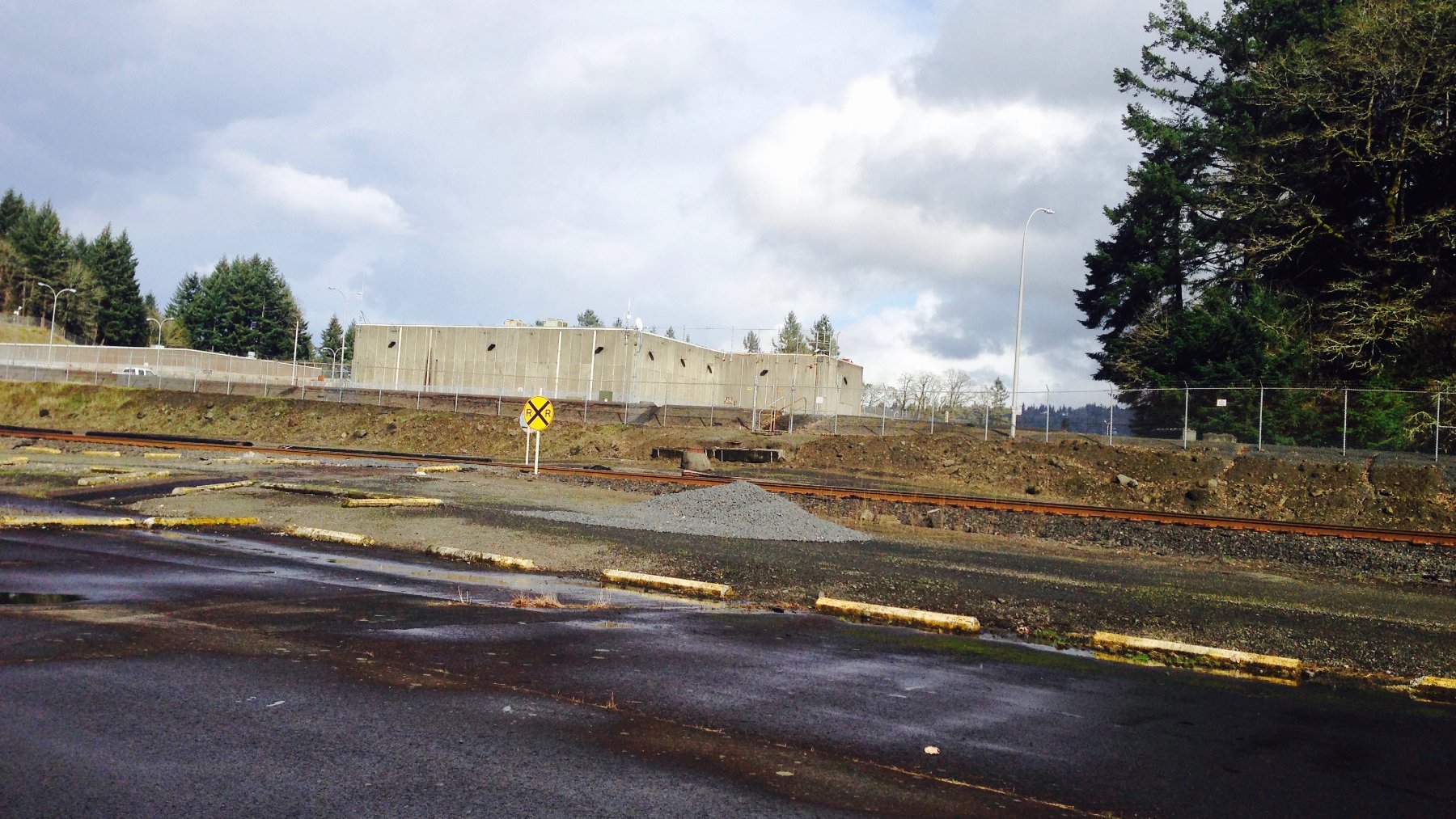
Portland General Electric completed Trojan’s decommissioning in December 2004, and Oregon’s Energy Facility Siting Council approved the site’s unrestricted release in April 2005. The state explains that this designation allows uses including housing, although the spent-fuel installation remained a separate responsibility.
The cooling tower was demolished in 2006, removing the plant’s most recognizable landmark. But the disappearance of the power plant’s buildings should not be confused with the departure of all its radioactive material, as Oregon’s continuing oversight of the fuel-storage installation makes clear.
The nuclear fuel is still waiting
In 2003, PGE transferred Trojan’s 791 spent nuclear fuel assemblies into dry storage. They remain in 34 large steel-and-concrete casks standing upright on a concrete pad, according to the Oregon Department of Energy. These are separate from the reactor vessel buried in Washington.
The state says the fuel will stay until the federal government establishes a national repository or an interim consolidated storage facility. For nearby communities, that makes continued monitoring and long-term storage planning part of the plant’s legacy, even after power generation has ended.
The power plant is gone, but the responsibility for its fuel remains. The official site overview was published on the Oregon Department of Energy website.