The Noor solar complex near Ouarzazate, in southern Morocco, has fed the national grid since its first plant started commercial operation in early 2016. Today there are four plants, about 582 megawatts in all. Three of them can keep the sun’s heat in tanks and use it after dark.
Delivering that power has fallen short of plan. A World Bank completion report from March 2025 found that Noor II and Noor III averaged 739 gigawatt-hours a year from 2019 to 2023. Planners had counted on 1,144 a year, so real output came in about 35 percent lower.
Four plants, 582 megawatts
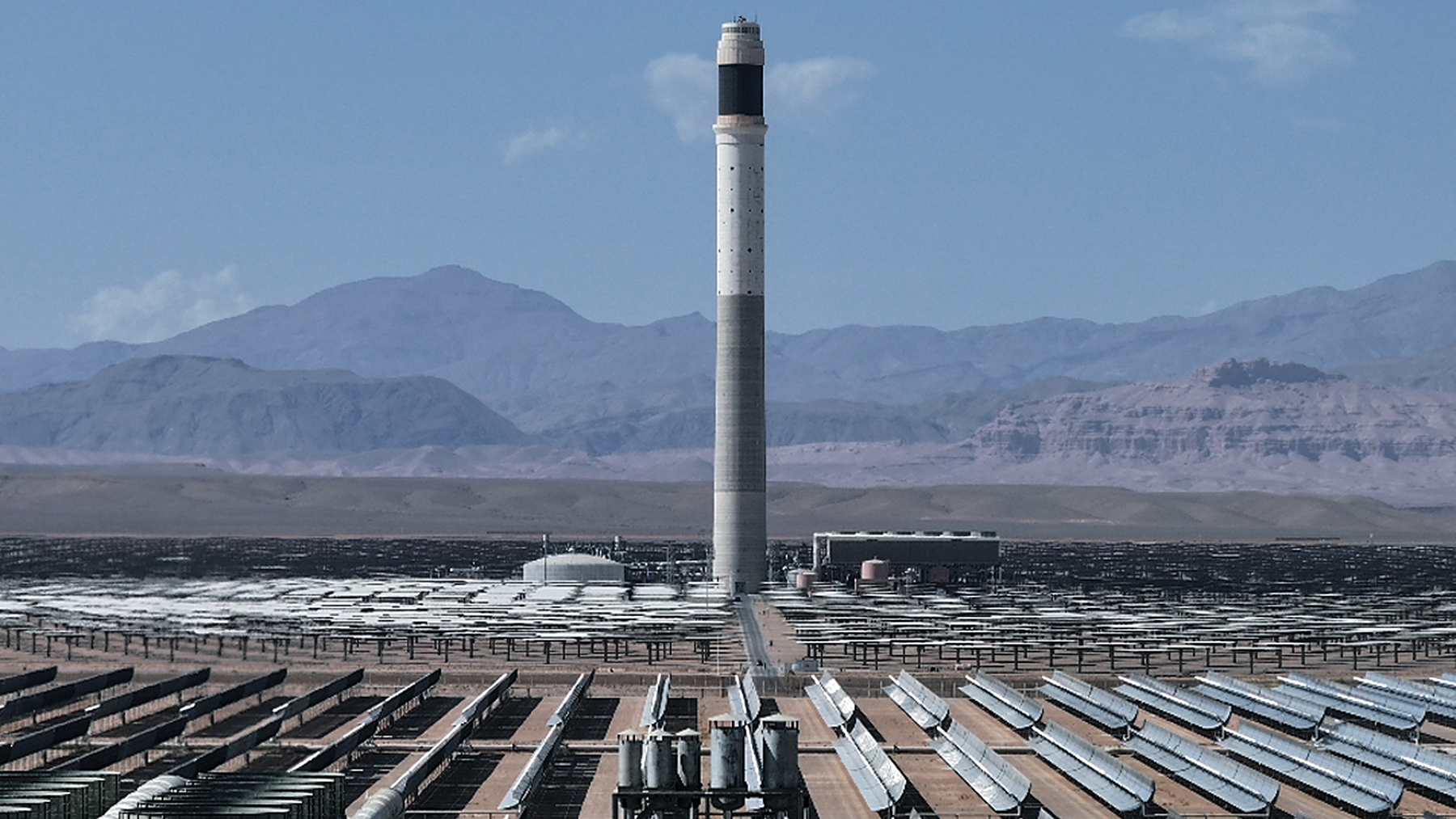
Noor I, the first phase, has 160 megawatts of capacity on about 1,110 acres (450 hectares), according to ACWA Power. The Saudi developer owns most of the plants together with MASEN, Morocco’s solar agency. Noor I uses parabolic troughs, long curved mirrors that focus sunlight onto a pipe of hot fluid, and stores heat for three hours.
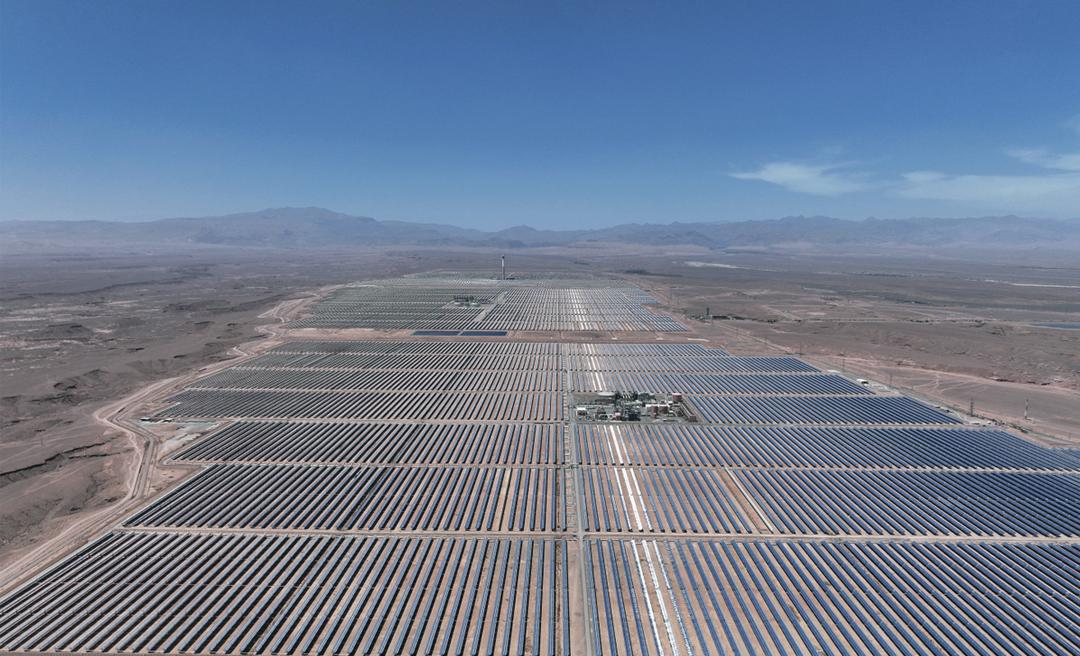
Noor II came next, in 2018, with 200 megawatts, the same troughs and seven hours of storage. The 150-megawatt Noor III tower followed late that year, also with seven hours of storage.
Unlike the other three, Noor IV runs on photovoltaic panels mounted on trackers. They turn light straight into electricity and store no heat. Morocco’s energy ministry lists the plant at 72 megawatts and about 120 gigawatt-hours a year.
On ACWA Power’s project pages, the three thermal plants cost $841 million, $1,146 million and $942 million. That comes to close to $3 billion. The World Bank, which approved its loans in September 2014, helped pay for Noor II and Noor III.
Heat kept in molten salt
At Noor III, flat mirrors called heliostats follow the sun. They aim its light at a receiver on top of a tower about 820 feet (250 meters) tall. California’s Ivanpah mirror field works on the same basic layout, minus the salt tanks.
The captured heat goes into tanks of molten salt. Later, it boils water into steam that spins a turbine. ACWA Power’s Noor III project page describes a molten salt storage system “providing power even after sunlight.”
Those storage hours are design figures, though. What is left on a given evening depends on the day’s sunshine. It also depends on the state of the equipment.
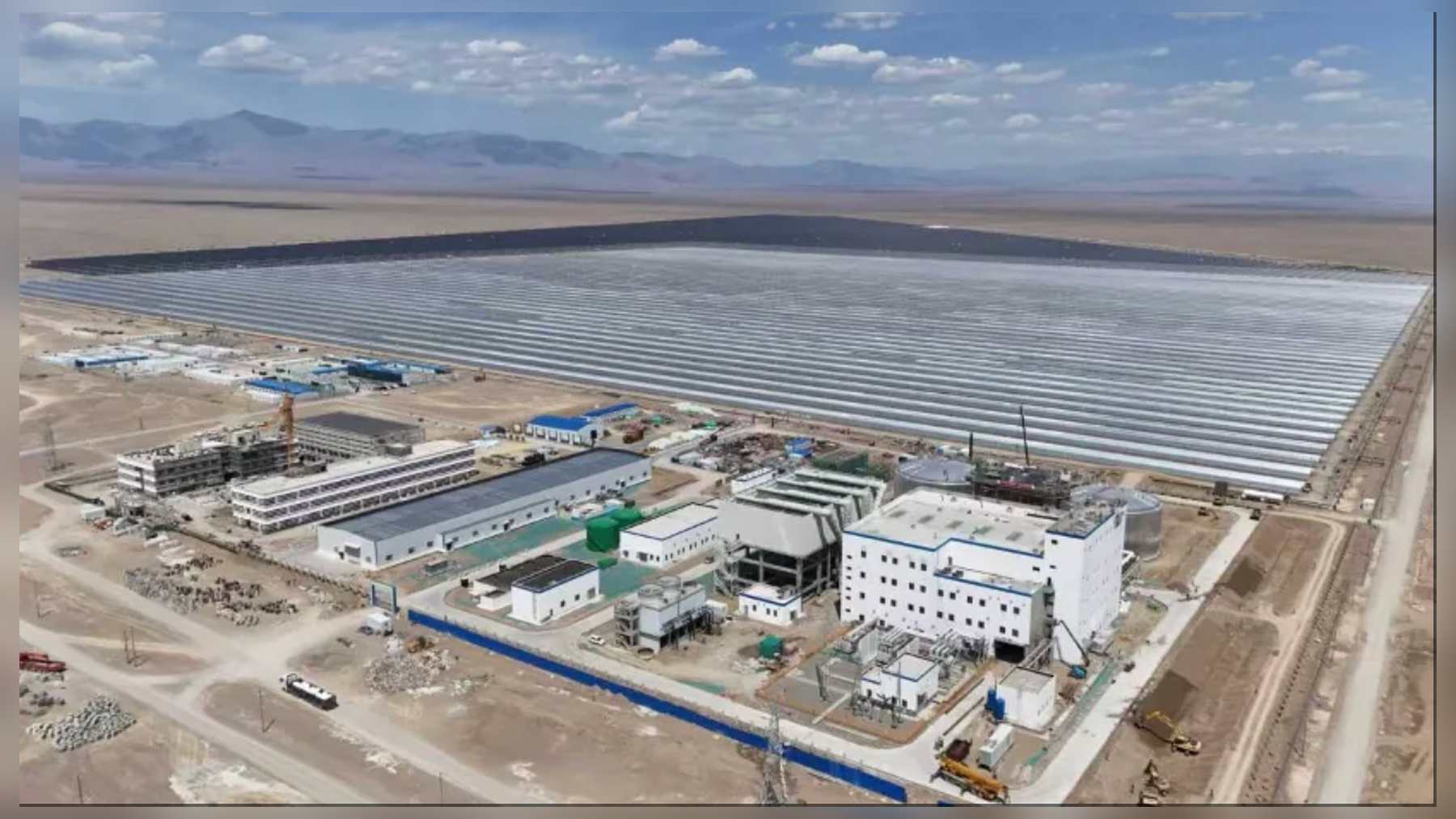
China has since started trial runs at a 1-gigawatt solar complex in the Gobi whose thermal unit also stores heat in molten salt.
Who the 1.3 million are
In its completion report, the World Bank counts 1,298,960 people who gained new or improved electricity service through the project. The first goal was 1.1 million. It rose to 2.2 million when extra money was added for two plants at Midelt, farther north.
Construction at Midelt had not started when the project closed. The Ouarzazate plants met their own sales target, yet only 57 percent of the overall goal was reached. The bank rated the outcome “Moderately Unsatisfactory.”
The people count describes a contribution to supply, not 1.3 million residents on Noor power around the clock. Megawatts measure what a plant can produce at one moment. Gigawatt-hours measure what it really delivers over a year.
Two long storage breakdowns
The bank points to storage trouble at Noor III, which it calls a significant technical issue. Cracks in the hot storage tank and heat stress at plant temperatures that can reach 500 to 600 degrees Celsius are the main cause, the report says.
The completion report also lists “at least two prolonged outages.” The first ran from September 2021 to December 2022, and the second began in April 2024.
Looking back at the design, the authors wrote that it needed more study of “potential thermal issues linked to the technology of storage tanks.” As one safeguard, they mention a backup storage tank for the tower.
ACWA Power’s third-quarter 2025 report states that “the outage was resolved and the plant commenced operations during April 2025.” The same filing lowered the capacity assumed for the old salt tank until a new one is commissioned.
For 2025, the company booked an impairment loss of 404.4 million Saudi riyals, about $108 million, on Noor III. It was tied to lower output forecasts and to spending on a new hot molten salt tank.
MASEN, for its part, expects Noor II and III to produce 1,163 gigawatt-hours a year once all repairs are done, the World Bank report says. That would put them roughly back on the original forecast.
Renewables at 45.5 percent
Noor belongs to a national energy strategy that Morocco launched in 2009. In August 2025, Mohamed Ouhmed, secretary general of the Energy Transition Department, gave an update. Renewables then made up 5.5 gigawatts, or 45.5 percent of installed capacity, including 928 megawatts of solar and 2,451 of wind.
Renewables supplied 27 percent of the country’s electricity by the end of 2024, he added. It is the same gap between capacity and output seen at Noor. A $12 billion program for 2025 to 2030 plans 15,672 megawatts of new capacity, 12,445 of them renewable.
The longer-term goal is for renewables to reach 52 percent of installed electricity capacity by 2030. Fares Yassir, Morocco’s ambassador to Argentina, restated it in a September 16, 2026, update on the government portal Maroc.ma.
No output figures since April 2025
Neither the World Bank report nor ACWA Power’s 2025 filings give Noor III’s production since it restarted. Without those numbers, outsiders cannot tell whether the complex is nearing MASEN’s estimate for a repaired plant.
ACWA Power’s reports mention the new hot salt tank but give no date for it to enter service. Until then, the company’s own forecasts assume the old tank holds less heat than it was designed to.
The World Bank’s full Implementation Completion and Results Report was published in March 2025. Other ways to move clean power into the evening, from a dense-liquid storage plant in Devon to an Oregon wind, solar and battery site, face the same test of what they deliver once the sun goes down.
Photo: ACWA Power