More than 200,000 barrels of radioactive waste were dumped into the Northeast Atlantic during the second half of the 20th century. A France-led expedition has now examined selected containers nearly three miles down, finding severe corrosion, spilled material, and localized radioactive signals. The onboard measurements remained low, but the wider ecological effect is still being investigated.
One point matters from the start. Despite headlines about “recovering” the barrels, the research team is not hauling them back to shore. It is mapping, photographing, and sampling them in place to learn how radioactive material moves through one of Earth’s least understood ecosystems.
Why the barrels are there
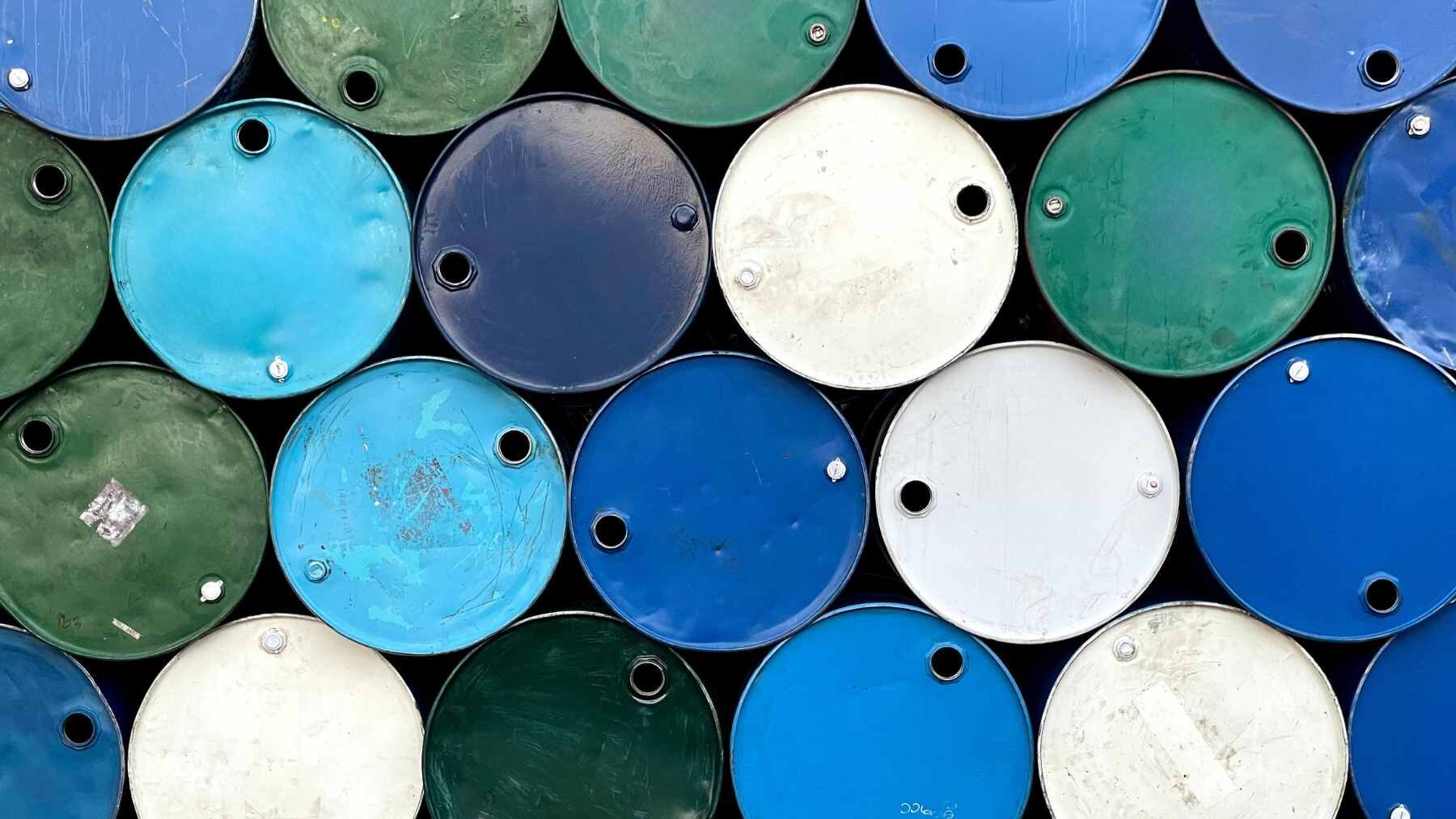
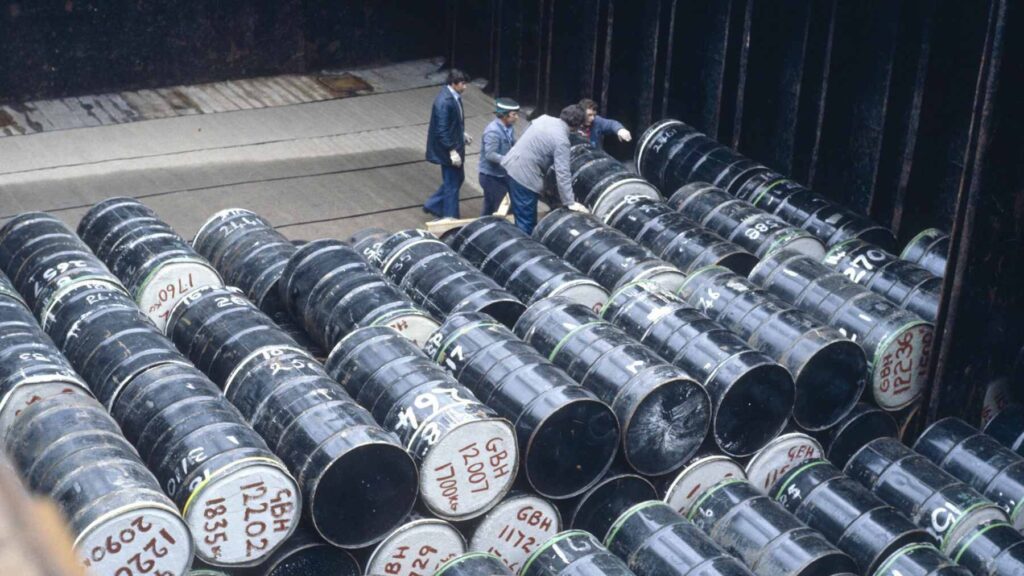
For decades, several European countries treated the deep ocean as a disposal site for low-level and intermediate-level radioactive waste, a history documented in an official International Atomic Energy Agency inventory. Steel drums were filled with contaminated equipment, sludge, and other material, then stabilized with cement, bitumen, or resin before being dropped into international waters more than 15,000 feet deep.
At the time, the abyss was often viewed as remote, stable, and almost empty of life. That assumption did not age well. The 1993 London Convention amendments banned the dumping of low-level radioactive waste at sea, but the old barrels remained where they landed.
How scientists found them
The NODSSUM project united Ifremer, France’s ocean science institute, the Nuclear Safety and Radiation Protection Authority, and international partners. During the first expedition in 2025, the autonomous vehicle UlyX from the French Oceanographic Fleet used high-resolution sonar to scan the seafloor, then descended from about 230 feet above it to take close photographs.
That survey mapped 3,355 barrels across roughly 63 square miles at depths approaching 16,400 feet. It was a major step, yet it covered less than 2 percent of a dumping zone estimated at about 5,600 square miles. In practical terms, most of the site is still unseen.
A closer look in 2026
The second voyage ran from May 27 to June 28, 2026, with about 30 scientists and the crewed submersible Nautile. It completed 20 dives below 15,400 feet, allowing mechanical arms to collect sediment, water, animals, and microbial communities beside selected drums.
Mission co-leaders Patrick Chardon, a specialist in measuring radioactivity at Clermont Auvergne University, and Javier Escartin, a marine geologist at École Normale Supérieure-PSL, used the earlier map to choose five close-up study sites. In a translated account, Chardon recalled the approach in simple terms, “You see one, then two, then three, then four.”
What the barrels revealed
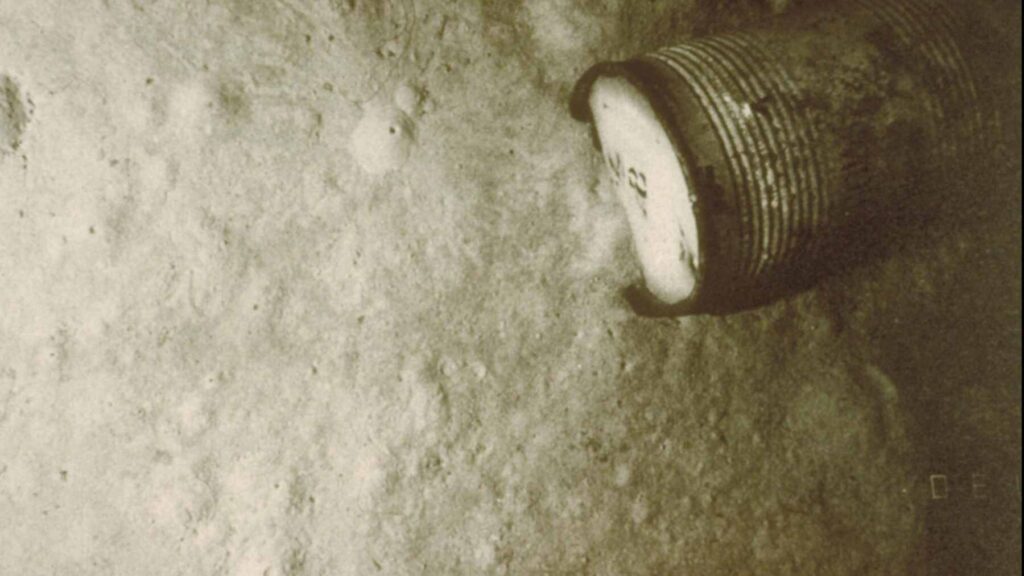
Several drums showed advanced deterioration. Their steel walls were badly corroded, and material from some containers had spilled onto the surrounding seabed. Researchers also identified the cement, bitumen, and resin once used to hold the radioactive waste together.
A radionuclide is an unstable form of an element that releases radiation as it changes. Instruments aboard the ship detected waste-linked radionuclides above the background expected in this part of the deep Atlantic. Even so, the measured activity remained low enough for the samples to be handled without major additional radiation-protection measures.
That is an important distinction. Low readings during the voyage are not the same as proof that the ecosystem is unharmed. Laboratory teams now need to measure exactly what escaped, how far it traveled, and whether sediment, microbes, fish, or invertebrates are carrying it through the food web.
Life on a radioactive dump
The barrels were not sitting in an empty desert. Anemones, sponges, crabs, coral, and sea cucumbers had colonized many of them, turning pieces of industrial waste into hard surfaces that resemble artificial reefs. Strange as it looks, the presence of life is not a clean bill of health.
Hard surfaces can concentrate animals in a landscape dominated by soft sediment. That may also create new routes for radioactive material to enter living tissue, which is one reason the team sampled organisms directly from the drums. Researchers also saw plastic bags, bottles, and paint containers, a familiar trail of trash in a place sunlight never reaches.
Why the barrels will stay down
The mission has no plan to raise the drums. Project officials say the logistics would be extremely difficult, while handling containers weakened by decades of corrosion could add risk without improving the science. The objective is to study their condition and surroundings where they are.
A rusted can in a backyard is easy to pick up. A weakened radioactive drum nearly three miles down is another matter. Lifting a small number would not address a site spread across thousands of square miles, so the project is focused on monitoring rather than cleanup.
What happens next
Images and samples from the 2025 and 2026 campaigns will be analyzed for months. Scientists will compare life on the barrels with communities on nearby natural rock, quantify artificial radionuclides, and track how they move through water, sediment, and organisms. The work could become one of the most detailed deep-sea radioecology studies yet conducted, examining how radioactive material behaves within an ecosystem.
Earlier international surveillance research examined how radioactive material moves through marine environments, but modern sonar, robotic mapping, and close-range sampling provide a sharper view. At the end of the day, the central question is straightforward. What happens when waste designed to be forgotten becomes part of an ecosystem for generations?
The official findings were published in a July 2026 press release from the French National Center for Scientific Research.