A northern gannet can strike the ocean at roughly 54 mph and keep chasing fish beneath the surface. Research published October 12, 2026, adds another clue to how these birds withstand the plunge, identifying unusually sturdy neck bones that help support them during impact.
The finding builds on earlier work examining their pointed beaks, strong muscles, and air-filled compartments beneath the skin. Together, the studies reveal a hunting system that involves much more than falling fast, with different adaptations helping the bird enter the water and pursue its next meal.
A closer look at the neck
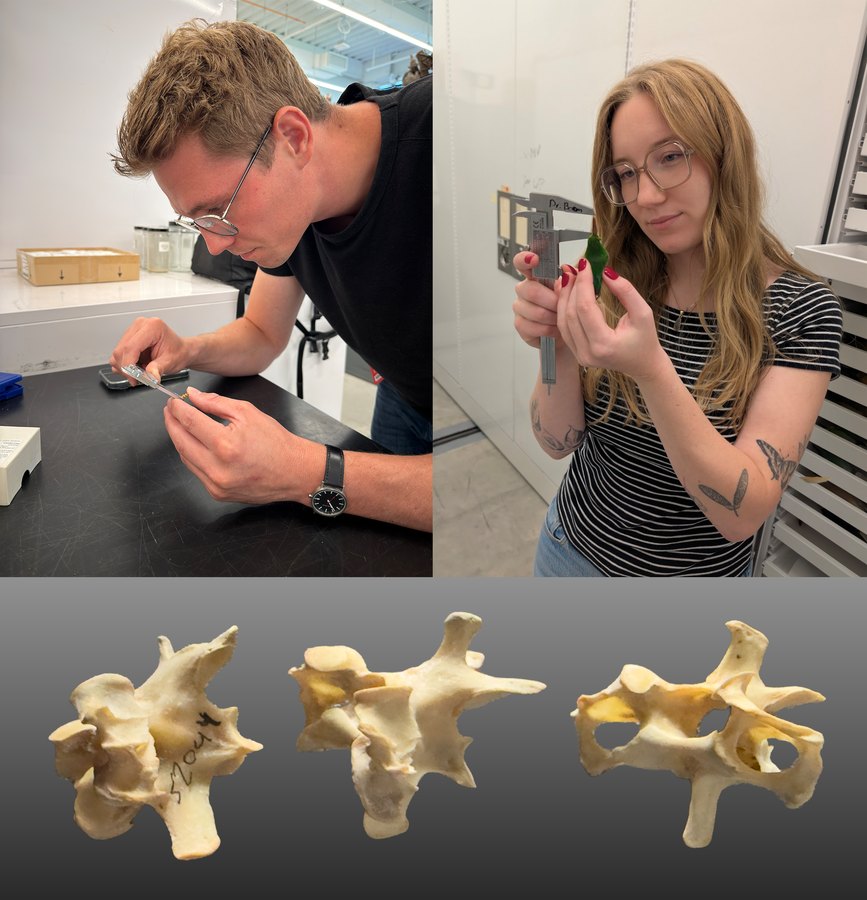
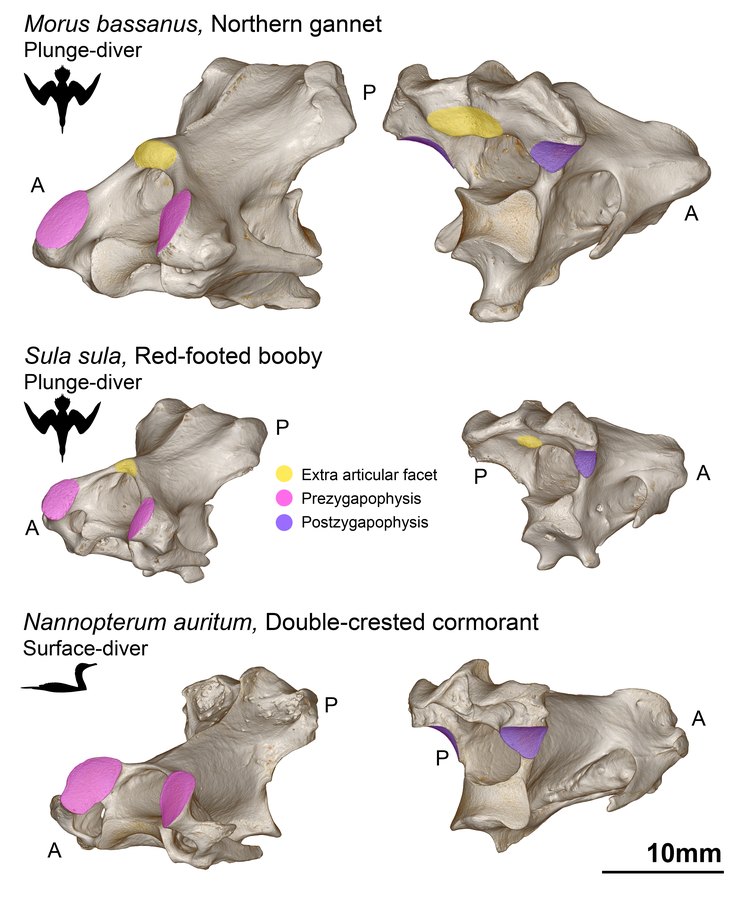
The new University of Washington study compared neck vertebrae from five species that plunge-dive and two that do not. Using detailed CT scans, researchers found that the diving species had shorter, wider vertebrae with reinforced features suited to handling impact.
Gannets and boobies also had an extra contact surface between some bones near the front of the neck. Researchers suggest this additional support helps limit backward bending when a bird meets the water at an angle.
“We see that the birds that plunge-dive have more robust vertebrae,” said lead author Megan Vandenberg in the university’s announcement. That strengthens the evidence that the neck’s underlying structure matters alongside the muscles surrounding it.
From soaring to a narrow target
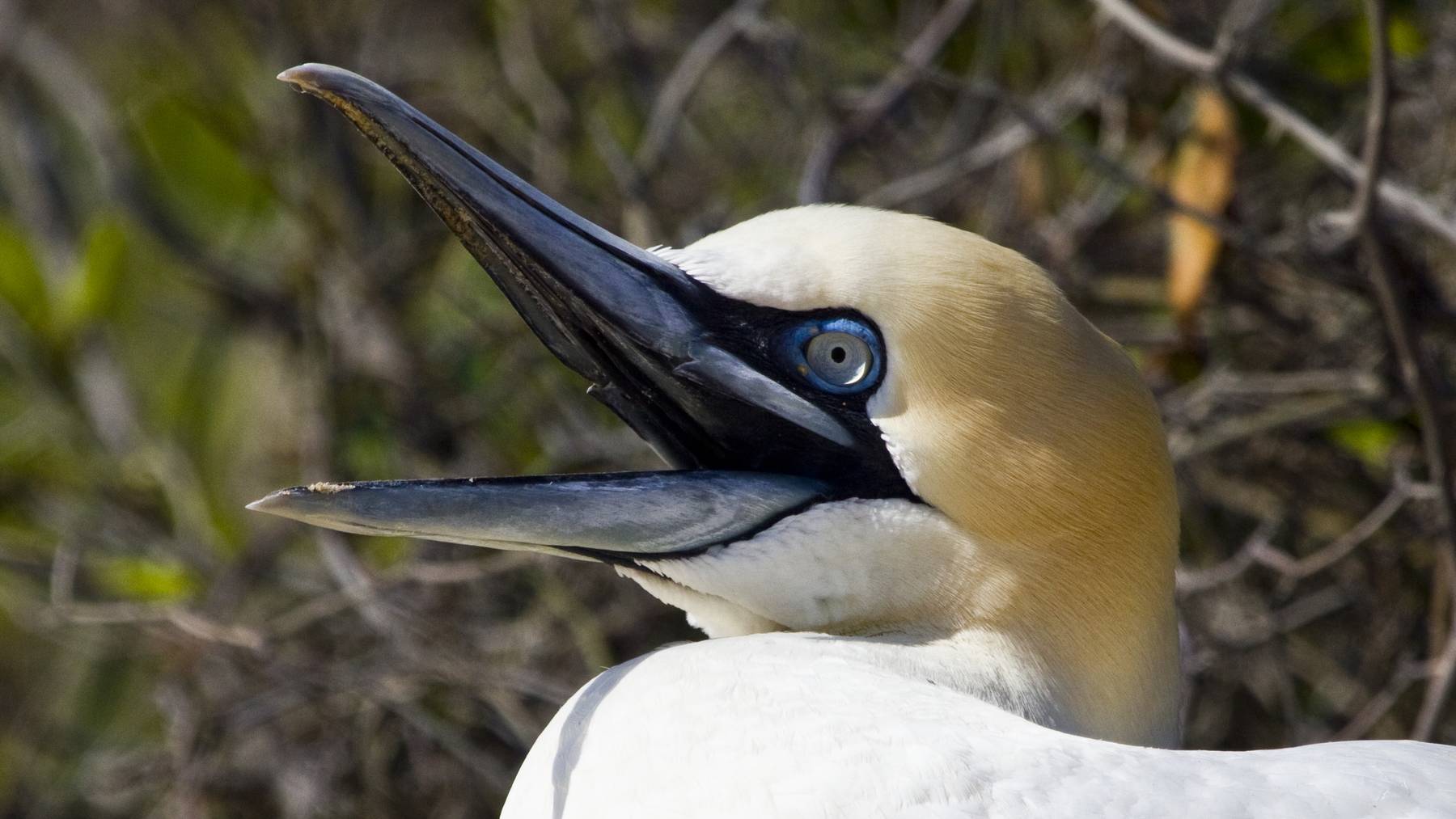
Known scientifically as Morus bassanus, the northern gannet patrols the North Atlantic with a wingspan approaching 6.5 feet. Adults have mostly white feathers, dark wingtips, and a pale yellow head, making them striking birds even before the diving begins.
Once a bird spots fish, it tips downward and draws its wings back as it approaches the surface. Those broad wings, so useful in flight, tuck away to create a much narrower profile for entering the water.
Why the pointed beak matters
Anyone who has landed awkwardly in a swimming pool knows that water can deliver a surprisingly sharp slap. For a gannet, the long, tapered beak meets the surface before the wider head, making the shape of that first contact especially important.
A 2019 study tested 11 3D-printed bird models fitted with sensors. Researchers found that, under similar impact conditions, the forces were comparable across bird types, but the time taken to reach maximum acceleration differed with head and beak shape.
That distinction matters because an abrupt change in acceleration creates what engineers call “jerk.” The plunge-diving models experienced lower values than surface-diving models, showing why the way a force builds can be just as important as its size.
Muscles hold the line
The neck faces a difficult moment after the head enters the water but before the chest follows. Water slows the head while the rest of the body continues downward, putting the slender neck under compression.
A 2016 study used a salvaged northern gannet, anatomical measurements, and simplified physical models to investigate this problem. Its findings showed how neck dimensions, beak geometry, muscle strength, and entry speed work together to reduce the risk of buckling, the sideways bending that can occur when a narrow structure is compressed.
Are the air sacs really airbags?
Air-filled spaces beneath the skin add another layer to the story. A 2008 anatomical study examined 15 northern gannet carcasses and mapped an extensive network of compartments around the trunk and parts of the wings, legs, and neck.
The main body compartments connect with a respiratory air sac, while smaller spaces along the neck communicate with the nasal cavities. Calling the whole arrangement “airbags” offers a familiar picture, but it leaves out some important anatomical differences.
The researchers considered cushioning a likely function, yet explicitly called for further work to establish how the compartments operate and how air circulates through them. Their study described the anatomy rather than directly measuring how much impact protection those spaces provide during a live dive.
The chase beneath the splash
What happens when the fish are deeper than the initial plunge can reach? The gannet can switch to underwater wingbeats, extending the hunt after its downward momentum begins to fade.
In a 2009 study using miniature accelerometers, monitored northern gannets did not exceed about 36 feet underwater on plunge momentum alone. With wing-powered propulsion, they reached approximately 79 feet, more than twice that depth.
Those figures describe the birds in that study, not an absolute limit for the species. The researchers’ model also suggested that launching from above roughly 131 feet added little extra depth through momentum alone, so climbing higher does not necessarily buy a much deeper dive.
What these dives can teach us
For engineers studying how objects cross from air into water, these findings suggest that entry shape and structural support deserve attention together. A streamlined exterior tells only part of the story, because the structures carrying the load also influence what happens at impact.
The latest research leaves further questions about exactly how forces travel through the neck, something the team hopes to investigate next. The study was published on Wiley Online Library in The Anatomical Record.
Photo: Orsulak / U.S. Fish and Wildlife Service