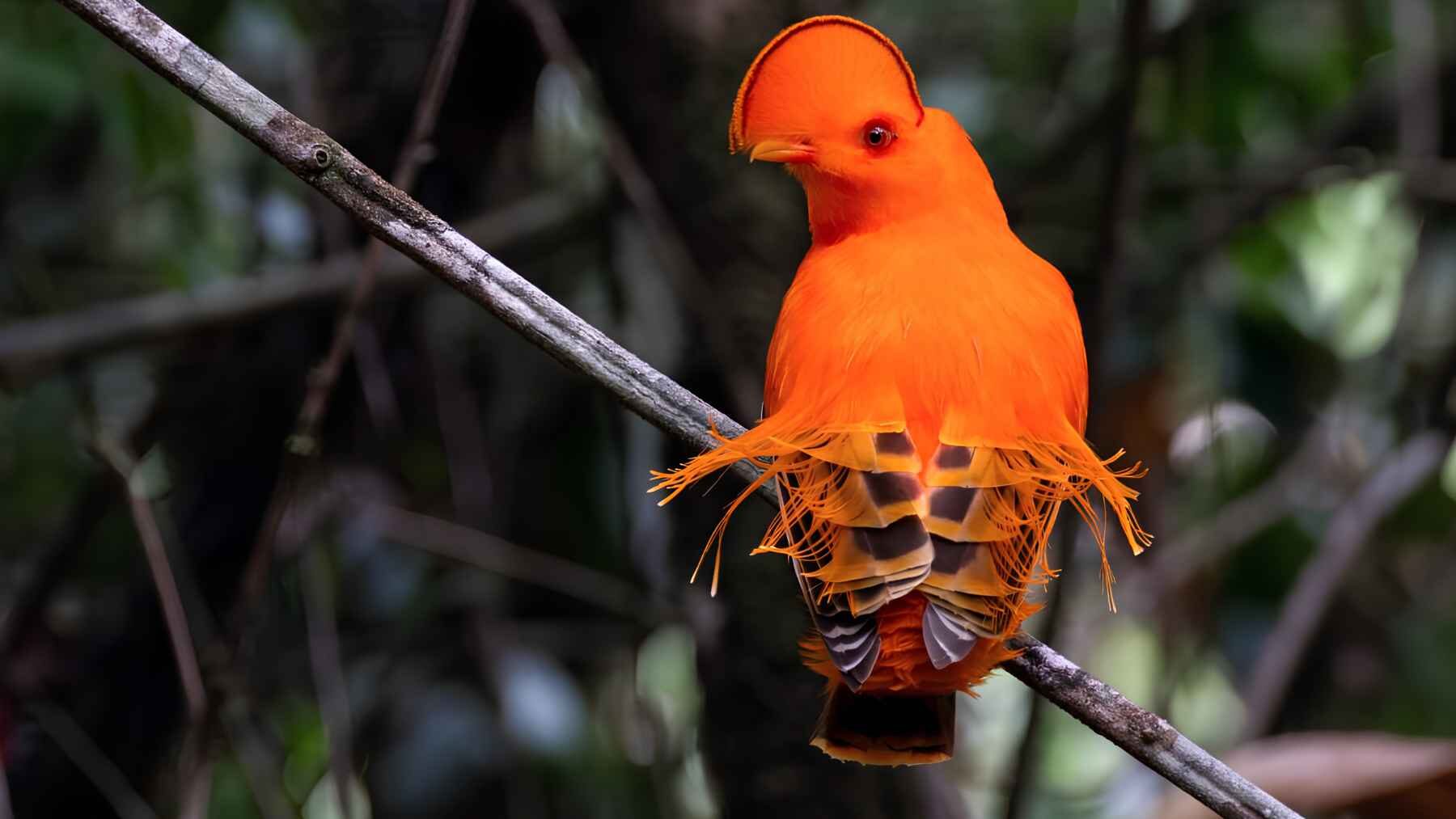
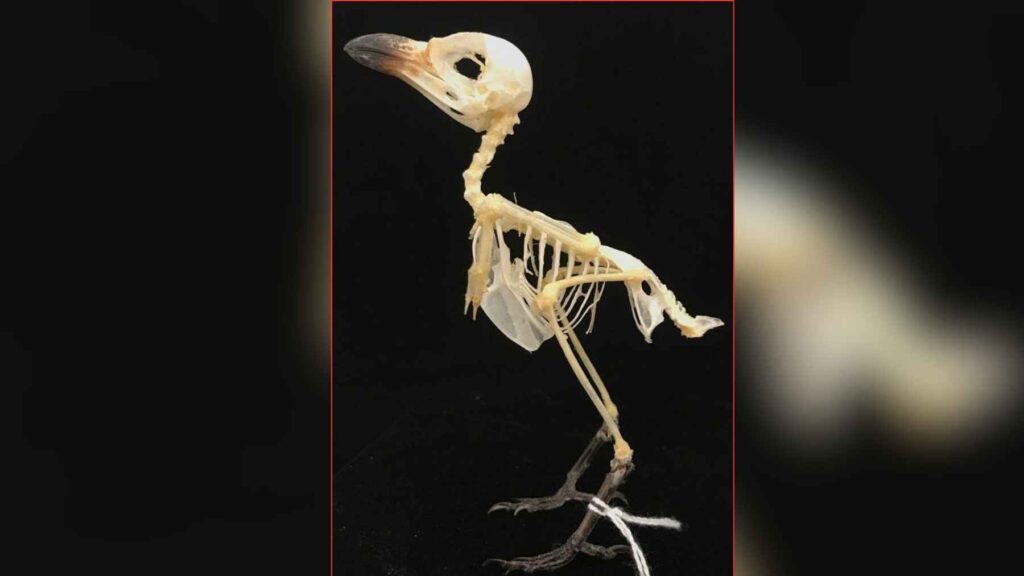
A bird skeleton may look like a quiet museum object, but thousands of them have now exposed a far more restless story. Researchers led by the University of Michigan used artificial intelligence to process more than 170,000 skeletal measurements from 2,057 passerine species and reconstruct changes in their body plans across roughly 50 million years. The central finding is that evolutionary change was dominated by uncommon bursts of innovation rather than one steady, unbroken pace.
Those bursts often appeared near the origins of major bird groups and aligned with periods of greater climatic instability. The result does not overturn natural selection or suggest that evolution simply switches off between major events. Instead, it shows that visible anatomical change can accelerate when ecological opportunities appear, then ease as those opportunities become harder to find.
Museum drawers meet AI
Passeriformes are the most diverse order of living birds and include many familiar perching birds and songbirds. For this study, the researchers examined roughly 15,000 museum specimens representing 2,057 species, most of them held by the University of Michigan Museum of Zoology. A project on that scale would be painfully slow with calipers and handwritten notes.
That is where Skelevision came in. The system photographs a bird skeleton against a standardized grid, then uses a deep neural network to identify and measure 12 important structures in about 45 seconds. Traditional handling and measurement could take as long as 30 minutes for one specimen.
Effectively, the AI converted museum photographs into consistent anatomical data. It did not decide why birds evolved or replace scientific judgment. Researchers still had to frame the questions, test the patterns, and determine what the results could reasonably mean.
A whole skeleton at once
Lead author Jake Berv developed a statistical method called bifrost so the team could analyze the body as an interconnected system instead of treating every bone as a separate story. As Berv explained, “The whole organism is an integrated, complex morphology, and each of the individual pieces is interrelated to every other part in the body.”
By combining these measurements with the passerine family tree, the researchers reconstructed changes in overall body proportions across deep time. The analysis found rare, large increases in evolutionary rates near the beginnings of major groups, followed by many smaller slowdowns. The biggest anatomical experiments were not spread evenly across the timeline.
Does that mean evolution is always explosive? No. Populations can continue changing during quieter periods, though major body-plan innovation may happen much more slowly. The study sharpens the picture of evolutionary tempo while leaving natural selection firmly in place.
Climate changed the tempo
One of the clearest bursts appeared about 35 million years ago around the Eocene-Oligocene transition. Earth was undergoing intense global cooling as it shifted away from warmer greenhouse conditions. That environmental shake-up likely altered habitats and opened ecological space that some passerine lineages could exploit.
The model also detected a cluster of evolutionary slowdowns about 15 million years ago, close to another major cooling phase. The authors interpret the broader pattern as a cycle in which lineages first explore new ecological space rapidly, then lose speed as more of it becomes occupied. Still, timing alone does not prove that temperature shaped every change.
The researchers then looked for a similar signal across the modern world. Bird communities at more extreme latitudes, where seasonal temperatures swing more sharply, tended to contain species with higher average rates of morphological evolution than communities near the equator. Their traits were also more modular, meaning groups of body features could vary with somewhat greater independence.
Why ecological openings matter
The finding fits a century-old idea about adaptive radiation. When a lineage reaches a new continent, enters a different habitat, or gains access to an underused resource, natural selection may have many workable directions to explore. Body shapes can diversify quickly because the ecological map still contains blank spaces.
An ecological opening is a little like an empty theater. Early arrivals find plenty of seats, while later arrivals face a more crowded room and fewer easy choices. That does not end evolution, but it can make dramatic innovation less frequent.
This helps explain why the study found a lopsided pattern rather than a neat rhythm. There were a small number of large accelerations and many modest declines. Evolutionary history looked less like a smooth highway and more like long stretches of ordinary travel interrupted by brief periods of rapid movement.
Museum collections become time machines
The research also makes a strong case for preserving natural history collections. Most of the bones were gathered long before Skelevision existed, yet careful labeling and storage allowed scientists to ask questions the original collectors could not have imagined. Old drawers became a biological archive waiting for the right tool.
AI made that archive searchable at a scale that would otherwise demand years of repetitive work. The underlying value, however, came from the specimens and from the people who collected, prepared, cataloged, and maintained them. Technology opened the door, but the museum had kept the evidence safe.
What this means now
There is a lesson for the current period of rapid climate change, though not a comforting guarantee. The study shows that climatic instability and evolutionary change have been connected across deep time, but it does not show that every species can adapt fast enough to modern warming. Historical patterns offer context, not a simple forecast for the next decade.
What the research provides is a clearer view of how opportunity, climate, anatomy, and time can work together. Evolution does not always move at the same speed, and 170,000 measurements have made that uneven rhythm much harder to miss.
The study was published in Nature Ecology & Evolution.