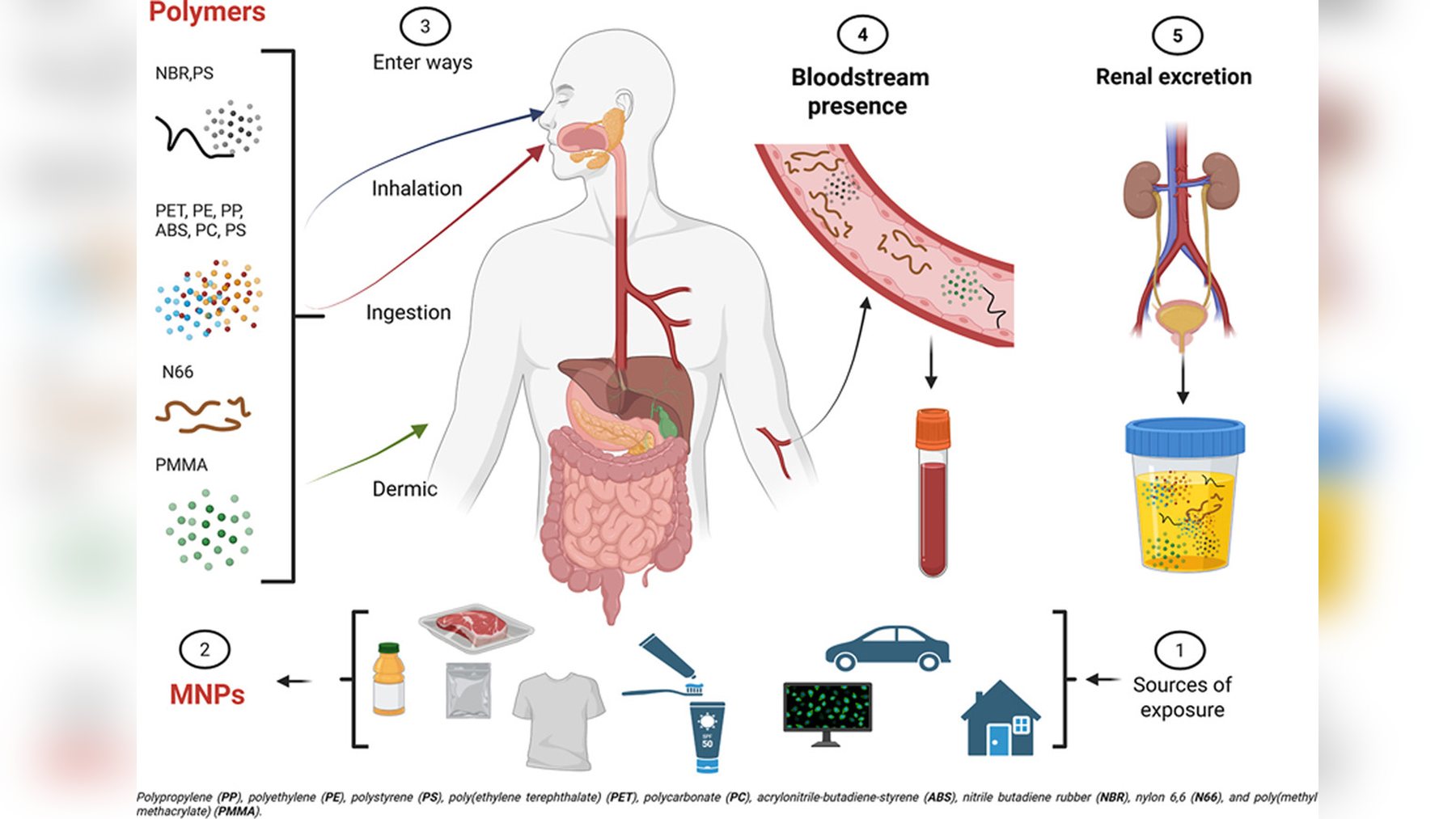
Researchers in Mexico have detected microplastics in blood and urine collected for a study involving 98 residents of Corralero, Oaxaca. The findings bring plastic pollution uncomfortably close to home, while raising a question that scientists are still working to answer. Once these materials enter the body, what happens to them?
The team at Mexico’s National Polytechnic Institute (IPN) found that nylon 66 appeared more prominently in blood than in urine, suggesting that some materials might be retained differently. But that possibility remains a hypothesis, and detecting plastic does not establish that it caused illness in the participants. IPN announced the findings on September 20, 2026.
What the researchers found in Oaxaca
Led by Laura Arreola Mendoza at IPN’s environmental research center, CIIEMAD, the project examined 10 types of plastic polymers. Collaboration with the Spanish National Research Council (CSIC) in Barcelona provided access to specialized technology for analyzing the biological samples.

The published paper reports 78 blood samples and 91 urine samples from the 98 volunteers, with both fluids available for 71 people. Every participant tested positive for at least one polymer in at least one of the two fluids, which does not mean every blood and urine sample contained detectable plastic. These details appear in the study published in Environmental Pollution.
According to IPN, more than 70% of the particles identified in blood were fibers. Urine contained a more even mix of fibers and fragments, showing that the two fluids did not present the same picture of exposure.
Why the nylon finding matters
Think of the blood and urine results as two snapshots, each revealing something different. The greater presence of nylon 66 in blood raises the possibility that this material behaves differently from plastics that appeared more prominently in urine.
Still, a snapshot cannot tell researchers how long a particle has been circulating or exactly when it will leave. The authors acknowledge that their study cannot establish how these materials move through the body over time, and IPN says the retention hypothesis needs further investigation.
That makes urine an interesting option for future monitoring, since collecting it does not require a needle. The authors suggest it could help assess environmental exposure, although measuring exposure is a different task from diagnosing disease.
Where might these particles come from?
Microplastics are generally described as plastic pieces smaller than 5 millimeters, while nanoplastics are smaller still, typically below one micron. A human hair is roughly 70 microns across, according to the U.S. Food and Drug Administration, which also notes that definitions are not yet standardized.
These materials can form as larger plastic objects weather and break apart, and people can encounter them through air and food. That helps explain why the issue extends beyond the bottles and bags we can see along a roadside or floating in a stream.
The Oaxaca team also detected NBR, a synthetic rubber, and polystyrene, with IPN pointing to questions about tire-related sources. But identifying a polymer is not enough to trace it back to a particular tire, package, or household product. The route from an environmental source to a person’s sample still needs evidence.
Detection does not settle the health question
Arreola Mendoza also highlighted the possibility that plastic particles can carry other substances, including chemical or biological contaminants. Plastics may contain additives and interact with pollution around them, adding another layer to the research questions.
That concern does not demonstrate that the particles detected in these volunteers carried cancer-causing metals or produced a particular health effect. The FDA says important gaps remain in understanding the potential health effects of microplastics and nanoplastics found in human samples.
The findings also come from one community, so they cannot establish exposure levels for everyone in Mexico or elsewhere. For readers, the useful distinction is straightforward. Finding a contaminant helps scientists investigate exposure, but understanding the consequences requires additional evidence.
Plastic waste does not simply disappear
The environmental message reaches beyond the laboratory. Throwing something away may remove it from the kitchen counter, but it does not necessarily end its journey through the environment.
“If people knew that you throw it away today and breathe it in or ingest it tomorrow, things would be different,” Arreola Mendoza said in the IPN statement, translated from Spanish. Her point is that waste management and human exposure are connected, even when the particles are too small to notice.
IPN says the team is continuing to process information and examine how these materials are distributed in the body. The official press release was published on the National Polytechnic Institute’s website.
Image: Rodríguez-Gutiérrez et al. / Environmental Pollution, CC BY-NC-ND 4.0