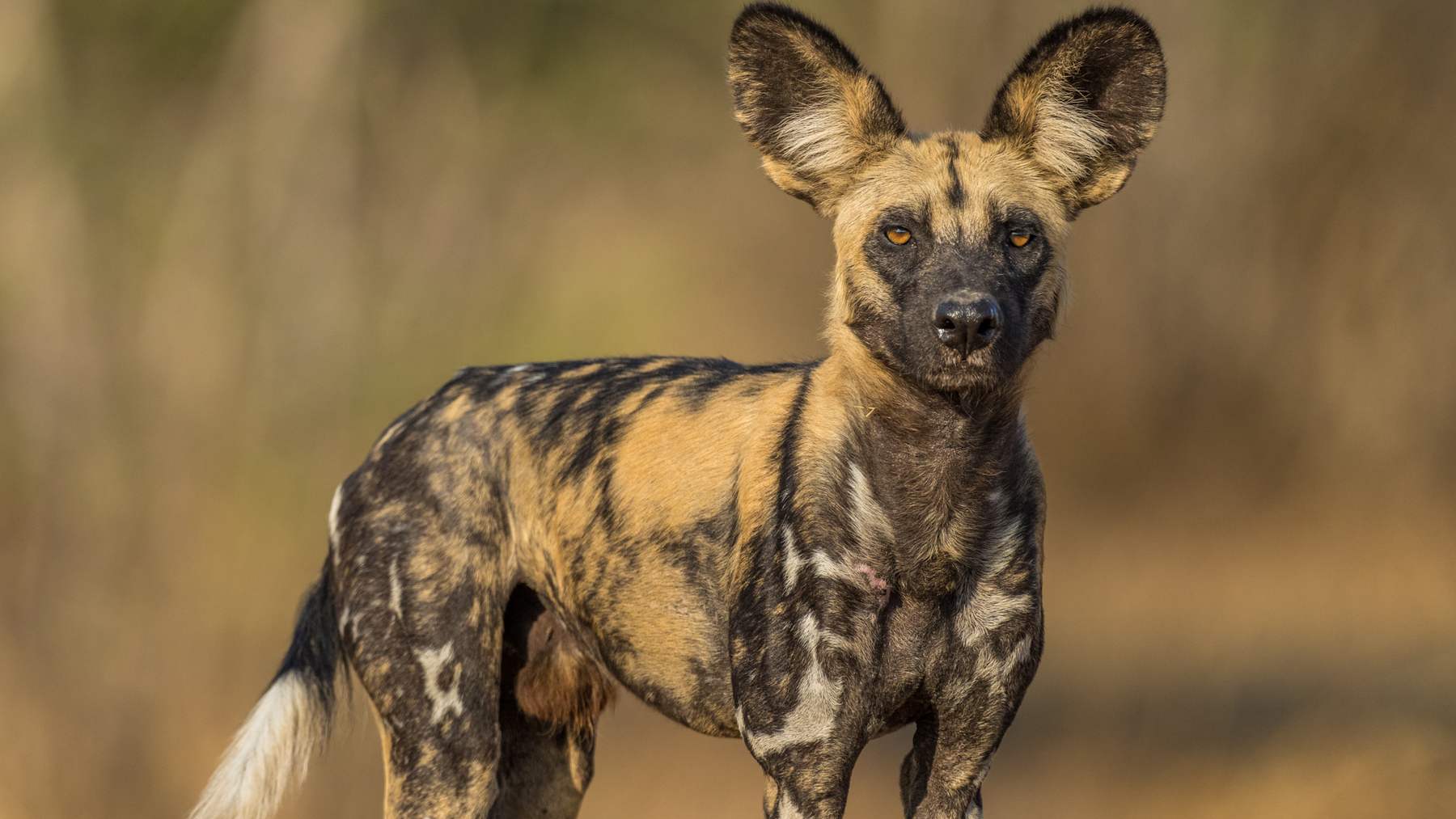
Finding a mate took three African wild dog brothers on a journey of about 2,564 miles across Zambia. Researchers describe it as the longest dispersal route ever recorded for an African mammal. Their travels show how much ground these endangered predators may cover while searching for breeding opportunities.
But the distance tells only part of the story. The animals crossed a landscape divided by roads, cities, and reservoirs, showing that connections between wildlife habitats still exist while exposing the dangers along the way.
Why wild dogs leave home
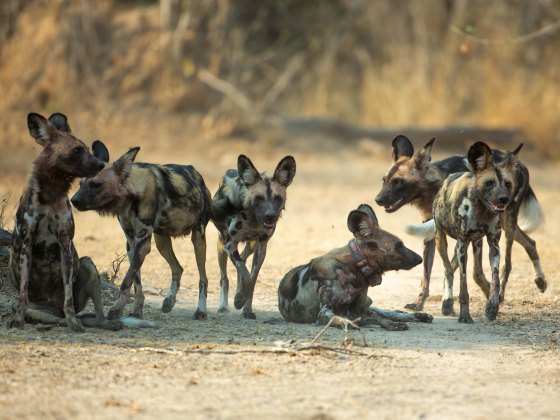
African wild dogs live in close-knit packs that hunt together and help raise one another’s pups. Usually, a dominant male and female do most of the breeding, leaving other adults with limited opportunities to reproduce.
What happens when a young adult is ready to breed? Some stay and help relatives, while others leave with siblings of the same sex to search for unrelated partners. Scientists call this departure “dispersal,” a move away from an animal’s original home.
Lead author Scott Creel of Montana State University and colleagues, including researchers from Zambia’s Department of National Parks and Wildlife, tracked the journeys using GPS collars. The devices provided a record of where the animals traveled and where they paused or doubled back.
A journey full of detours
The brothers left their family pack in Kafue National Park in July 2025, two weeks after four sisters departed. By April 1, 2026, the males’ recorded route totaled about 2,564 miles. The paper reports a straight-line distance of roughly 260 miles, showing how much extra ground their winding journey covered.
The females initially stayed in a wildlife management area near their former home, while the males headed east into central Zambia. In September, the brothers and sisters briefly encountered one another again. After about a day together, the two groups separated and continued their searches.
For the males, moving onward meant navigating around cities and large reservoirs. Anyone who has followed a long road detour knows how quickly extra miles accumulate, but these animals had no marked alternative route. Their tracks show repeated retreats and changes of direction.
The sisters encounter danger
In October 2025, the females’ movements raised concerns near Kabwe. A collared animal repeatedly returned to the same location in a small wooded area, a pattern researchers recognize when wild dogs remain close to an injured companion.
The team inferred that an uncollared sister had become caught in a wire snare. These traps, set to catch wild animals for meat, can also capture predators traveling through the same vegetation. Staying close to an injured packmate may expose other dogs to nearby traps.
A collared female later died, probably in another snare, and researchers lost contact with the remaining sister. Her fate was unknown. The evidence points to suspected snaring, rather than a confirmed account of every female’s death.
Miles do not guarantee mates
The brothers eventually settled in the Luano wildlife management area within the Luangwa Valley ecosystem. Reaching a new range was an important step, but it did not establish that they had successfully reproduced.
That distinction runs through the study. Four groups together traveled more than 6,100 miles, yet the researchers reported little resulting exchange of genes or additions to other populations. In everyday terms, movement between habitats only helps connect breeding populations when newcomers survive and reproduce.
Meeting unfamiliar wild dogs can be dangerous, too, because encounters may lead to fighting. The findings therefore support a careful conclusion about conservation. Animals can still cross these landscapes, but a passable route alone does not guarantee a successful new pack.
What earlier research shows
A 2020 study cited by the new paper examined movements inside and outside South Luangwa National Park. It found that wild dogs generally traveled faster and in straighter paths outside the park, although movement slowed where human influence was stronger. research.slu.se
That earlier work suggests why a line on a map is only the beginning of understanding a wildlife route. Roads, settlements, and other changes can affect how animals move through the space between protected areas. A place they can cross is not necessarily somewhere they can safely remain.
Keeping wildlife routes open
The African Wildlife Foundation estimates that about 6,600 African wild dogs remain in the wild. Habitat loss, disease, and conflict with people threaten the species, while fragmentation breaks its range into smaller pieces. A wildlife corridor is a connection that allows animals to move between those separated habitats.
Protecting these connections can help animals find mates and return to areas where local populations have disappeared. “The dogs are showing us that connectivity still works; now we need to do more to protect and strengthen it,” Matt Becker, chief executive of the Zambian Carnivore Programme, told The Guardian.
In practical terms, conservation must account for the land between parks, including places where people live and keep livestock. Measures such as secure livestock enclosures and monitoring nearby packs can reduce conflict. www.awf.org The full study was published on September 13, 2026, in the journal Ecology.
Photo: Zambian Carnivore Programme