New South Wales has reintroduced 13 locally extinct mammals to three fenced conservation sites, the state government announced on June 29, 2026. Some of those species had not been seen in the wild in the state for more than 100 years. They are now breeding in areas protected from feral cats and foxes.
Mallee Cliffs National Park and Pilliga State Conservation Area are managed with the nonprofit Australian Wildlife Conservancy (AWC). Sturt National Park is run through UNSW Sydney’s Wild Deserts program. The government is extending both partnerships for another 10 years.
Mallee Cliffs, partnered since 2016
AWC and the NSW Government signed their agreement in 2016. According to AWC’s July 1 press release, it was the first time a private conservation organization had partnered with a government agency to manage wildlife and deliver large-scale threatened species recovery.
The conservancy’s fence at Mallee Cliffs, about 19 miles (30 kilometers) from Mildura on Barkandji Country, went up in 2019. It encloses a predator-free area of 9,570 hectares (roughly 23,650 acres), and all cats and foxes were removed from inside. Greater bilbies were reintroduced that same year.
AWC now estimates 1,840 greater bilbies and more than 600 brush-tailed bettongs at Mallee Cliffs. In the Pilliga, on Gamilaroi land in the state’s northwest, the conservancy says bridled nailtail wallabies, brush-tailed bettongs and Shark Bay bandicoots all number in the hundreds.
AWC counts 11 species returned across its two sites. The government’s figure of 13 covers all three partnership sites, Sturt included.
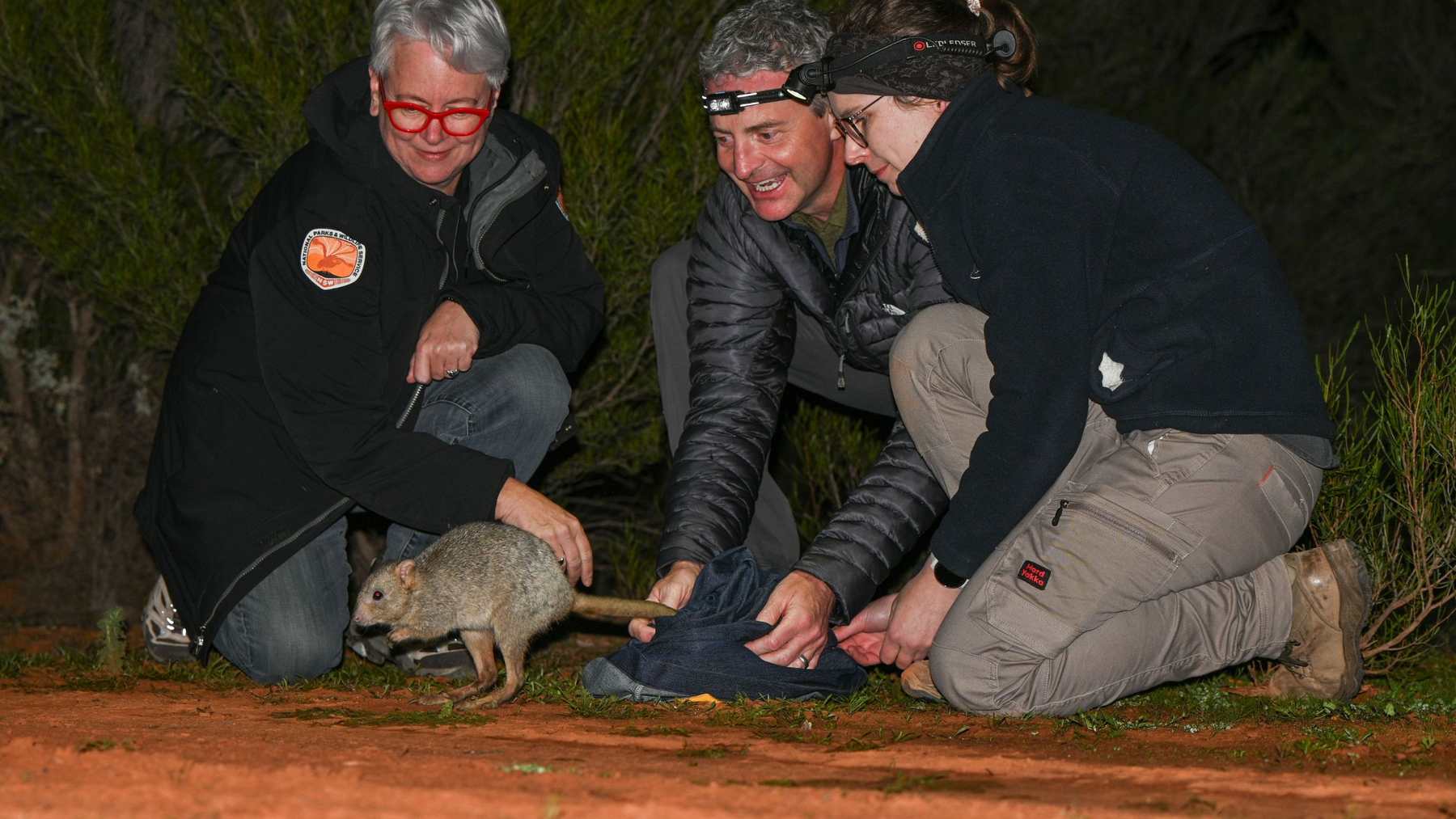
Environment Minister Penny Sharpe visited Mallee Cliffs and joined the team in releasing burrowing bettongs after health checks. In the government’s release, she said the next 10 years of the partnerships would also be about “improving our knowledge of what contributes to successful reintroductions, so we can drive recovery of threatened species and tackle our extinction crisis.”
Sturt’s 25 miles of fence
Sturt National Park lies in the far northwest of the state. There, according to UNSW, the Wild Deserts team finished about 25 miles (40 kilometers) of feral-proof fencing in October 2018. The team removed every rabbit, cat and fox from two exclosures, each 4 by 5 kilometers (about 2.5 by 3.1 miles).
Since reintroductions began in August 2020, UNSW says, six species have returned. They are the greater bilby, crest-tailed mulgara, Shark Bay bandicoot, golden bandicoot, burrowing bettong and western quoll.
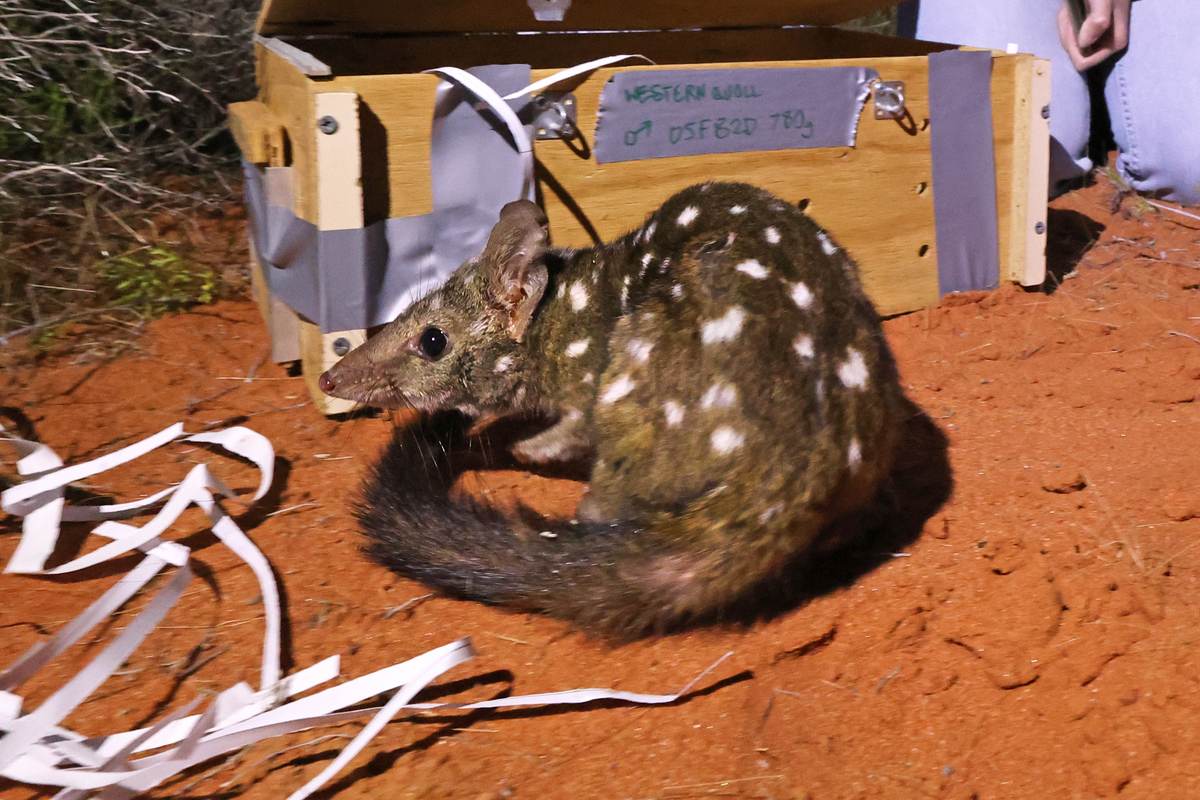
In Western Australia, a different quoll species is getting help too, after two Perth scientists tested buried plastic pipes as dens for northern quolls.
Richard Kingsford is the UNSW Scientia Professor who leads Wild Deserts. “This is a realisation of the tremendous progress we have made over the last decade in restoring the desert ecosystem in Sturt National Park,” he said in the state’s release.
Bettongs that till the desert
UNSW says deserts cover around 70 percent of Australia. As their native mammals vanished, soil turnover, seed dispersal and nutrient cycling were disrupted.
In a June 16 article, the university explains how burrowing bettongs help. As they dig for food and build burrows, they turn over soil, spread nutrients and improve water infiltration.
Cats held to 10 percent
Since 2020, the project has also run the Wild Training Zone, which covers more than 100 square kilometers (about 39 square miles). Feral cats and foxes there are kept at low levels instead of being removed.
Two of its borders are the semi-permeable Dingo Barrier Fence, and the rest is predator-proof fencing.
Over two years, UNSW reports, more than 700 animals from four threatened species have been released into the zone. They include bilbies, golden bandicoots and western quolls, and many are surviving and breeding.
Dr. Reece Pedler, the Wild Deserts project manager at the UNSW Centre for Ecosystem Science, puts feral cat numbers in the zone at around 10 percent of those outside. That has been enough for bilbies, quolls and other species to survive, he says.
“We can’t remove cats and foxes from the entire Australian landscape, so we need to find ways for native fauna to live with them,” Pedler said.
Safe havens too small to scale
Safe havens like the two Sturt exclosures stop extinctions, but UNSW calls them small, expensive and difficult to scale. New Zealand faces a similar problem, with kakapo conservationists running out of safe islands.
Burrowing bettongs were the latest species released into the zone, and Dr. Rebecca West, the project’s principal ecologist, pointed to earlier work by colleagues at Arid Recovery in South Australia. There, she said, “some of our team had bettongs alongside feral cats and documented good survival rates when the cats were at low densities.”
Along Sturt’s Dune Scenic Drive, UNSW says, new road signs now warn motorists to watch for wildlife at night. The university reads that as a sign that animals are moving again through areas where they had long been absent.
Survival outside the fences is unproven
The results in the training zone still depend on people, and UNSW credits intensive management, including automated grooming traps, for holding cats down. Pedler said his team keeps adjusting predator control as the counts move. “It is adaptive management in real time, informed by a range of monitoring data sources,” he said.
AWC says the partners hope to extend feral cat and fox control beyond the fences over the next decade. Select species could then be reintroduced into the broader landscape. The model is Mt Gibson Wildlife Sanctuary in Western Australia, where AWC has released three species beyond the fence.
New Zealand is attempting something larger, with a plan to eradicate rats, possums and feral cats nationwide by 2050.
According to the government, around half of the state’s surviving mammal species are threatened with extinction. Its network of 10 feral predator-free areas is meant to cut the extinction risk for 33 locally extinct species. It also aims to help secure 45 more threatened species.
The NSW Government published the announcement on June 29, 2026.
Photo: Australian Wildlife Conservancy