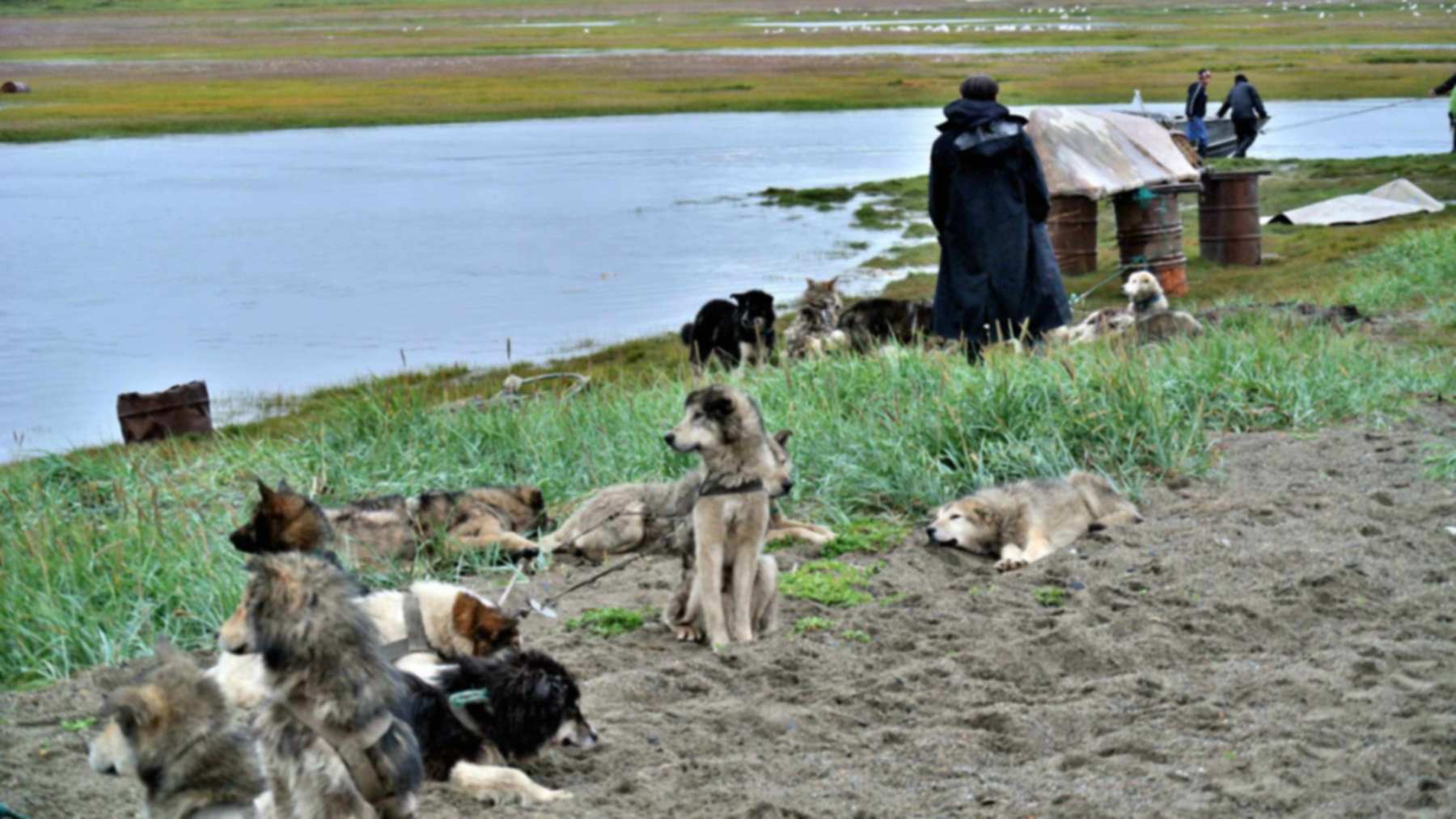
Ancient sled dogs from sites on Russia’s Chukotka coast up to 2,000 years old had the same short legs as modern sled dog teams, a new study finds. Their forearm and shin bones were about 6 percent shorter than those of other canids, and a biomechanical model built by the researchers shows why that build helps a dog pull.
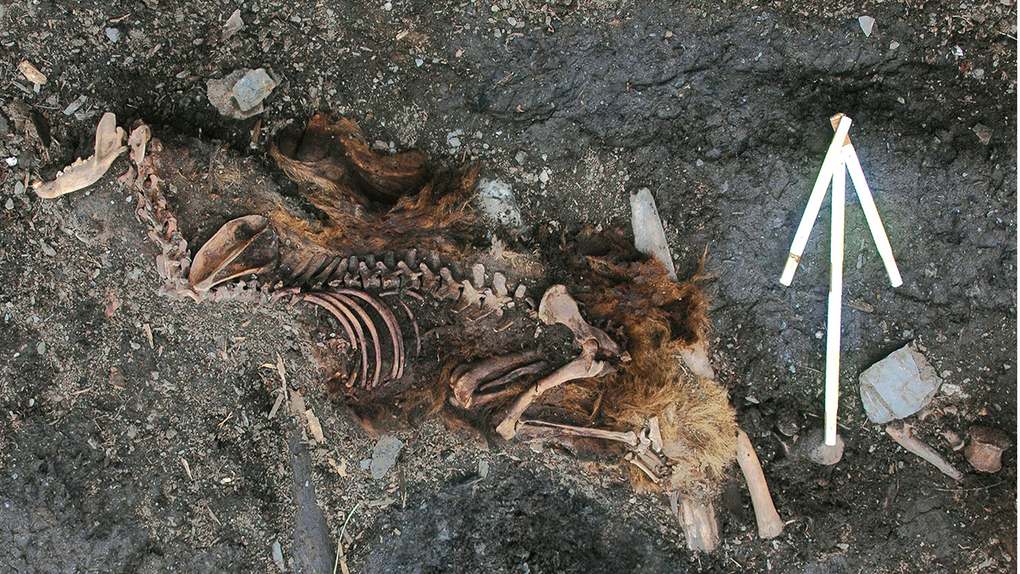
One of those dogs turned up in 2009 at Paipelghak, on the Chukchi Peninsula, under the wooden floor of a corridor that once led out of a dwelling. Permafrost had kept its skeleton and fur, and the fur showed possible harness traces, the researchers write.
Mitya Kletzerman of the School of Archaeology and Maritime Cultures at the University of Haifa in Israel led the work, published Oct. 14 in iScience, a Cell Press journal. Without dogs, Arctic people could not hunt, relocate or travel between communities as efficiently, Kletzerman said in a Cell Press news release, and studying how sledding evolved “could give us new insights into how people adapted to life in the Arctic.”
Sled parts on an Arctic island
The oldest evidence tied to dog sledding comes from Zhokhov Island in the Russian Arctic, where sled parts lay beside dog remains about 9,000 years old. Then the trail goes quiet until sleds and lots of dog bones show up together at Ust’-Polui in northwestern Siberia, some 2,000 to 1,500 years ago.
Inuit culture was forming around the Bering Strait at about that time, and its people pushed east across the strait between roughly 1,000 and 800 years ago, leaving more dog remains and sled gear behind. Some scholars tied those bones to the rise of sledding, but the study says the claim was never tested, because sled parts are rare. Old travel gear does turn up now and then, like the 1,300-year-old skis that melting ice released in Norway.
Working reindeer show limb differences from non-working ones, Cell Press notes, so Kletzerman’s team wondered whether pulling had shaped sled dogs too.
A pulling dog tips backward
The authors knew of no biomechanical model of sled pulling, so they built one from a classic greyhound outline. A dog standing still puts about 60 percent of its weight on its front legs. In harness, the pull shifts weight to the back legs, and at a maximum pull the hind legs take it all.
“When people or animals pull a load, it tends to tip them backward,” Kletzerman said. A lower or more forward center of mass counters that.
In the model, lowering the center of mass by half doubled the pulling force at light and heavy loads alike. Moving it 10 percent forward also doubled the force on light runs but added only about 17 percent under the heaviest load. Short legs are one way to get a lower body.
Museum skeletons from Greenland and Chukotka
The team measured 80 modern skeletons from museums in Moscow, Copenhagen and Russia’s Ural region. Twelve sled dogs came from Greenland, nine from Chukotka and one from Kamchatka, compared with wolves, free-ranging mongrels and spitz breeds.
The sled dogs averaged about 22.6 inches (57.3 centimeters) at the shoulder, and only wolves were larger. Yet after correcting for size, their radius, ulna and tibia were about 6 percent shorter than in the other canids, according to Cell Press.
Because every sled dog came from the far north, the team checked Allen’s rule, the idea that animals in colder places grow shorter limbs. Data from 29 North American gray wolves across many latitudes showed only weak links to climate, and sex made no difference. The gap “is not explained by Allen’s rule,” the authors conclude.
Ritual burials on the Bering Strait
The ancient bones came from Paipelghak, Ekven and Kaniskak, across the Bering Strait from Alaska, in sites spanning the first centuries B.C. to the 16th century A.D. Ekven’s grave No. 329 held two dogs in a human-sized grave, with a walrus penis bone and a polar bear jaw, where the original human remains seem to have been removed. One Ekven dog, an old male with cut marks on its skull, dates to between A.D. 900 and 1470. The Paipelghak dog dates to between A.D. 1170 and 1540.
All 15 humeri tested matched the sled-dog pattern, along with 20 of 25 radii and 38 of 42 tibiae, or 89% of the loose bones. The three buried dogs matched too. For the authors, that “provides an independent osteometric line of evidence that specialized traction dogs were already established in the Bering Strait region.” Links across the strait go back much further, as the Siberian-style points from an Ice Age camp on Alaska’s Tanana River show.
Genes, early work or diet
The paper weighs three causes. Arctic sled dogs share ancestry, and extra copies of a gene called FGF4 are linked to short legs in many breeds. Young dogs also start hauling before their skeletons are mature, which can limit bone growth. And the dogs may have been fed tissues rich in vitamin A, an excess of which can make young dogs’ growth plates close too soon.
The sled dogs come nowhere near the inherited dwarfism of Alaskan malamutes, which suggests a trade-off with other demands on the body. Dog bodies can change fast, as a study of 763 dogs across nine regions of Ukraine found. How much each factor contributed remains unresolved.
What the bones cannot prove
None of the sites offers unequivocal artifactual evidence that these dogs pulled sleds, and only a minority of specimens were dated directly. Short limbs are not unique to sled dogs, the authors add, and loose bones “should be interpreted probabilistically.”
Used with care, the method could show when and where dog-powered transport emerged and spread, including from frozen trash heaps like Greenland’s ancient middens, now melting out of the ice.
The full study was published in iScience.
Photo: Ansgar Walk/Wikimedia Commons (CC BY-SA 3.0)