Ancient garbage may not sound glamorous, but in Greenland, it has become a frozen archive of human life. A new study shows that old waste mounds preserved by permafrost still carry microbial traces of hunting, farming, animal keeping, and everyday hygiene across about 4,500 years.
The reassuring part is just as important. Researchers found disease-linked bacteria and antimicrobial-resistance genes in these sites, but the evidence suggests they are not spreading far from thawing middens right now.
“The risk of release of ancient pathogens from ancient middens on Greenland is currently low,” said Dr. Frank Møller Aarestrup, a professor at the National Food Institute at the Technical University of Denmark.
Ancient trash frozen in time
Greenland’s human story stretches across several major waves of settlement. Paleo-Inuit cultures arrived thousands of years ago, Norse settlers lived there from about the 10th to the 15th century, and Danish colonial settlements began in 1721.
Each group left behind middens, the archaeological word for old trash heaps. These piles can include animal bones, shells, human waste, tools, food remains, and other scraps from daily life. Not pretty, but incredibly useful.
Because many of these sites stayed cold and wet for centuries, they became something like deep freezers for biological clues. That means researchers can study not only what people ate, but also which microbes lived around people, animals, and waste.
DNA tells the story
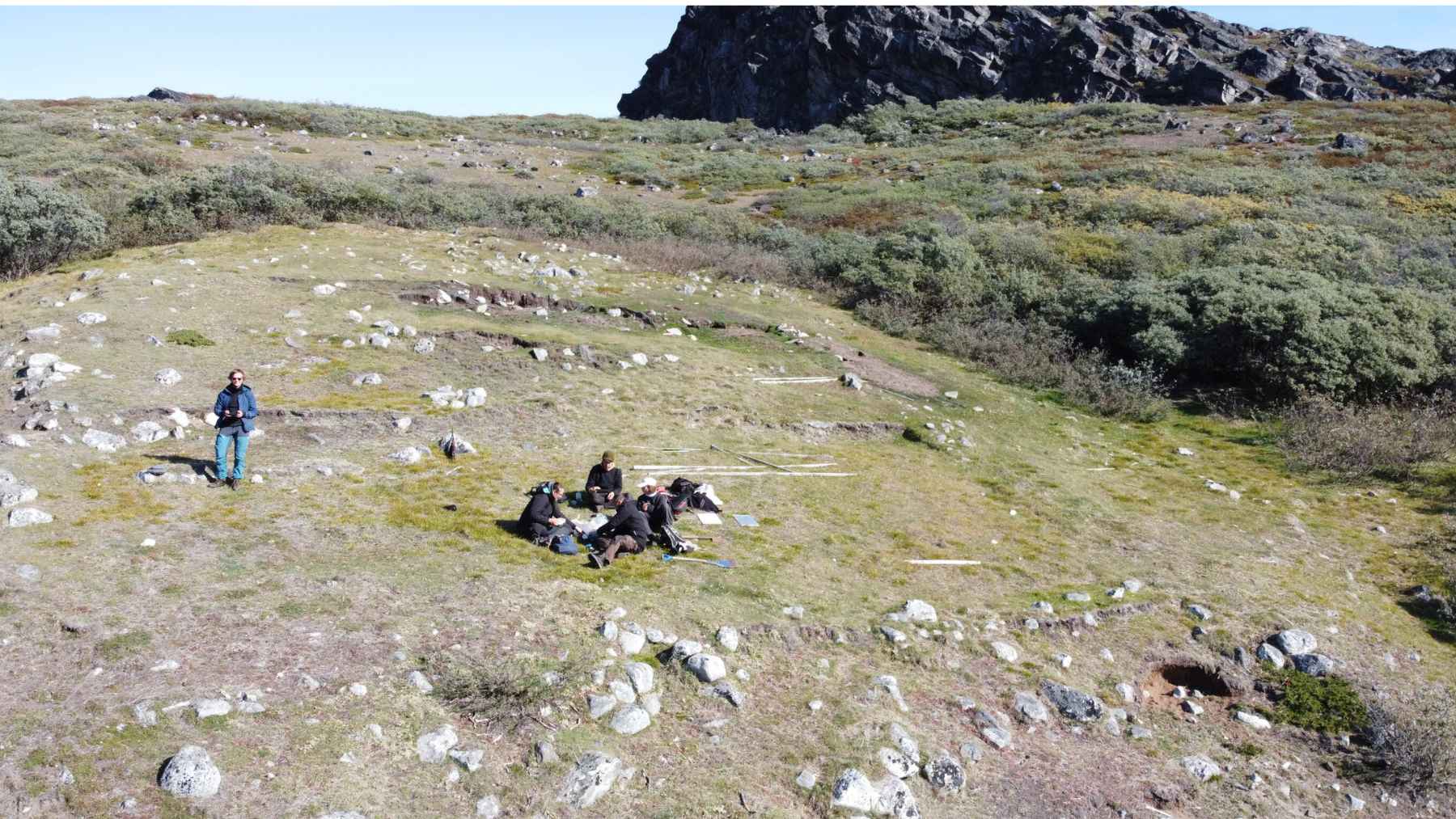
The team analyzed 78 midden samples from West and South Greenland and compared them with 143 soil samples taken away from historic settlements. The work included sites linked to Paleo-Inuit groups, Norse communities, and early colonial Inuit life.
To do this, the researchers used DNA sequencing. This means they read tiny pieces of genetic material from the soil to identify the bacteria that had once been present there.
The sequencing revealed between 9 and 202 bacterial species in each midden, with 1,207 species found in total. Many were not well known to science, which shows how much remains hidden in Arctic soils and archaeological deposits.
Farms, seals, and toilets
The frozen trash did not preserve one simple microbial pattern. Instead, each midden carried a signature shaped by what people threw away there.
Some early colonial layers from Nuuk contained decomposing seal skins and were rich in Clostridium perfringens, a bacterium often linked to food poisoning. Middens filled with animal carcasses had more gut-related bacteria from animals, while early Norse layers with rotting bones carried other bacterial groups tied to decay.
That is where the study becomes more than a health question. The microbes help confirm old patterns of daily life, from seal hunting to livestock farming to the basic reality of waste disposal. A trash pile can be a diary, if you know how to read it.
What about ancient diseases?
The researchers did find bacteria that can be linked to disease. These included types associated with food poisoning, botulism, toxic shock syndrome, sepsis, and gas gangrene.
That sounds alarming at first. However, the key point is that the study detected microbial DNA signals, not a wave of revived ancient infections moving through Greenland.
The team also found genes linked to antimicrobial resistance. That means some bacteria carry genetic tools that can help microbes withstand medicines designed to kill them. These genes appeared across old and more recent layers, suggesting that resistance can persist in frozen environments for centuries.
Low risk for now
The big public-health question is simple. Could thawing Arctic trash heaps release dangerous microbes into today’s environment?
For now, the answer appears to be no, at least in the Greenland sites studied. The researchers found that midden-related bacteria stayed close to the eroding layers and were quickly overtaken by local environmental microbes once released into runoff.
That matters because the Arctic is warming three to four times faster than the global average, and thawing permafrost can expose material that has been locked away for centuries. The trouble is, the clock is moving faster than many landscapes can handle.
Why monitoring still matters
The study does not close the case forever. It gives a snapshot of current risk in specific Greenland sites, not a guarantee for every Arctic region.
Dr. Saria Otani, an associate professor at the National Food Institute, noted that the thawing permafrost microbiome appeared to be “rapidly replaced by local contemporary environmental microbes” after release. That helps explain why the immediate danger looks limited.
Still, Dr. Anders Priemé, a professor at the University of Copenhagen, warned that scientists do not yet know whether the risk could rise as temperatures increase or whether other Arctic areas might behave differently. That is why the authors recommend adding microbiome checks to routine archaeological monitoring.
Greenland’s past in waste
At the end of the day, this research is about more than ancient bacteria. It shows how frozen waste can preserve details of human history that ordinary artifacts may miss.
Bones and tools can tell archaeologists what people hunted, made, or carried. Microbes add another layer, showing traces of livestock, skin processing, human waste, decay, and the hidden biology of settlement life.
For now, Greenland’s thawing middens appear to be less of a horror story and more of a warning label. They are fragile archives, and as the Arctic warms, scientists may need to read them before they wash away.
The main study has been published in Frontiers in Microbiology.