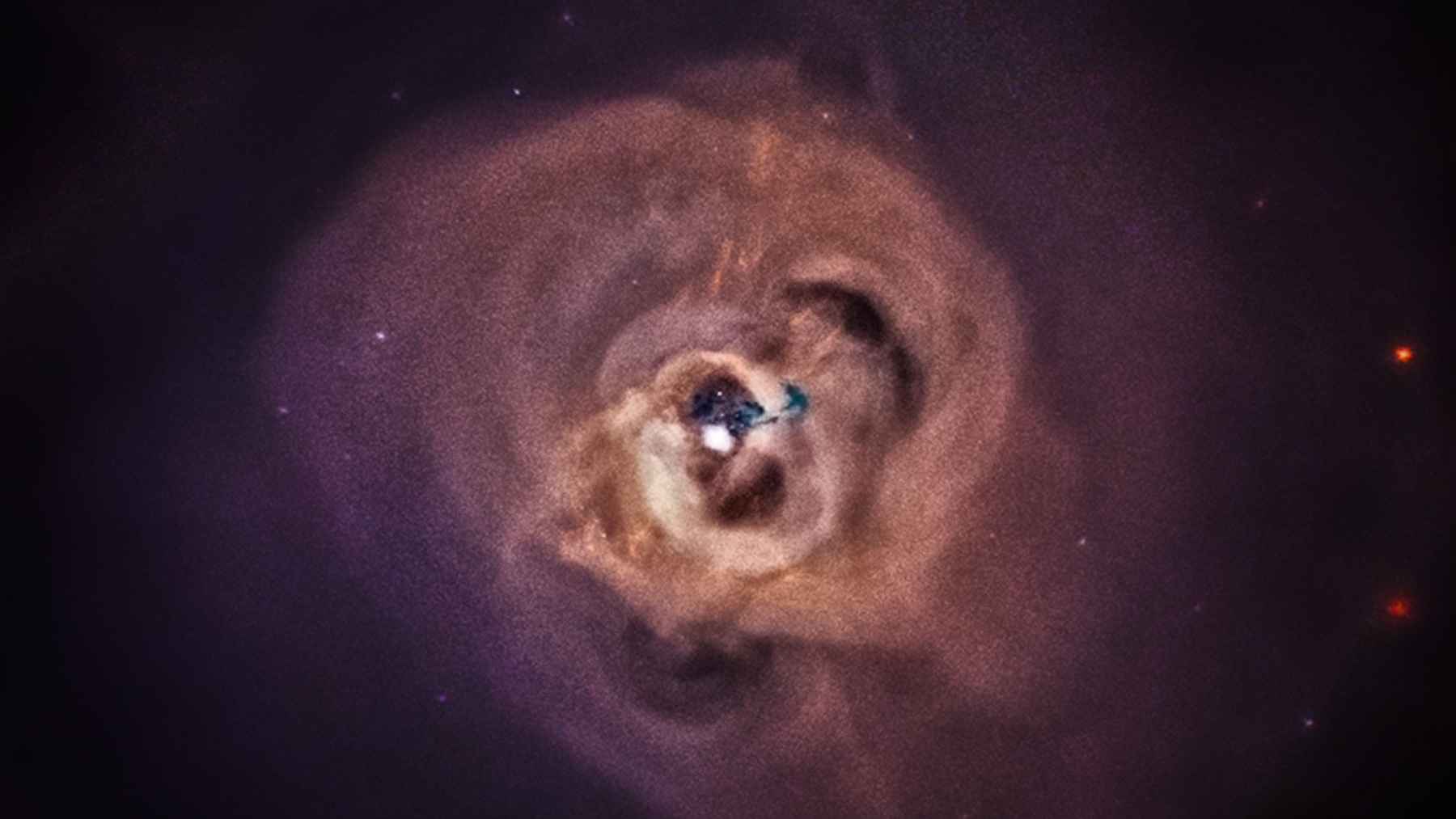
A new X-ray study has taken a sharper look at the hot gas inside the Perseus galaxy cluster, one of the brightest galaxy clusters in the X-ray sky. The result challenges an old puzzle about whether iron really drops off at the very center of the cluster, where earlier instruments seemed to suggest something strange was happening.
Using the Resolve instrument aboard the X-Ray Imaging and Spectroscopy Mission (XRISM), researchers found no strong evidence for a deep central iron drop. They also found that several chemical elements appear surprisingly uniform compared with iron across the cluster core, suggesting that much of this cosmic enrichment happened long ago, before or during the assembly of the cluster itself.
A sharper cosmic fingerprint
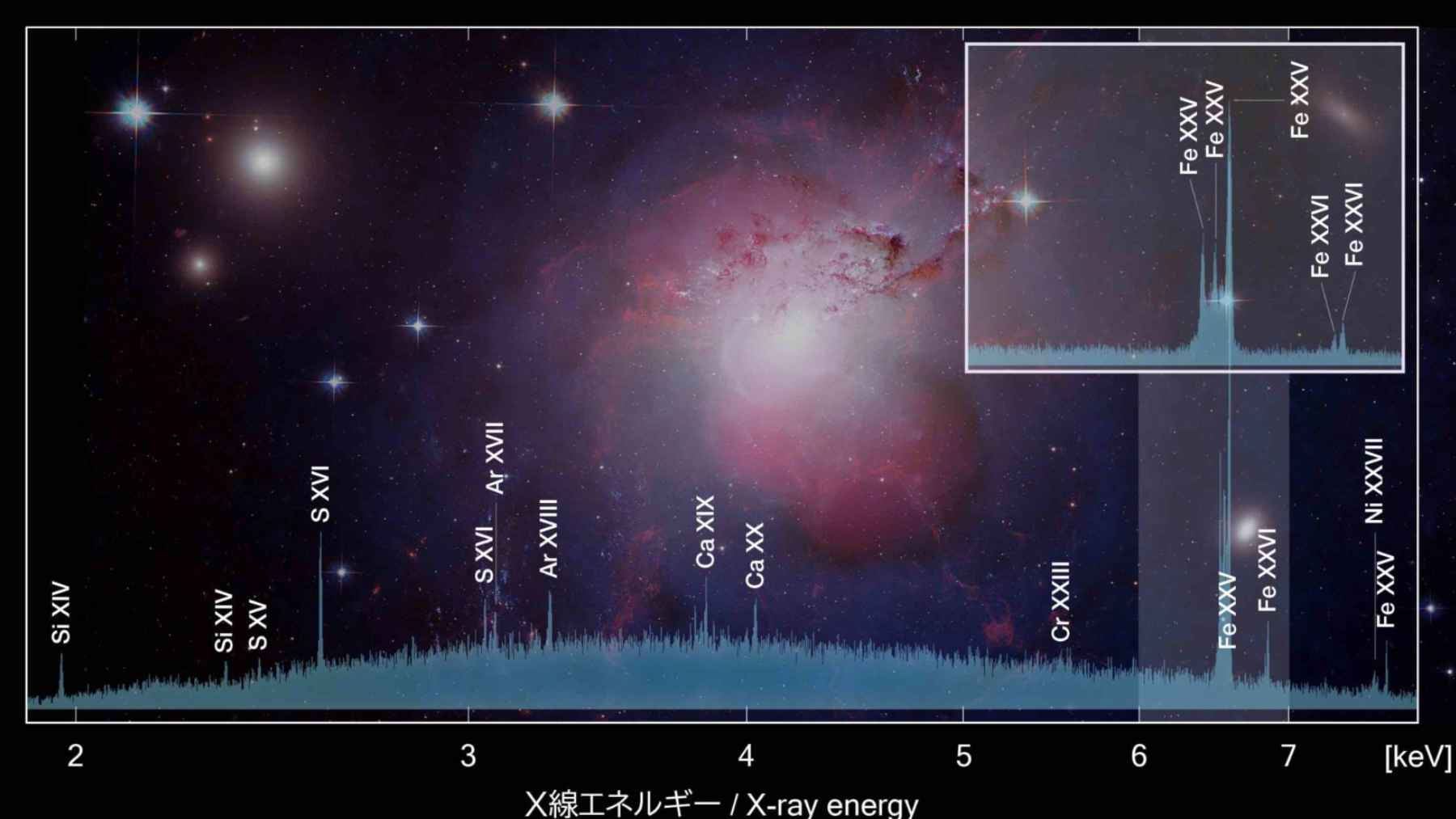
The mission is a collaboration between the Japan Aerospace Exploration Agency (JAXA) and NASA with participation from the European Space Agency (ESA). Its Resolve instrument reads X-ray light with unusual precision, helping astronomers identify elements by their “fingerprints” in space.
That matters because galaxy clusters are not just collections of galaxies. They are filled with extremely hot, thin gas that glows in X-rays, and that gas stores clues from billions of years of stellar explosions.
The XRISM Collaboration, with Marc Audard, Hisamitsu Awaki, and Ralf Ballhausen among the first names listed on the paper, used four separate views of Perseus. Together, those observations reached nearly 815,000 light-years from the cluster’s center.
The gas between galaxies
The “intracluster medium” is the gas that sits between galaxies inside a galaxy cluster. It is not empty space. It is more like a vast, extremely hot mist spread across a region much larger than any single galaxy.
In Perseus, that gas contains chemical elements made by supernovas over roughly 12 billion years. Some came from massive stars that collapsed at the end of their lives, while others came from Type Ia supernovas, which involve exploding white dwarf stars.
Why look at iron? Iron is one of the strongest chemical tracers in X-ray astronomy, and it can reveal how many stellar explosions helped seed a cluster with heavier elements. In everyday terms, it is like finding soot patterns after a fire and trying to reconstruct where the sparks came from.
The iron puzzle
For years, astronomers knew that the outer regions of galaxy clusters tend to have iron spread at about one-third of the Sun’s level. That fairly even distribution suggests the gas was enriched early, before the cluster fully came together, but the centers of relaxed galaxy clusters often show more iron, forming what researchers call an iron peak.
The trouble was that some previous X-ray measurements hinted at a sudden dip in iron right at the very center.
Was that dip real, or was it a trick of older instruments? XRISM’s new data leans toward the second explanation, at least for a strong drop in Perseus. The bright central black hole still makes the measurement difficult, yet the study says a large drop is not supported.
Supernovas left the clues
The study also measured how elements such as silicon, sulfur, argon, calcium, chromium, manganese, and nickel compare with iron. Instead of finding strong changes from place to place, the team saw a notable steadiness across the observed region.
That result points to a simple yet important idea. The brightest galaxy at the center, NGC 1275, may not have added much late Type Ia supernova material to the hot gas, at least not enough to change the chemical pattern in a major way.
The models also did not require two separate Type Ia enrichment channels to explain the observed mix. In practical terms, the chemical recipe of Perseus may be less complicated than some scenarios had suggested.
Older clues now look different
This is not the first time Perseus has acted like a cosmic laboratory. A 2017 Hitomi result found that the pattern of several iron-related elements in the cluster looked similar to the Sun’s chemical pattern, helping scientists study how Type Ia supernovas enrich the universe.
Hitomi’s mission ended early, but it showed what high-resolution X-ray spectroscopy could do. XRISM now carries that approach forward with Resolve, giving astronomers a more detailed way to separate signals that older charge-coupled device (CCD)-style detectors could blur together.
NASA’s Chandra observations have also shown that Perseus contains waves, bubbles, and other structures in its hot gas. That makes the cluster beautiful to study, though not easy to decode.
Why Perseus matters
Perseus sits about 240 million light-years from Earth and is the brightest galaxy cluster in X-rays. Because it is so bright, scientists can study its hot gas in more detail than many other clusters.
At the end of the day, this is not just about one cluster. It is about how stars, supernovas, black holes, and galaxies recycle matter across cosmic time.
The new result suggests that the chemical story written into Perseus is broad and old, not dominated by a recent burst of enrichment from its central galaxy. A single cluster cannot answer every question, but this one gives astronomers a cleaner page to read.
The official study has been accepted for publication in Astronomy & Astrophysics.