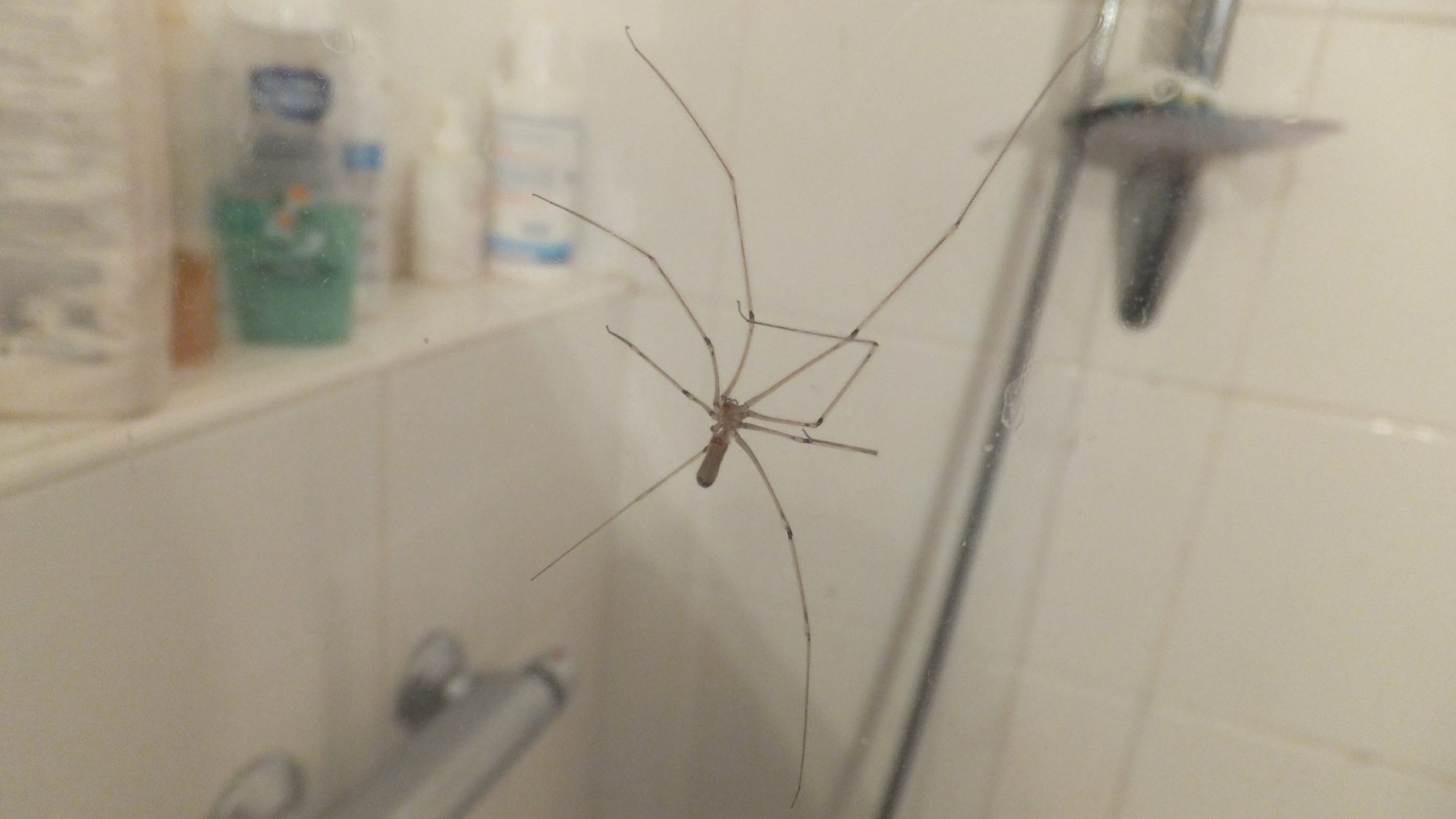
A spider on a freshly cleaned bathroom wall can make you wonder what you missed. But finding one does not, by itself, mean your house is dirty. Even a carefully maintained home offers ways in and quiet places to hide.
Spiders can stay when they find shelter and insects to eat, including some gathering near your windows after dark. That makes a spider sighting a reason to check entry points and nearby insect activity, rather than judge your housekeeping. These small predators may also help catch flies, mosquitoes, and other unwanted visitors.
What the research found
A 2017 study led by Misha Leong at the California Academy of Sciences examined factors shaping insect and spider communities in 50 homes around Raleigh, North Carolina. Overall tidiness was not significantly associated with the variety of arthropods, the larger animal group that includes insects and spiders.
There was an exception worth keeping in mind. Cellar spiders, the delicate creatures with long legs, occurred in a greater proportion of rooms in more cluttered homes. The research measured diversity and community patterns, so it does not show that cleaning has no effect on particular pests.
The earlier 2016 survey behind that analysis also found spiders throughout the sample. “Every single house we visited was home to spiders,” entomologist Matt Bertone of North Carolina State University wrote when describing the work. An indoor spider was an ordinary finding, not evidence of a household failing.
The clue near your windows
Why might the same window keep attracting webs? Outdoor lighting draws insects toward buildings, creating feeding opportunities for spiders nearby. A porch light beside a doorway can help concentrate prey close to an opening into the house.
Spiders can enter through cracks, gaps around doors, and damaged screens, or arrive on boxes, plants, and firewood. Some wander inside accidentally, while others belong to species that can live and reproduce indoors. Their presence does not necessarily mean they recently moved in from the yard.
The 2017 analysis also linked greater access to the outdoors with a wider variety of indoor arthropods. Rooms with more doors and windows tended to contain more kinds. That finding points to a home’s connection with its surroundings, although it does not prove what attracted any individual spider.
Small predators at work
Spiders are arachnids, animals with eight legs, rather than six-legged insects. Many catch prey in silk webs, while hunters such as jumping spiders stalk and pounce on their meals. A missing web does not mean a spider is missing dinner.
Colorado State University’s guidance describes spiders as natural enemies of indoor pests, including flies, mosquitoes, and moths. Their diet depends on the species and what they encounter. A fly buzzing around the window may eventually become food for a waiting spider.
This is a form of biological control, in which living predators or other natural enemies help limit pests. But a spider in the corner is no guarantee of fewer mosquito bites or an end to an infestation. The household research did not measure how many nuisance insects spiders removed.
What repeated sightings mean
Seeing spiders regularly can be a clue that food is available nearby. Protected hiding places and easy access may also help explain their presence. Counting spiders alone cannot tell you which factor matters most in your home.
Location offers useful clues. Web-building species often settle in undisturbed corners, while cellar spiders commonly occupy basements and crawl spaces. A little-used storage area may provide suitable shelter even when the kitchen counters and bathroom fixtures are spotless.
Look around the places where sightings keep happening. Are small flies collecting near a window, are insects caught in the web, or is there a gap beneath the door? These observations can help guide practical changes without treating every spider as proof of a hidden infestation.
Fewer spiders without spraying
Start by sealing cracks around windows, doors, and the foundation, then repair screens that are torn or fit poorly. These steps can reduce entry by both spiders and their prey. University of Minnesota Extension also recommends reducing outdoor lighting that attracts insects near buildings.
Inside, vacuum along baseboards, behind furniture, and in quiet corners where webs accumulate. Reduce stacks of bags and boxes that provide hiding places, especially in storage rooms. These measures remove shelter and webs that can help spiders remain indoors.
If insects keep appearing, investigate that food supply as well. Removing a spider while leaving easy entry and plentiful prey may leave the conditions for another one to settle nearby. Physical prevention and removal are useful first steps for reducing occasional household spiders.
Do you need to remove it?
An occasional spider can often be left alone if it is out of the way and identified as harmless. If you prefer to remove it, place a jar over it and slide stiff paper underneath to capture it without touching it. Avoid handling unfamiliar spiders directly.
Most household encounters do not result in bites, but identification matters because some species, including black widows, can cause serious harm. Seek identification help from a local extension service if you are unsure. A spider’s usefulness as a predator does not make every species equally safe to handle.
The main study discussed here was published in Scientific Reports.
Photo: Syrio/Wikimedia Commons, CC BY-SA 4.0