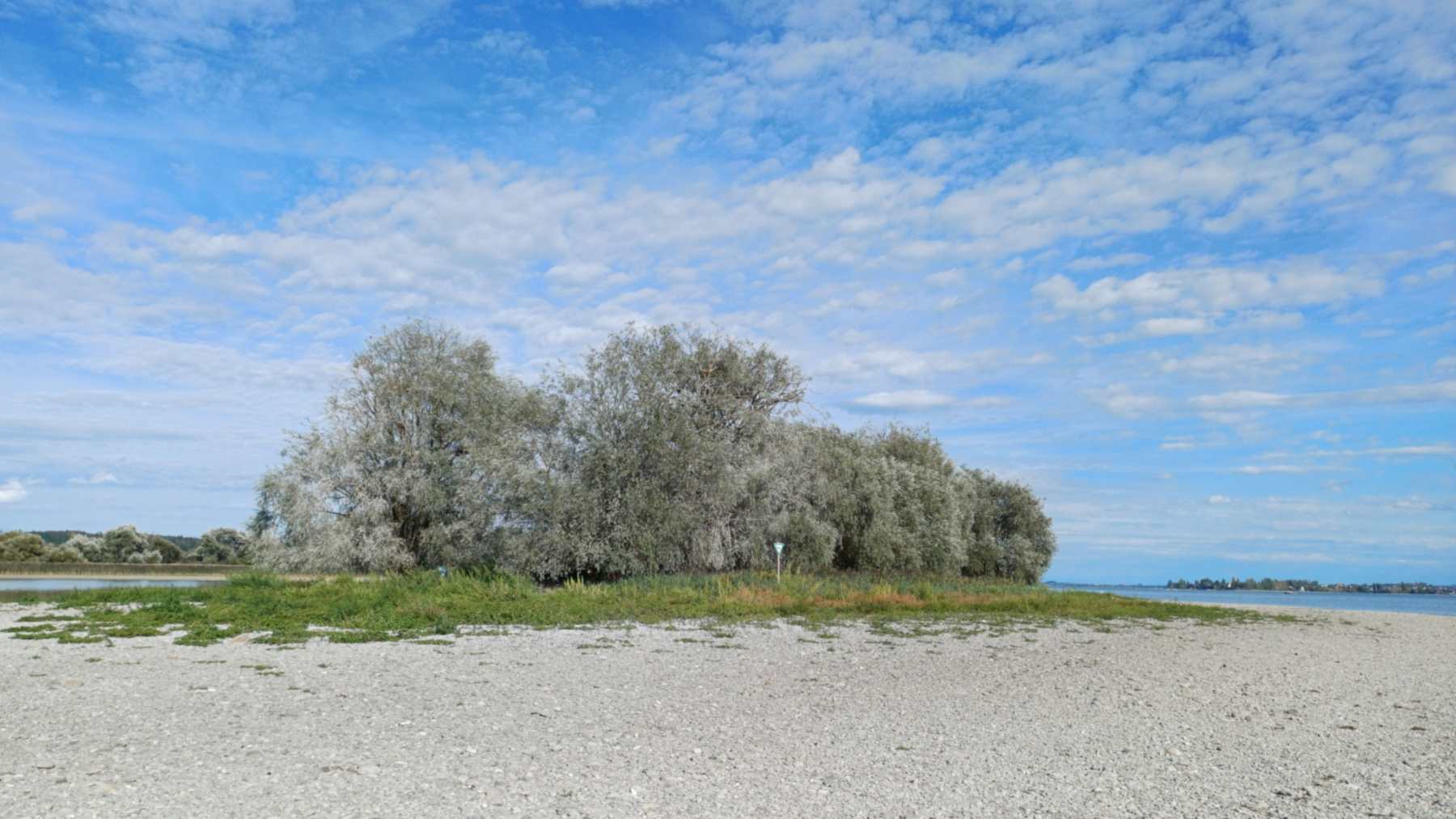
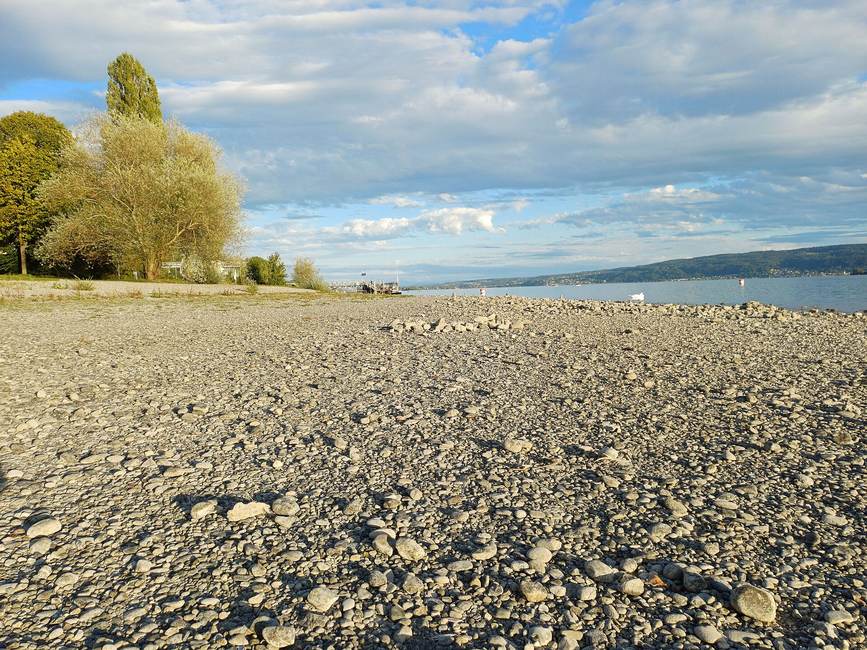
The Lake Constance water level at the Konstanz gauge averaged 8.2 feet (250 centimeters) on Oct. 13, the lowest for that date in records going back to 1850 and below the previous low of 8.7 feet (265 centimeters) from 1947, according to Baden-Württemberg’s Low Water Information Center (NIZ). The lake now sits about 10 inches under last winter’s low, and some passenger boats have stopped running.
Bodensee-Schiffsbetriebe (BSB) has suspended courses 613 to 620, which normally run between Radolfzell, Iznang, Mannenbach and Reichenau on the Untersee, the lake’s western arm, until further notice. Its passenger notice opens with a blunt line: “Never before was the summer water level of Lake Constance as low as this year.”
Below a record from 1947
The NIZ checked every Oct. 13 since 1850 for its weekly situation report and found nothing lower. A normal Oct. 13, by the 1991-2020 average, reads 11 feet (335 centimeters), which left the lake 33 inches (85 centimeters) short. The NIZ expects the level to hover around 250 centimeters in the coming days, and on Monday morning, Oct. 19, the federal PEGELONLINE portal showed a provisional 8.17 feet (249 centimeters).
That figure does not mean the lake is 8 feet deep. Lake Constance is hundreds of feet deep, and the Konstanz gauge counts from a zero mark 391.89 meters (about 1,286 feet) above sea level. Austrian and Swiss gauges use other reference points, according to a conversion page run by the International Commission for the Protection of Lake Constance (IGKB).
Lower than last winter
Lake Constance normally bottoms out in February or March and peaks in June or July with Alpine snowmelt. This year that rise mostly never came. The winter low was 9.06 feet (276 centimeters) on Feb. 9. On Aug. 13 the gauge hit 9.02 feet (275 centimeters), beating the 2003 record for that date by 10 inches (25 centimeters), and the Oct. 13 reading sits about 10 inches (26 centimeters) under the February low.
Ulrich Maurer, president of the State Institute for the Environment (LUBW), called a level lower at the end of September than in spring “an extraordinary and untypical development” in the agency’s Sept. 29 assessment. He blamed snow-poor winters in the Alps, which left spring short of meltwater, along with missing rain and high evaporation during a hot summer.
On Sept. 28 the level was 8.3 feet (253 centimeters), 35 inches (90 centimeters) under the long-term mean and lower than in the exceptionally dry year 2003, when it read 263 centimeters. The all-time low is older. In late February and early March of 1858, the gauge sat at 7.4 feet (226 centimeters) for several days.
A summer with no rain to spare
The summer of 2026 was Baden-Württemberg’s warmest since 1961 and its second driest. September brought about 0.75 inches (19 liters per square meter) of rain across the state against a normal 2.8 inches (70 liters), early German Weather Service figures show. It has been too dry in the state since the end of November 2025, Maurer said, and the Alpine Rhine and other inflows are partly carrying extreme low water.
On a hot summer day up to 30 cubic meters (about 1,060 cubic feet) of water a second can evaporate off the lake, “roughly the volume of a tanker truck per second,” the LUBW said in August. Normally the inflows replace it, but in August they carried clearly less water than usual.
By Oct. 14 the state had collected about 1.2 inches (31 millimeters) of October rain and was roughly 13.8 inches (350 millimeters) behind over the past 12 months, the NIZ said. Switzerland’s national drought platform has put parts of the catchment at level 4, or great danger. Far downstream at Maxau, the Rhine stood 5.5 feet (167 centimeters) below its seasonal mean on Oct. 13, after a summer in which the Rhine and the Danube shrank under heat and drought.
Steep gangways at the piers
Low water makes for very steep gangways at many landing stages, BSB tells passengers, who must push their own bikes and e-bikes aboard. Anyone with limited mobility needs a companion. At six piers, Immenstaad, Hagnau, Dingelsdorf, Überlingen, Langenargen and Kressbronn, wheelchairs and bicycles can’t board at the moment. The Überlinger See boats and the Konstanz-Bregenz line still stop everywhere, though BSB warns of restrictions and delays.
Shallow shores dried out early
The flat shores take the hit. Areas that would normally still be flooded at this time of year are already dry and temporarily lost as habitat for aquatic life, the LUBW wrote on Sept. 29. Those shallows always fall dry in winter and are resettled when the water returns, but this year they dried out clearly earlier, and in some areas the summer flooding phase never happened at all.
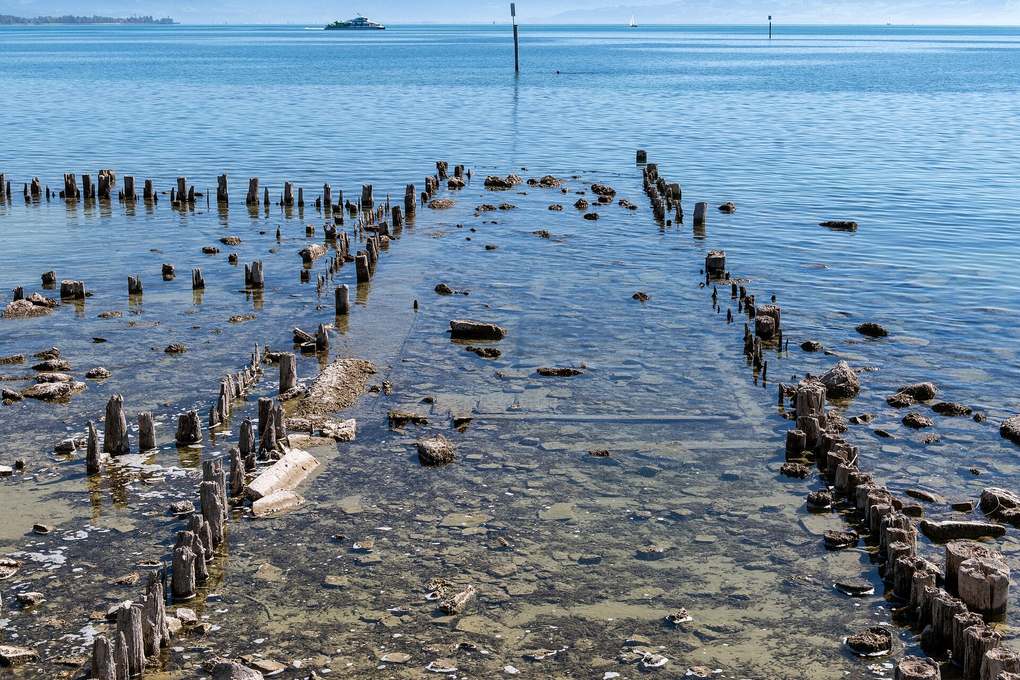
Thekla Walker, the state’s environment minister, said in August that “the current state of the lake makes the climate crisis visible.” Warmer winters no longer allow the lake to mix completely, which hurts its oxygen content, she said, calling for more monitoring of Europe’s largest drinking water reservoir. In June the LUBW said such levels did not put the lake’s drinking water role at risk.
What the data cannot show yet
Whether the shallow-water communities change for good depends on how the water levels develop, the LUBW says, and its environmental monitoring is following it. The latest Konstanz readings are raw data and may still move. A record for Oct. 13 is not an all-time low, because 1858 sits lower. And agencies pick different reference periods, so what counts as below normal depends on who is counting.
The NIZ expected rain for the weekend of Oct. 17 and 18, mostly in the east and south of the state, but said it would not be enough for a substantial improvement. In the weeks ahead snow can start falling in the high catchment instead of running off, the parched soils will hold on to what does fall, and shrinking mountain glaciers add almost nothing now. The NIZ expects the lake to keep dropping, as Lake Mead did on its way to a record low and Montenegro’s Lake Piva did when it fell about 98 feet.
Only a properly rainy autumn and winter can help, Maurer said. “We are all now hoping for persistent miserable weather.”
Photo: Markus Wolter / Wikimedia Commons, CC BY 4.0