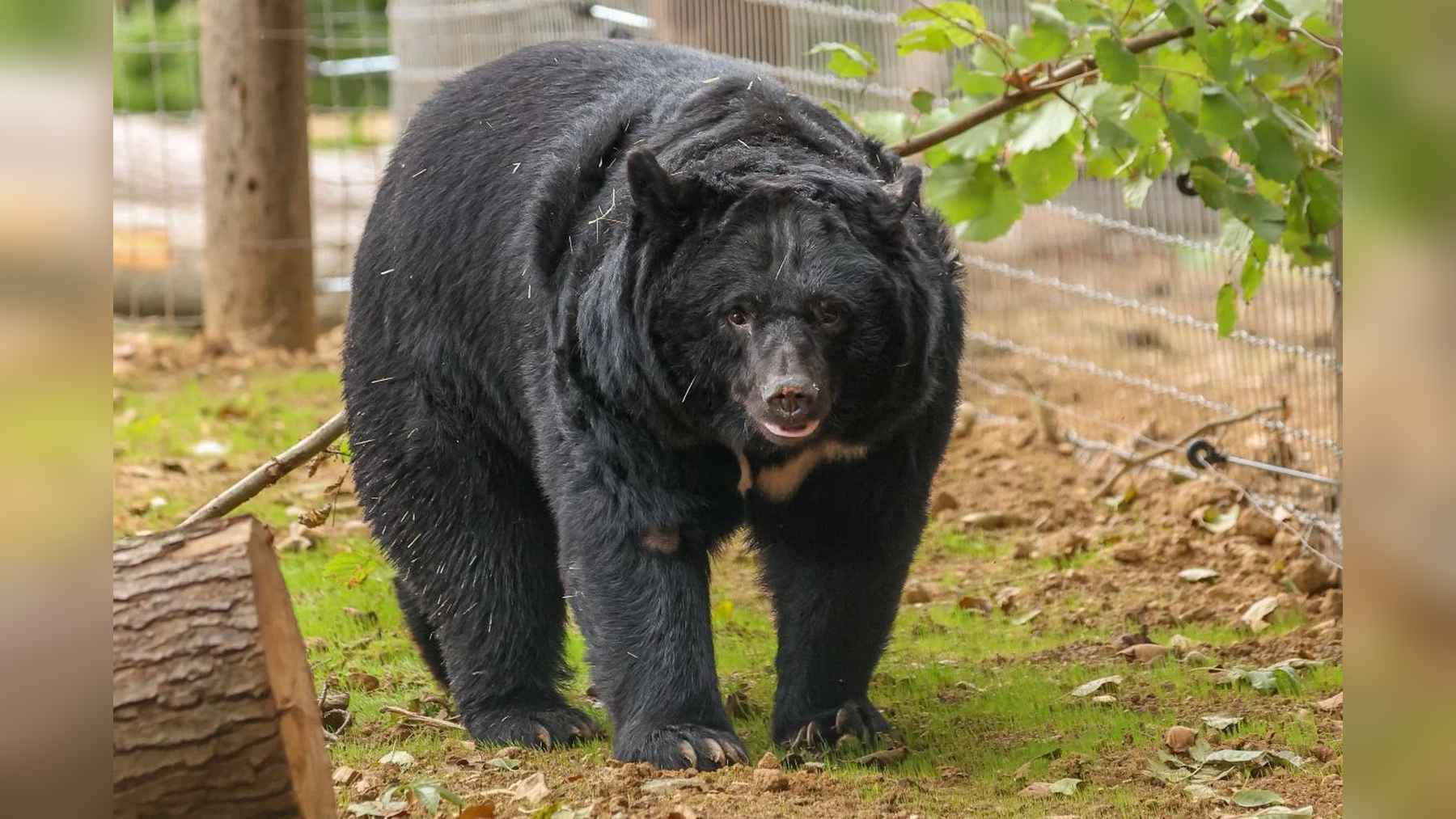
Five moon bears that spent more than 20 years in cages on a South Korean bear bile farm landed in the UK on Sept. 10, after a trip of more than 5,500 miles (about 8,850 kilometers), and now live at Jimmy’s Farm & Wildlife Park in Suffolk, England. The park says it is the first organization to rescue moon bears from South Korea’s bear bile industry and bring them to Britain. In June, 219 bears were still on Korean farms.
The charity Space for the Wild ran the six-month rescue with the Korean Animal Welfare Association (KAWA). In a Sept. 24 video on the Jimmy’s Wild Life YouTube channel, Jimmy Doherty showed the bears, Bara, Rumi, Saebit, Yonggi and Huimang, in their bedroom block, where they have bark beneath them for the first time, plus straw and a hammock.
Hell on earth, in Doherty’s words
Doherty, who is president of Space for the Wild, traveled to South Korea with members of his team in March 2026 to see the bears where they lived. “It was truly hell on earth. You cannot unsee these things,” he said in the park’s announcement of the arrival.
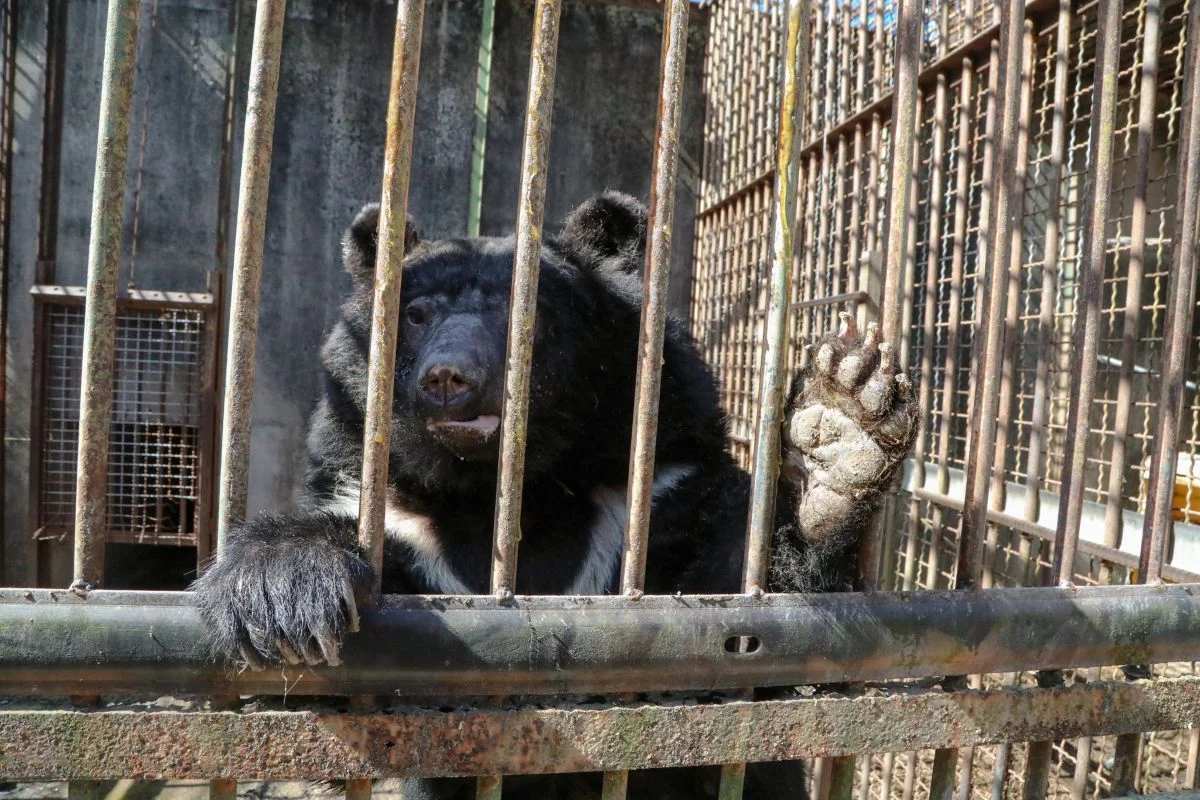
Bara, the bear the charity calls the one who waited 27 years, came to the farm as a cub in 1998. In a June video, Doherty said Bara had lived there for over 20 years in appalling conditions, with no regular food and no regular water. By then Bara had been moved to a veterinary center in South Korea, and the same video showed his very first bath.
Names instead of numbers
On the farm the bears had numbers. Now each one has a Korean name, listed in the charity’s June 30 update on the rescue: Bara (To Watch, To Hope), Huimang (Hope), Saebit (New Light), Rumi (Beautiful Light) and Yong-gi, written Yonggi by the park (Courage). Yong-gi, the smallest of the five, spent years in one cage with his sister Rumi, and Huimang shared another with her brother Saebit.
Moon Bear Islands in Suffolk
In a June video update, park director Stevie Sheppard explained that because the bears had been confined to small cages their entire lives, they needed lots of space that still felt safe. Moon Bear Islands gives each bear its own space, he said, but lets them explore past the island whenever they want.
The move also took bespoke travel crates, veterinary support, specialist air transport and international permits, the charity says. In a written statement, Sheppard said his team had “created a woodland reserve designed entirely around these bears and their recovery.”
Two weeks after the bears arrived, Doherty showed the long corridor that links the bedrooms to the outdoor reserve and described their first steps on grass: pulling leaves off the trees, walking on logs, swimming and playing with each other. Every day is an adventure for these bears, he said.
Why the bears were farmed
Bear bile, the digestive fluid a bear stores in its gallbladder, has been used as medicine for thousands of years, for fever, inflammation and even hangovers, says Humane World for Animals, although a synthetic, animal-free alternative has been available for decades. In South Korea, before the ban, farmers killed the bears and then took out their gallbladders, the group says, and its campaign manager there, Sangkyung Lee, has seen farmed bears with missing ears and limbs.
South Korea’s ban started on Jan. 1, 2026. When its grace period ran out on June 30, the Ministry of Climate, Energy and Environment counted 262 captive bears: 43 in sanctuaries and 219 on nine farms. Eight farms with 147 bears agreed to hand them over, and the ministry wants 172 bears, about 65 percent, in protected care by the end of 2026 and all 262 by 2027, partly in a sanctuary going up at Seocheon.
Minister Kim Sungwhan promised to make sure “even the very last bear is safely protected.”
Why they cannot go back to the wild
In a July video, Doherty answered a question supporters kept asking: why the bears could not simply be freed in Asia, where moon bears, also called Asiatic black bears, live in 18 countries from Iran to Japan, according to the charity Animals Asia. “If we were to open those cages and let those bears out, they’d probably be dead in 24 hours,” he said. After a lifetime in captivity, he explained, they would wander into urban areas and probably end up being shot.
Sheppard added that the farmer had fed them every day, so they seek out people when they want food. Doherty also warned that a released bear could spread disease to South Korea’s wild bears, which he described as critically endangered.
The species is rated Vulnerable on the IUCN Red List. Animals Asia names logging, farming, poaching, the bile trade and hunters’ snares as threats, and rangers pull the same kind of wire traps out of a protected forest in Cambodia. Protection can work, though: in the French Pyrenees, trackers counted 12 brown bear cubs among 685 tracks and sightings.
What the rescue does not fix
Next to the ministry’s June count of 262 captive bears, five is a small number. The park says some bears still in South Korea are at risk of euthanasia if appropriate alternatives cannot be found. Space for the Wild also says its appeal has not yet raised enough to cover the rescue, which went ahead anyway, and that the bears’ long-term care is paid for separately.
Settling in can take a long time. Humane World for Animals describes a bear named Toto who paced and shook his head over and over when he reached a Korean sanctuary until caregivers helped him with antidepressants and his favorite snacks. Other cases have gone better, like a bear raised in a tiny cage that started hibernating again once it had room, cold and time.
Jimmy’s Farm & Wildlife Park announced the arrival on Sept. 16, 2026. Visitors will be able to see the bears in their woodland reserve, always subject to the needs and welfare of the bears, Space for the Wild says.
Photo: Jimmy’s Farm & Wildlife Park