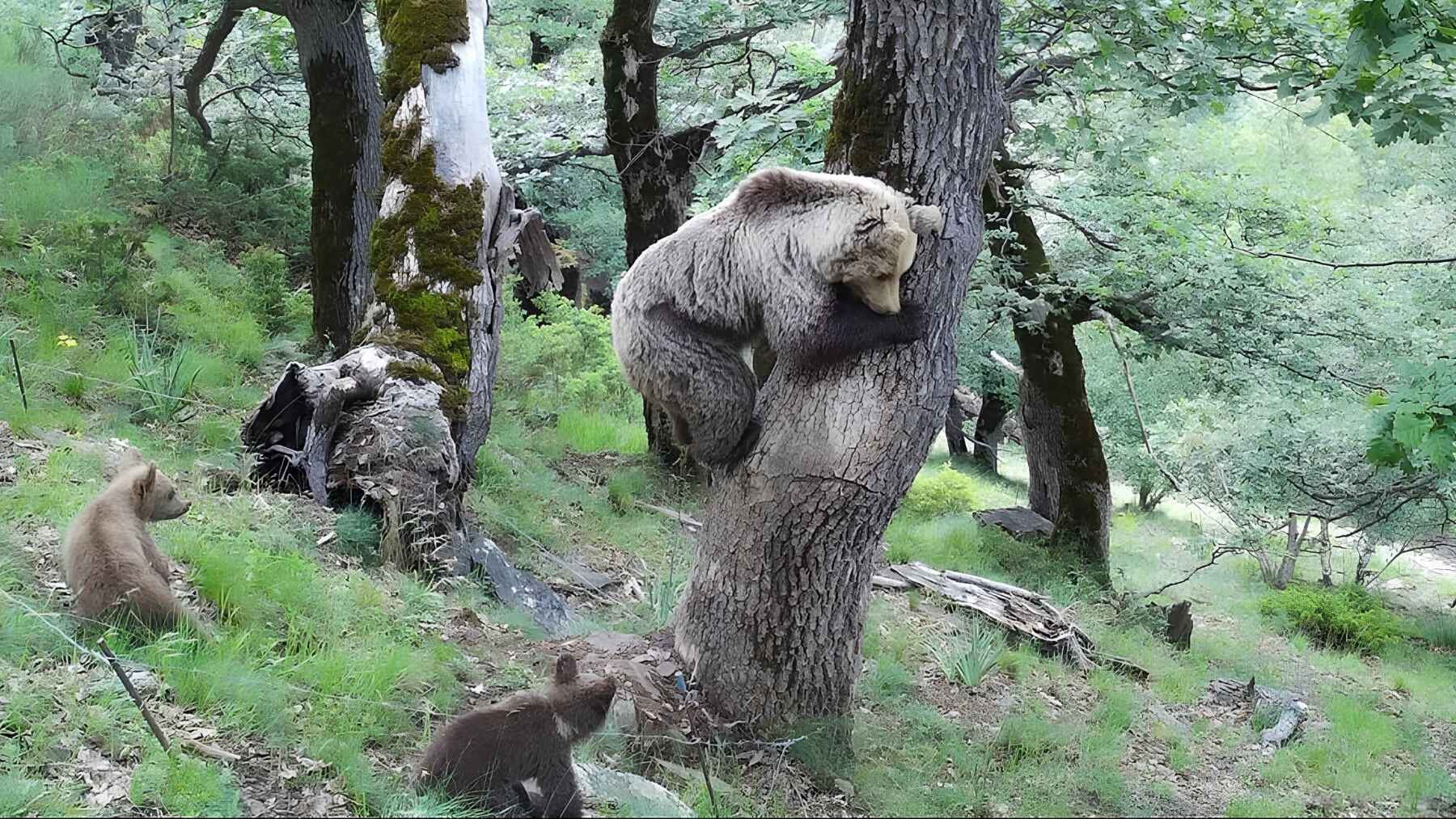
A 29-year-old male brown bear and 12 cubs from seven litters have been detected in the French Pyrenees during the first seven months of 2026. Quite a mix.
France’s Brown Bear Network recorded 685 indirect signs of bear presence across six departments, from tracks and hair to camera images. Together, the findings show an active, reproducing population spread across a broad mountain corridor. this is not a final census.
What 685 bear signs really mean
First things first. Those 685 signs do not mean 685 bears.
Think of fingerprints. Finding hundreds of them would not mean hundreds of different people had been there. The same thing applies here.
Researchers use overlapping clues to identify bears, track their movements, and eventually estimate the population. The Office français de la biodiversité explains that bear monitoring relies on signs such as tracks, hair, droppings, claw marks, feeding remains, livestock damage, and automatic camera images.
And bears do not exactly make the job easy. They are mostly active around dusk and at night, and they spend plenty of time in remote mountain terrain. So researchers often have to work with whatever clues the animals leave behind.
From January through July, 45 planned walking routes produced 141 signs. Another 52 automatic cameras captured 194 photo or video series.
That still does not add up to 685. Why? Because the full tally also includes other evidence gathered in the field.
Trees become bear check-in points
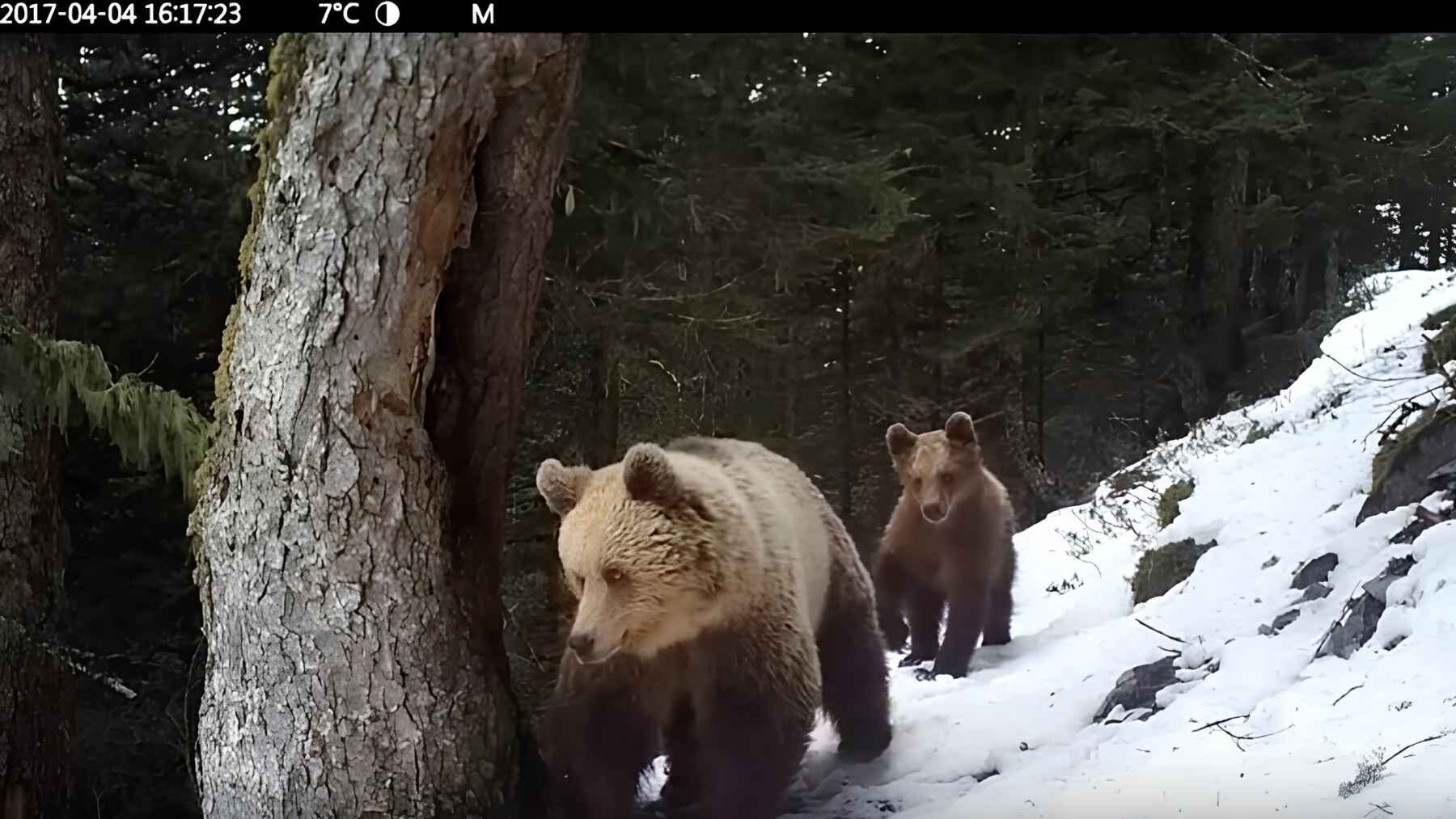
Some of those cameras are aimed at very specific places. Trees.
Bears use certain trunks to leave scent and other signals. They may sniff the bark, scratch it, or rub their necks and backs against the wood.
It almost works like a wildlife check-in point. A bear arrives, leaves a trace, and moves on.
Hair left behind can be especially useful. DNA analysis may help researchers identify an individual bear, determine its sex, and piece together family relationships.
Néré is still going at 29
One bear stood out.
Néré, a 29-year-old male, was recorded on May 7 near Bordes-Uchentein in Ariège. The camera caught him sniffing and rubbing against a tree.
Twenty-nine years old. For a wild bear, that is an impressive age.
Repeated sightings of a known individual like Néré give researchers something valuable. They confirm that the animal is still alive and provide another clue about where it is moving, all without having to capture or handle it.
A few seconds of camera footage can tell quite a story.
Seven litters and 12 cubs
Then there are the cubs.
At least seven litters containing 12 cubs were detected in the French Pyrenees during the first part of 2026, according to the monitoring results supplied for the report.
Four litters were detected in Ariège and another in Haute-Garonne. The most recent was observed on July 11, and analyses were still underway to determine the identity of the mother.
The number is still provisional. More genetic results could help researchers identify mothers, separate similar-looking family groups, or refine the count.
In other words, the family tree is not finished yet.
A population that has grown
To see why these observations matter, it helps to look back.
The Pyrenean brown bear population came dangerously close to disappearing in the 1990s. Since then, reinforcement and conservation programs have helped the population recover.
In 2025, researchers collected 3,287 indirect signs across the Pyrenean range. The official annual report identified at least 108 different bears and estimated the overall population at between 109 and 143 animals.
That is a major change from three decades ago.
Still, the new 2026 figures should not be read as a fresh population estimate. They cover January through July and focus on signs recorded on the French side. Annual population estimates require a much broader set of genetic and field data.
So, 685 signs? Interesting. But not 685 bears.
Why all these clues matter
Bear monitoring may look a little like detective work. In many ways, it is.
Researchers rarely get the luxury of simply counting animals standing in front of them. Instead, they combine footprints, hair, droppings, damage reports, camera footage, and genetic evidence.
The Brown Bear Network carries out this work for the Office français de la biodiversité, which is responsible for monitoring the species in the French Pyrenees. The agency says this monitoring is a public-interest mission and is used to understand the animals’ distribution and population trends.
Every clue adds another small piece.
Bears are still difficult to monitor
Even with cameras and DNA, counting wild bears is not simple.
One animal can leave several signs in a single area. Another may pass through without leaving anything researchers find. Some bears may cross between France, Spain, and Andorra.
That is why scientists combine evidence over long periods instead of treating every footprint or video as a separate bear.
It takes time. And plenty of patience.
For now, the 2026 observations offer a snapshot of what is happening in the French Pyrenees. An old male is still roaming the mountains. Several mothers are raising cubs. And hundreds of traces are giving researchers a closer look at a population that was once on the brink.
Not bad for a few footprints, hairs, and camera clips.
The official brown bear monitoring information is published by the Office français de la biodiversité through its Brown Bear Network and L’Écho des tanières.