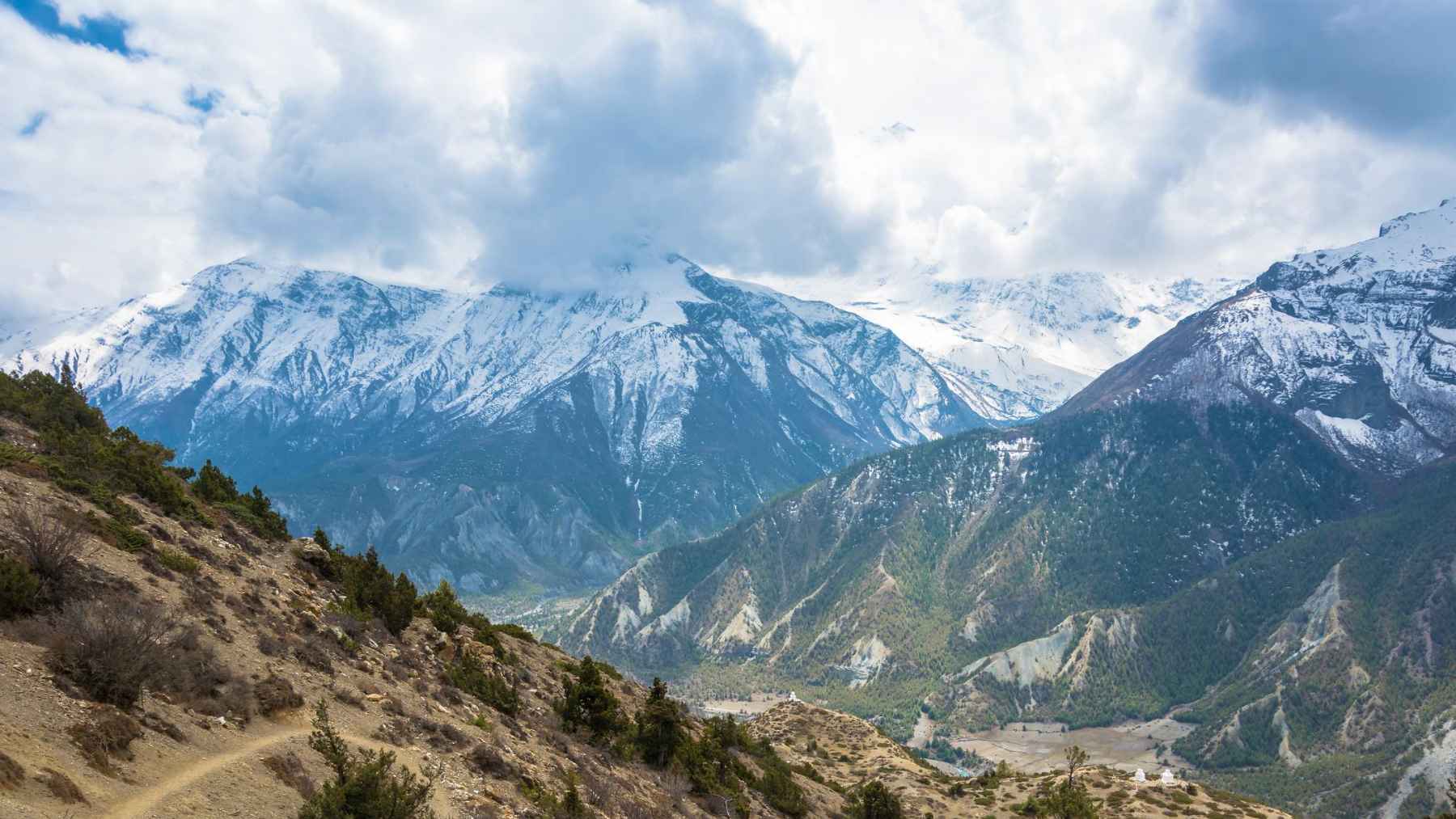
For years, the biggest climate warning from the Himalaya was easy to picture because glaciers were shrinking on the roof of Asia. Now, researchers are pointing to a quieter signal, one that can look almost harmless from a distance. The mountains are getting greener.
New research led by the University of Exeter shows alpine vegetation moving higher across six Himalayan regions from 1999 to 2022, pushed in part by warming and reduced snow depth. That might sound like nature recovering, but in this fragile landscape, more plant cover at extreme heights may change how snow is stored, how water runs downhill, and how rivers behave for communities far below.
Plants are moving uphill
The study examined the alpine “vegetation line,” meaning the upper limit of continuous plant growth. Researchers tracked that line from Ladakh in India to Bhutan, and in every region they studied, plants were climbing higher.
Read More: {{post_title link:post}}
The pace varied sharply. In Khumbu, the Everest region, the vegetation line moved upward by about 4.7 feet per year. In Manthang, Nepal, the shift reached about 22.8 feet per year. No single valley explains it.
Those numbers may sound small next to a mountain range, but over more than two decades they can redraw ecological boundaries. Terrain that once stayed too cold, too snowy, or too bare for continuous plant cover is becoming more welcoming.
Less snow is opening the door
The researchers highlighted reduced snow depth as a key potential driver of the change. Snow cover acts like a seasonal gatekeeper. When it thins or retreats earlier, plants get a longer chance to root, leaf out, and spread.
Lead author Ruolin Leng put the bigger climate picture plainly, saying, “The Himalayas are warming faster than the global average.” Her team also points to shifts in temperature, water, and nutrients that can make old no-go zones more hospitable for alpine plants.
That does not help every species. Plants adapted to deep cold may be squeezed by species better suited to milder conditions. A greener slope can still be a stressed slope.
More green is not always good news
On a lowland street, green usually feels like a promise. More shade, more life, maybe even a cooler walk home on a hot afternoon. In the alpine Himalaya, though, vegetation can also shade soil, trap snow, and alter the storage and flow of water.
That means plants become part of the region’s natural plumbing. Professor Karen Anderson warned that “small-scale processes might have impacts on important catchments,” which is exactly why researchers are paying attention to plants that are easy to overlook.
Read More: {{post_title link:post}}
The tricky part is scale. A patch of shrubs does not look as dramatic as a collapsing glacier, but spread that change across a massive alpine ecosystem and the water consequences could become much harder to ignore.
Greening and browning
The study combined satellite imagery with long-term climate data to look for greening and browning. Greening generally means more vegetation or leafier vegetation, while browning can mean less vegetation or a shift toward woodier plants.
Across the six regions, greening trends were more common than browning trends. Still, the researchers found significant browning in the eastern regions, especially Khumbu and Bhutan. That mix matters because not all vegetation changes work the same way.
Grasses, dwarf shrubs, and woody plants interact differently with snow and soil. From far away, green looks green. Up close, it can be a changing community.
The water risk downstream
This is not only a mountain story. Earlier work by the same research group argued that Himalayan alpine ecohydrology needs urgent attention because up to 1.6 billion people rely on water supplies from these mountains.
The Indus, Ganges, and Brahmaputra are not simply map names. They feed farms, cities, ecosystems, and reservoirs across South Asia. When high-altitude storage changes, the effect can move downstream quietly at first.
Nobody should read this as a claim that a new forest is taking over Everest tomorrow. The concern is more subtle. It is about timing, storage, melt, runoff, and whether water arrives when people and crops need it most.
Satellites reveal the change
The new study drew on satellite imagery, vegetation data, climate variables, and annual estimates of the vegetation line between 1999 and 2022. Its archived dataset describes climate records for precipitation, temperature, and snow depth, along with satellite-based vegetation trends.
Read More: {{post_title link:post}}
That remote sensing work matters because installing instruments in high mountains is hard, expensive, and often risky. Still, satellites cannot answer every question. Researchers need field data to learn which plants are arriving and how they change snow, soil, and water.
At the end of the day, this is not just a plant story. It is a water story wearing a green jacket.
A warning in a greener landscape
The Himalaya’s changing color is a reminder that climate change does not always look like destruction. Sometimes it looks like new growth in the wrong place, at the wrong speed, under the wrong conditions.
For now, the message from researchers is measured but serious. More vegetation at high altitude could reshape alpine ecosystems and water systems, but exactly how strong those effects will be needs closer monitoring.
The full study was published in Ecography.