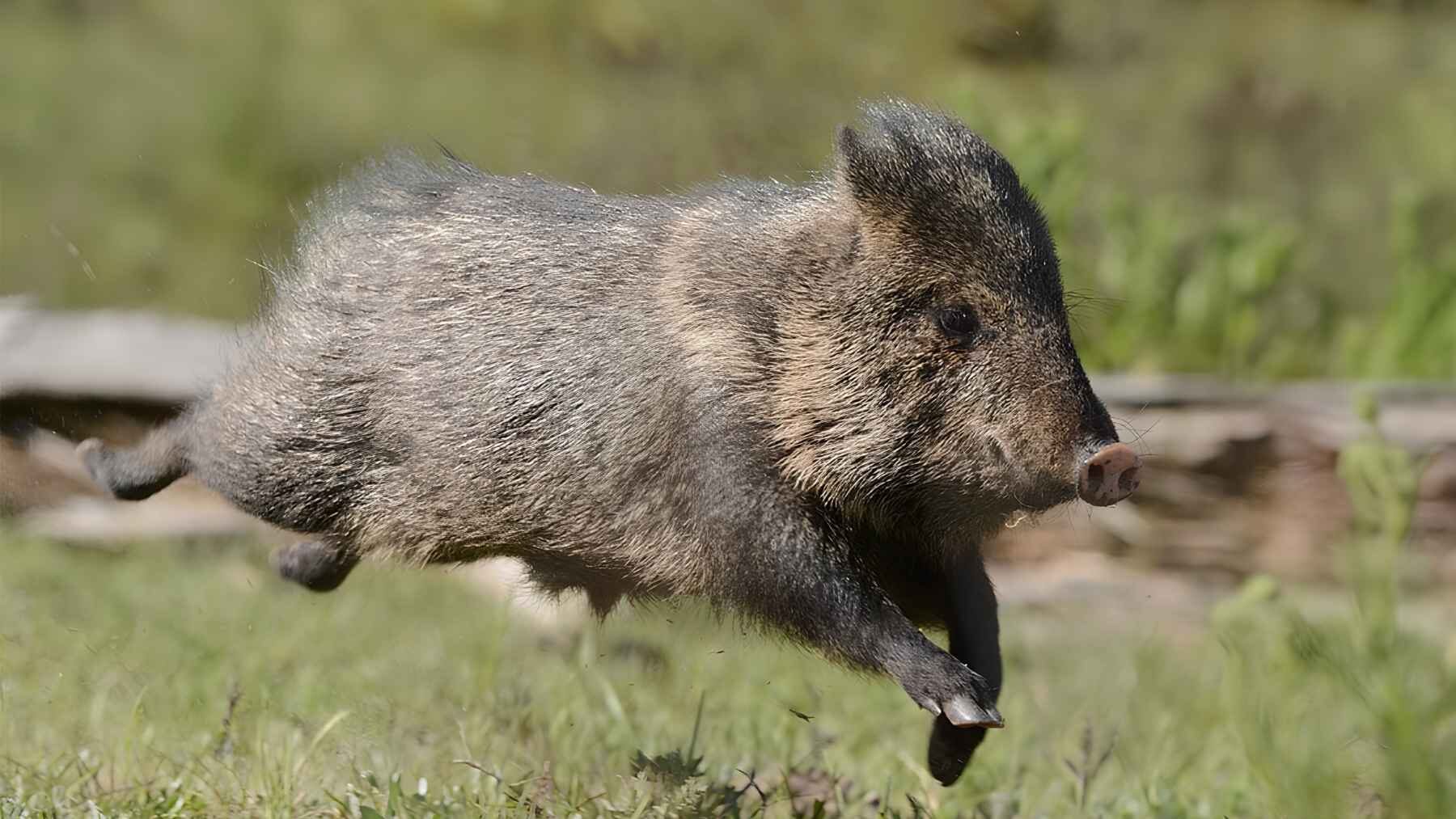
For more than a century, Uruguay’s grasslands and river forests were missing a compact, bristly mammal that once moved through them in social herds. The collared peccary (Pecari tajacu) had disappeared from the country, but a long breeding and release program has now returned it to the wild.
The strongest evidence comes from camera traps, tracks, and young animals born after the release. Even so, the latest assessments stop short of calling the species fully recovered because there is no firm wild population estimate, monitoring must continue and illegal hunting remains a concern.
Gone for generations
The collared peccary was not extinct worldwide. It was locally extinct in Uruguay, where the last concrete record cited by the country’s proposed mammal Red List dates to 1894, although scattered reports continued into the early 20th century.
Local extinction means an animal still survives elsewhere but has vanished from one part of its natural range. That distinction made a return possible, since founder animals could be brought from neighboring countries rather than recovered from a tiny surviving herd.
Why did it vanish? The exact answer remains unsettled. Uruguay’s assessment identifies hunting as the most likely main pressure, while habitat deterioration and disease may also have played roles that are harder to measure.
Seventeen years of preparation
The comeback began around 2000 at Bioparque M’Bopicuá, near Fray Bentos. Animals brought from Argentina and Paraguay helped establish a managed breeding population, while conservation teams worked with Uruguay’s environmental authority on genetics, health, diet, and release planning.
This was not a matter of opening a fence and hoping for the best. Before the animals went free, their food was shifted toward native grasses, fruits and tubers, and veterinary teams screened them for diseases that could endanger livestock or wildlife.
The project also involved scientists, government agencies, conservation groups, and people working near the release area. In a translated statement issued in 2017, biopark coordinator Juan Villalba said, “We trust that in a few years the peccary will once again occupy its place in our native fauna.”
The numbers tell a layered story
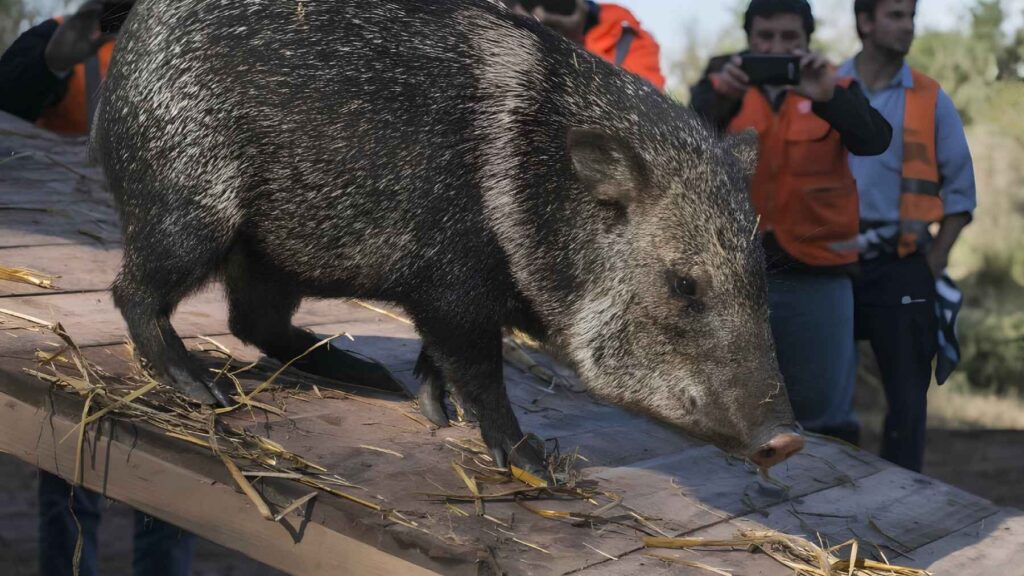
Uruguay’s government initially reported that nearly 100 peccaries were released in two carefully managed stages in 2017. A 2023 national assessment later cited 140 adults released in Paysandú that year, while project operator Montes del Plata said 200 animals were returned to the wild between 2017 and 2019.
Those totals appear to count different phases of the program. The safest reading is that Uruguay’s peccary comeback unfolded through several releases, not one dramatic moment when a single gate swung open.
The scale also made biological sense. Collared peccaries can live in groups of 2 to 30, and adults weigh roughly 66 to 88 lb. They stand about 20 in. at the shoulder and measure around 28 to 43 in. long, with a pale band of fur that looks like a collar.
Cameras catch a new generation
One year after the first releases, monitoring teams had collected 177 camera-trap images and confirmed the presence of young peccaries. Tracks, sleeping sites and droppings offered more clues that the animals were feeding, resting, and reproducing in the landscape.
A juvenile on camera mattered more than another adult photograph because it pointed to a wild-born generation. By 2022, researchers had detected peccaries more than six miles from the original release point, and biologist Alexandra Cravino said in a translated comment to El País, “They managed to adapt.”
The project’s 2025 sustainability report says monitoring continues to record the peccary’s daytime activity. That sounds like victory, but no public estimate in the available official reports shows how many now live free, how survival differs among herds or whether the population can persist without further releases.
A quiet ecosystem worker
A collared peccary does more than add another silhouette to a camera-trap image. As herds search for fruit, roots and other food, they turn soil and leaf litter, create paths, consume some seeds, and move others through the landscape.
Scientists have described peccaries as ecosystem engineers in some tropical forests. One exclusion study found that removing collared peccaries changed leaf litter and affected small amphibians and reptiles, although that result cannot simply be copied onto Uruguay’s grasslands and river woods.
In practical terms, the returning animals may help restore ecological work that had been missing for generations. But researchers still need to measure what changes, what does not and whether the effects remain beneficial in a landscape shared with farming, forestry and invasive wild boars.
Recovery still needs proof
Uruguay’s proposed national mammal Red List places the reintroduced peccary in the “Not Evaluated” category. It says continued monitoring is needed before the country can reassess the animal’s status, and it notes that hunting was reported after the release.
So, is the species saved? Not yet. Rewilding is a long process, not a release-day ceremony, and lasting recovery depends on suitable habitat, disease surveillance, enforcement against poaching and years of evidence that wild-born animals are surviving and reproducing.
For now, Uruguay has something it lacked for generations – native peccary herds once again moving through the countryside.
The official 2025 sustainability report was published on Montes del Plata’s website.