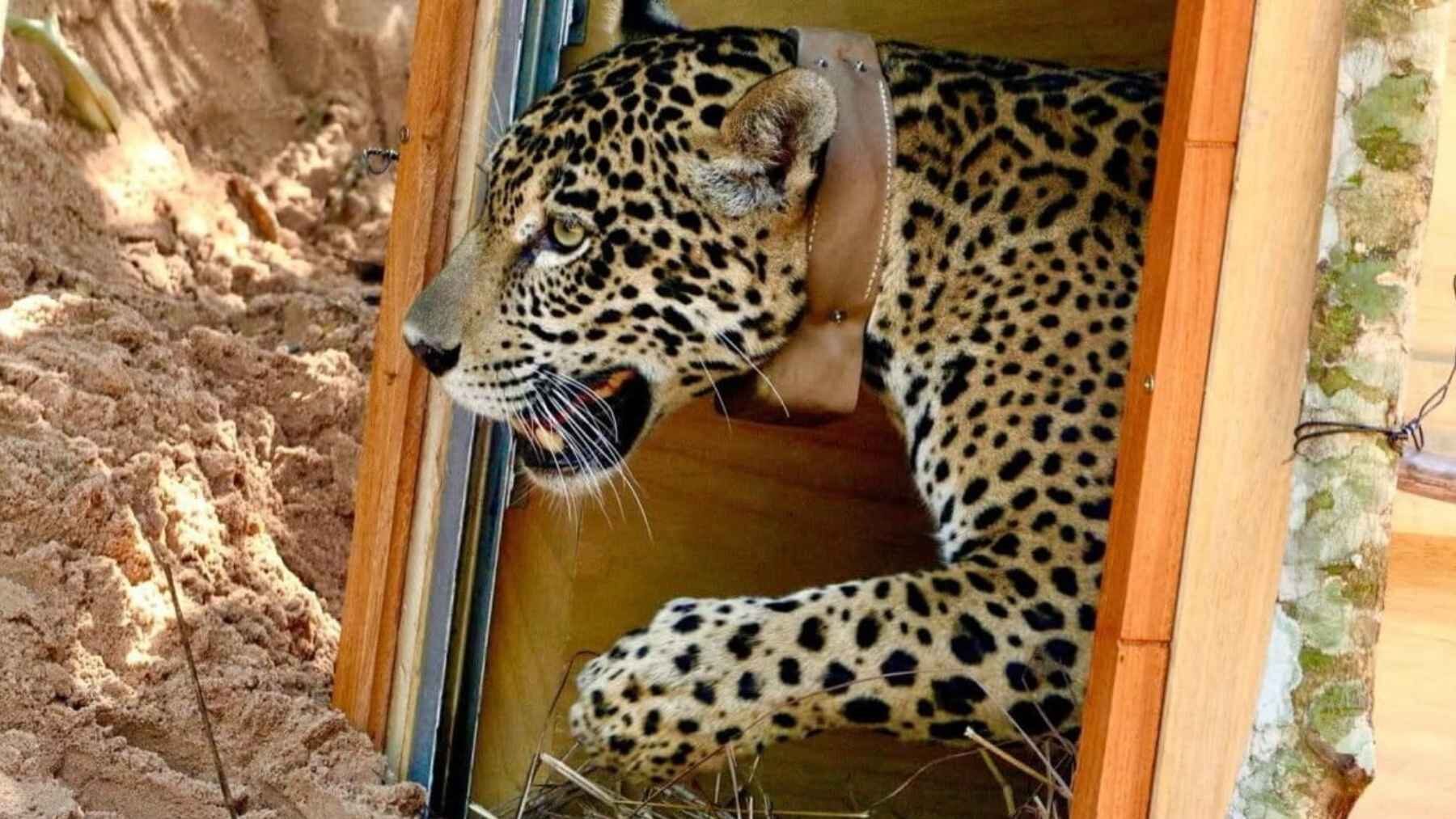
Yaguara, a female jaguar rescued after Bolivia’s 2024 wildfires, is back in the forest. After almost two years of rehabilitation with no direct human contact, she was released inside Noel Kempff Mercado National Park, marking Bolivia’s first known return of a rehabilitated jaguar to its natural habitat.
It sounds like a simple happy ending. It is not. Her release is now a real-world test of rescue work, satellite tracking, and whether a big cat separated from its mother as a cub can still live like a wild predator after fires burned more than 37 million acres across Bolivia in 2024.
How Yaguara made it back
Yaguara was still a cub when fire separated her from her mother in Santa Cruz, Bolivia. She later reached a ranch in Ascensión de Guarayos, where rescuers were contacted and moved her to the Ambue Ari sanctuary.
From there, her path home was anything but simple. Tania Baltazar, president of Comunidad Inti Wara Yassi, said the release required travel by vehicle, small plane, and boat before the jaguar reached a deeper part of the protected area.
“It was a day full of incredible emotions,” Baltazar said after the operation. For conservation workers, the moment was also a starting line. Opening the transport crate was only the first step.
A refuge built for a wild cat
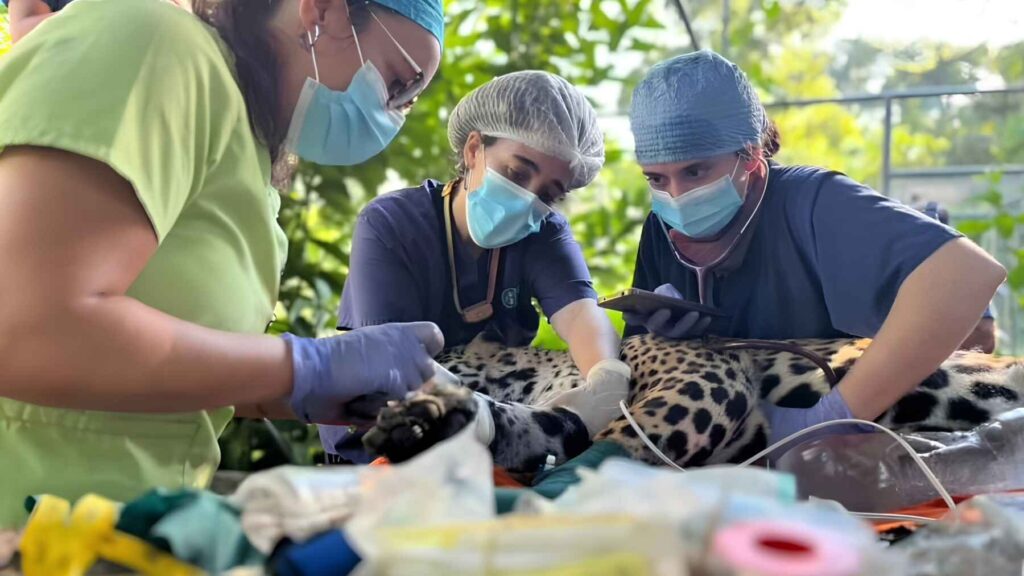
The main challenge was keeping Yaguara wild. That meant food, medical care, and observation, but almost no direct contact with people. A jaguar that learns to trust humans may later approach homes, roads, livestock, or people.
To prepare her, the team placed her in an enclosure of about 2.5 acres designed to feel more like forest than a cage. It included vegetation, hiding areas, and an artificial lagoon, so she could practice moving, swimming, and resting as she would outside.
Camera traps helped specialists watch her without interrupting her behavior. The organization reported that Yaguara had kept survival instincts and was able to hunt live prey inside her enclosure, which was one reason she was considered a strong candidate for release.
Why this one jaguar matters
Jaguars are the largest wild cats in the Americas. They are powerful swimmers and solitary hunters, often tied to forests, rivers, wetlands, and dense cover. In simple terms, they sit near the top of the food chain and help keep ecosystems balanced.
Conservationists often call the jaguar an “umbrella species.” What does that mean? Protecting enough space for one jaguar can also protect many other animals, from tapirs and monkeys to birds, insects, and plants that share the same landscape.
Noel Kempff Mercado National Park gives Yaguara room to move. UNESCO describes it as one of the largest and most intact parks in the Amazon Basin, covering more than 3.7 million acres and holding thousands of plant species and more than 600 bird species.
The risks are not small
Still, releasing a rescued big cat is not like returning a lost dog to a yard. Jaguars need territory, prey, caution, and the ability to avoid trouble. If one part of that system fails, the animal can suffer.
Verónica Quiroga, an Argentine biologist with the National Scientific and Technical Research Council, has warned that these cases must follow strict procedures. Age, health, stress, hunting skills, and behavior all matter before a release can be considered responsible.
Other jaguar experts are more cautious about returning felines after time in a refuge. Their concern is practical, not cold-hearted. A poorly prepared animal could be hurt, fail to hunt, move toward people, or create problems for other jaguars already living in the area.
What scientists watch next
Yaguara now wears a satellite collar, which sends location data to the team following her. Effectively, that collar is the difference between a symbolic release and a monitored conservation project.
The data can show whether she stays in suitable habitat, moves normally, finds food, or approaches risky areas. It can also help Bolivia build better rules for future wildlife rescues, especially as fires, illegal trafficking, and habitat loss continue to pressure animals.
Bolivia’s National Protected Areas Service said an interinstitutional technical committee reviewed the process during its final stages. That matters because this case could become a model, or a warning, for future attempts to return large felines to the wild.
A new chapter for Bolivia
For Yaguara, the forest is now the test. She must hunt, avoid people, and find her place in a landscape where other jaguars may already live. No satellite collar can do that for her.
For Bolivia, the release leaves something behind besides one free animal. It creates experience, protocols, and a harder question for the next rescue. When a wild animal survives disaster, how much effort should people make to send it home?
The official press release has been published on Bolivia’s National Protected Areas Service’s website.