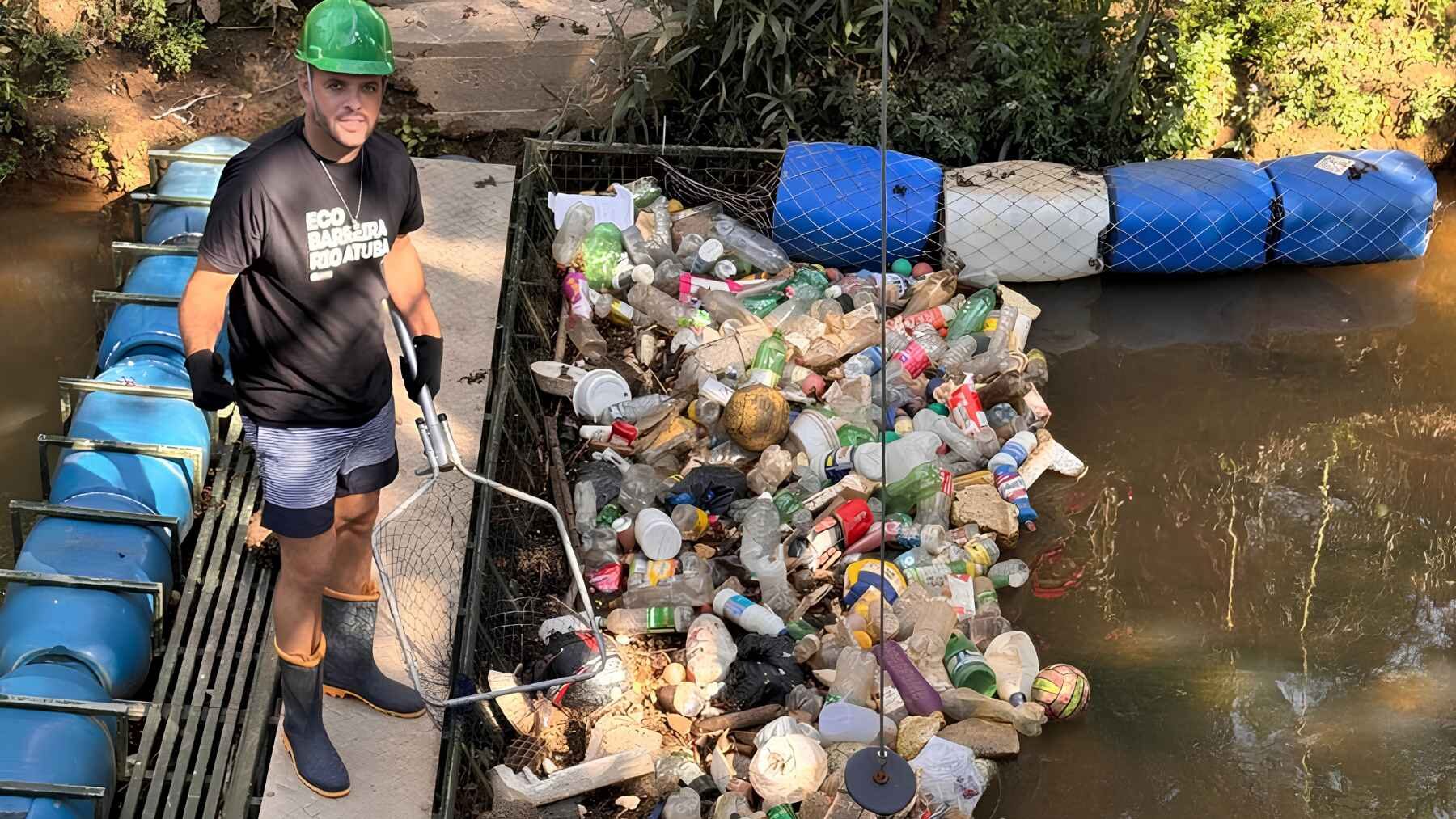
For years, Diego Saldanha watched trash float past the back of his home in Colombo, in Brazil’s Paraná state. It moved with the current of the Atuba River, carrying bottles, furniture, plastic, and other waste through a place he remembered very differently from childhood.
So he made a promise to his children and built a simple floating barrier. More than 10 years later, his homemade “ecobarrier” has helped remove more than 40 metric tons of waste from the river, equal to roughly 44 U.S. tons or about 88,000 pounds.
A promise in the backyard
Saldanha grew up with a cleaner version of the Atuba River. He has recalled seeing it as a place where people could swim, play, and live close to the water without the constant sight of garbage moving downstream.
That memory eventually became harder to ignore. What do you do when the river behind your house starts looking less like nature and more like a moving dump?
Instead of waiting for someone else to step in, Saldanha began testing a low-cost floating structure that could catch solid waste before it traveled farther. He says the barrier does not interfere with aquatic life, because it floats on the surface and holds back what should never have entered the water in the first place.
How the barrier works
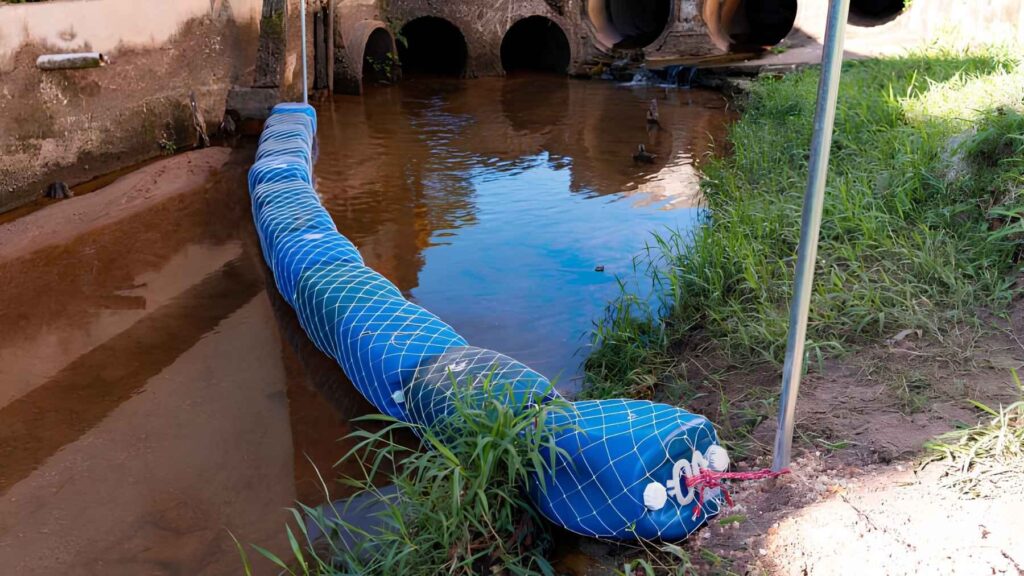
The basic idea is refreshingly simple. The ecobarrier sits across part of the waterway and guides floating trash toward a place where it can be removed, sorted, recycled, or sent for proper disposal.
Over time, the first handmade version was improved. Paraná’s state news agency reported in 2024 that the Atuba project had already removed about 20 metric tons of trash, or roughly 22 U.S. tons, and Saldanha described how the structure evolved from plastic bottles into a safer floating platform.
That matters because river waste is not just ugly. It clogs drainage, harms animals, pollutes water, and can make flooding worse when heavy rain arrives and neighborhoods are already bracing for trouble.
A local fix with a bigger message
The Atuba River story is small enough to picture clearly. One man, one river, one floating barrier, and bags of trash pulled out by hand.
But the wider problem is huge. The United Nations Environment Programme estimates that 19 to 23 million metric tons of plastic waste leak into aquatic ecosystems every year, polluting lakes, rivers, and seas. That is roughly 21 to 25 million U.S. tons.
Brazil’s urban rivers show the same warning sign in local form. SOS Mata Atlântica reported in 2026 that only five of 162 monitored water points in the Atlantic Forest biome had good water quality, while none were rated excellent.
From Paraná to Pará
Saldanha’s backyard idea did not stay in Paraná. In 2025, the model reached Pará, where official sources reported ecobarrier installations and public discussions tied to river cleanup and the COP30 climate agenda in Belém.
The city of Benevides said it installed Pará’s first ecobarrier in the Rio Benfica, using recyclable gallons, protective nets, and ropes to intercept illegally discarded waste and make collection easier from the riverbank. The city said the collected material would be removed three times a week and sent to local recycling cooperatives.
Later, Pará’s state environmental agency reported that an ecobarrier linked to the Tamandaré linear park works in Belém was removing more than 400 kilograms of trash per week, equal to about 880 pounds. Saldanha said the project needs “people with will” and cooperation between the private sector and public authorities.
Trash is a public choice
The river does not create mattresses, sofas, appliances, or plastic packaging by itself. People do.
That is why Saldanha’s social media work has also focused on showing residents what to do when they find or need to discard bulky waste. In one example shared in the supplied reporting, he contacted the local environmental department after finding a mattress, instead of letting it stay in the river.
There is also a penalty side. The supplied report notes that improper disposal can trigger fines starting at R$5,000, which is about $970 using Brazil’s recent central bank conversion rate. That is not just a punishment. It is a reminder that illegal dumping can cost everyone when drains clog, streams overflow, and cleanup crews have to fix preventable damage.
What the river teaches
Saldanha’s ecobarrier is not a full solution to river pollution. No single floating structure can replace proper trash collection, recycling systems, environmental education, and enforcement against illegal dumping.
Still, it shows what practical action can look like while governments and communities work on bigger systems. In plain terms, it catches the trash before the river carries the problem somewhere else.
At the end of the day, the Atuba River story is not only about one man cleaning water. It is about a promise made at home, the kind children remember, and about what can happen when that promise becomes a tool others can copy.
The official statement on the EcoBarreiras project’s expansion and COP30 discussion was published on SEMAS.